
When a doctor prescribes a pill, it’s not just about the medicine-it’s about whether the patient can actually afford to take it. For millions of people, the real barrier to getting better isn’t confusion or forgetfulness. It’s the price tag. And the data shows one clear thing: when generic drugs cost less, people take them. More often. Longer. And that saves lives-and money.
Why Cost Stops People From Taking Their Medicine
Think about this: you’re told to take a pill every day for the rest of your life. Maybe it’s for high blood pressure, diabetes, or cholesterol. Now imagine your copay jumps from $5 to $75. What do you do? A lot of people skip doses. Or delay refills. Or stop entirely. That’s not laziness. That’s survival. Studies tracking over 160,000 patients show that every $10 increase in out-of-pocket cost leads to a 2-4% drop in adherence. For expensive drugs like GLP-1 agonists used in diabetes, each extra $10 in cost cuts adherence by 3.7%. That might sound small, but when you’re talking about thousands of patients, it adds up to more emergency room visits, more hospital stays, and more preventable deaths. In 2023, a survey of 2,131 adults found that over one in three-32.7%-had skipped, cut, or delayed medication because of cost. One Reddit user, u/HeartHealthJourney, shared how switching from brand-name Crestor ($75 copay) to generic rosuvastatin ($5 copay) turned his adherence from “missing 3-4 doses a week” to “perfect for 11 months straight.” That’s not an outlier. That’s the rule.Generics Aren’t Cheap Copies-They’re the Same Medicine
A lot of people think generics are “weaker” or “inferior.” They’re not. The FDA requires generics to have the exact same active ingredient, strength, dosage form, and route of administration as the brand-name drug. They must also be bioequivalent-meaning they work in the body the same way, within 80-125% of the brand’s performance. That’s not a loophole. That’s science. The only difference? Price. Generic drugs cost 80-85% less. A statin like atorvastatin might be $120 a month as a brand. The generic? $10. Same pill. Same effect. Same risk of side effects. But the price difference changes everything. A 2012 study by Dr. J. Chen looked at Medicare patients switched from brand-name statins to generics. After the switch, adherence jumped by 5.9%. Another study on breast cancer drugs found patients on generics were 5% more likely to stick with their treatment than those on brand-name versions. Why? Because they could afford to.Insurance Tiers Are the Hidden Tax on Health
Insurance plans don’t treat all drugs the same. They use “formularies” with tiers. Tier 1: generics. $5-$10 copay. Tier 2: preferred brands. $30-$50. Tier 3: non-preferred brands. $75-$100+. Tier 4: specialty drugs. $200+. This isn’t about clinical value. It’s about cost control. And it works-until it doesn’t. Patients with diabetes, heart disease, or mental health conditions often end up on high-tier drugs. If they can’t pay, they skip doses. Or worse, they stop completely. Medicare Part D, which covers prescription drugs for seniors, started using this tier system in 2006. Since then, changes like the Inflation Reduction Act of 2022 have capped insulin at $35/month and are eliminating the coverage gap by 2025. The result? More people filling prescriptions. Fewer hospitalizations. That’s not just policy-it’s public health.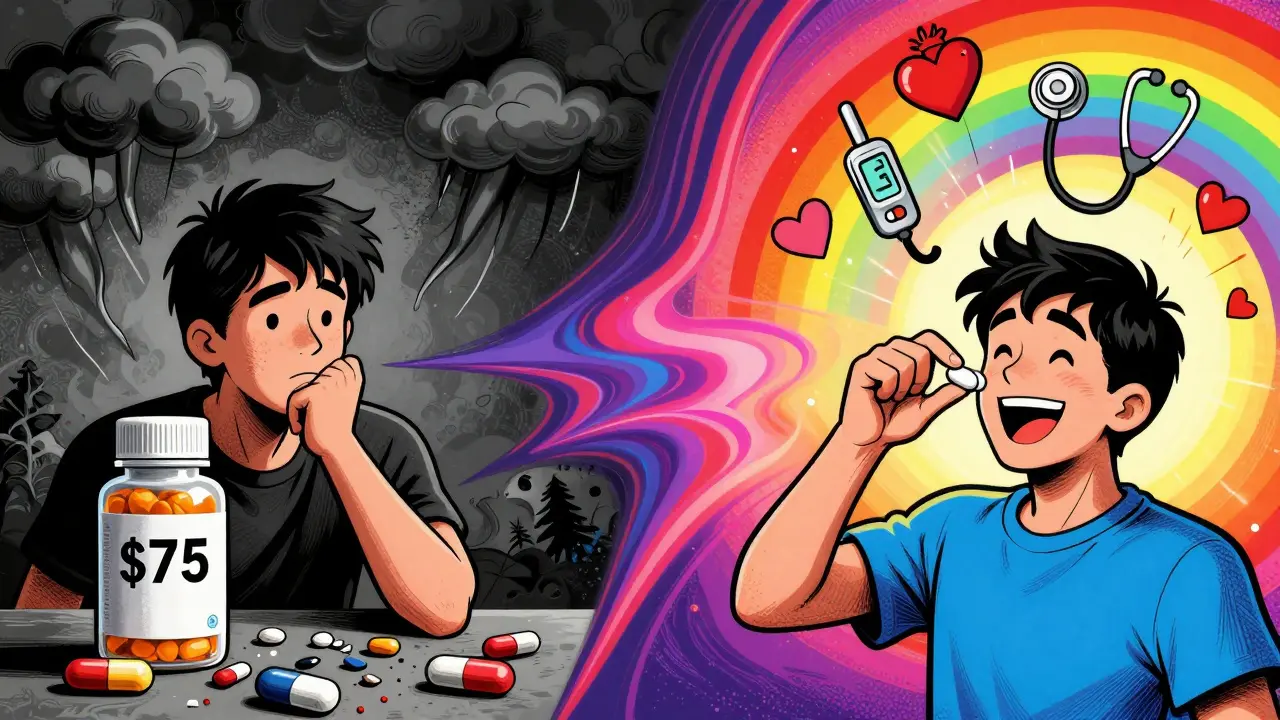
Lower Costs Don’t Just Help Patients-They Save the System Money
It’s easy to think: “If we lower drug prices, companies lose money.” But the real cost isn’t on the pharmacy shelf. It’s in the ER, the ICU, and the long-term care facility. Medication non-adherence causes up to 50% of treatment failures. It contributes to over 100,000 preventable deaths a year in the U.S. And it costs the system $100-$300 billion annually. That’s more than what’s spent on diabetes or heart disease alone. Here’s the twist: getting people to take their meds actually saves money. A study in Health Affairs found that adherent patients had 15-20% fewer hospitalizations. Even if the drug cost went up slightly, the total healthcare spending dropped. That’s because avoiding one hospital stay pays for months of pills. In the U.S., generics make up 90% of all prescriptions-but only 23% of total drug spending. From 2009 to 2019, they saved the system $643 billion. That’s not a drop in the bucket. That’s a flood.What’s Working Now-and What’s Still Broken
Real-time benefit tools (RTBTs) are changing how doctors prescribe. These systems show a patient’s exact out-of-pocket cost before the prescription is written. In pilot programs, they’ve boosted adherence by 12-15%. One pharmacy program, Magellan’s inforMED, saw a 40% drop in care gaps and a 2:1 return on investment. But there’s still confusion. Many patients don’t trust generics. They worry they’re “not as good.” The FDA’s “It’s Okay to Use Generics” campaign helps, but it’s not enough. Patients need to hear it from their doctor-not just a pamphlet. Another problem? Therapeutic duplication. Doctors sometimes prescribe two drugs for the same condition because they’re unaware of what’s already on the patient’s list. That adds $100-$200 a month in unnecessary cost. Medication therapy management programs-where pharmacists review all prescriptions-can cut that by half.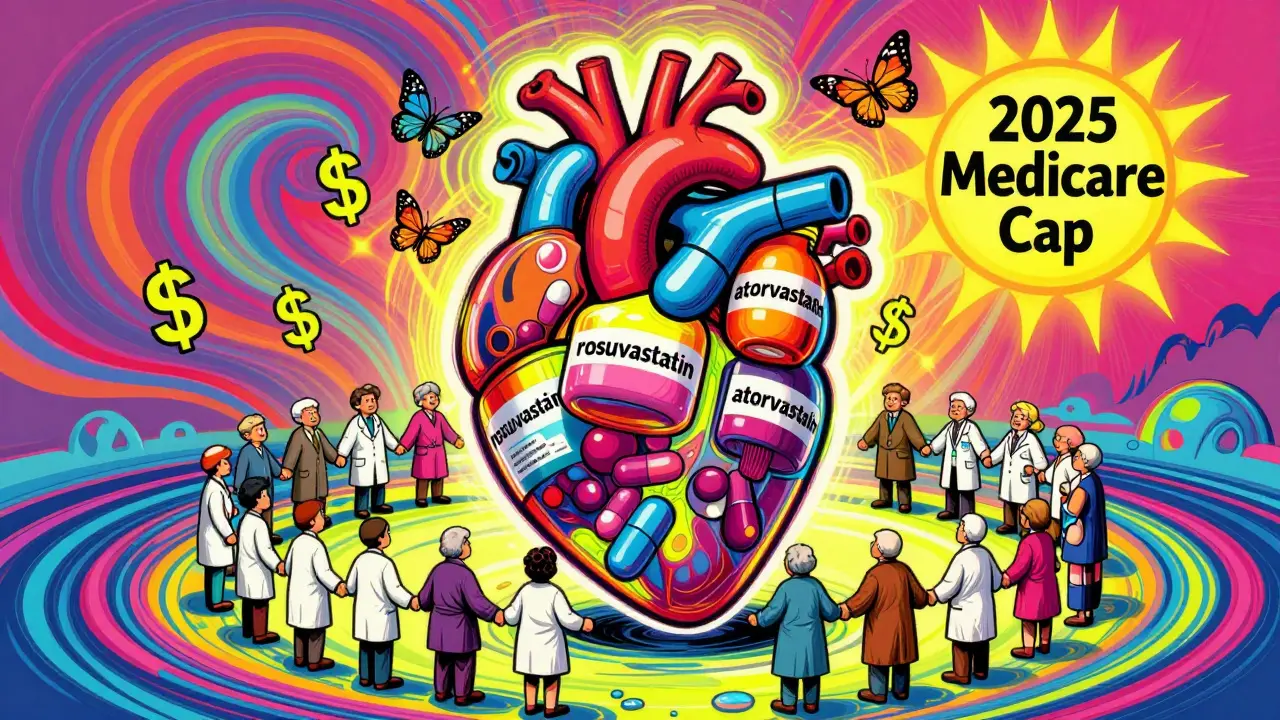
Konika Choudhury
January 12, 2026 AT 06:49Why are we even talking about this like it's a mystery? In India we've been using generics for decades and our people live longer than yours with half the spending. Your system is broken not because of drugs but because of greed. No fancy stats needed. Just look around.
Windie Wilson
January 12, 2026 AT 19:08Oh wow. So the solution to America’s healthcare crisis is… pills that cost less than a latte? I’m shocked. Shocked I tell you. Next you’ll tell me breathing air is cheaper than oxygen tanks.
Daniel Pate
January 14, 2026 AT 14:38The data is overwhelming but the real issue is structural. We’ve created a system where pharmaceutical profits are prioritized over biological outcomes. The FDA’s bioequivalence standards are scientifically sound, yet public perception is shaped by marketing, not evidence. This isn’t about affordability-it’s about trust in institutions that have repeatedly failed us.
jordan shiyangeni
January 16, 2026 AT 02:12Let me be perfectly clear: skipping medication because you can’t afford it is not a personal choice-it is a moral failure of the state. Every time someone doesn’t take their statin because it costs $75 instead of $5, it’s not just a health risk-it’s a betrayal of the social contract. We allow corporations to profit from human suffering while pretending we’re compassionate. This isn’t capitalism. This is cannibalism dressed in white coats.
Monica Puglia
January 16, 2026 AT 21:53My grandma switched to generic lisinopril last year and she’s finally sleeping through the night 😊 She kept saying ‘I don’t wanna be a burden’… now she’s gardening again. This isn’t policy-it’s dignity. Thank you for saying this out loud.
George Bridges
January 18, 2026 AT 03:07I’ve worked in community pharmacies for 18 years. I’ve seen people cry because they had to choose between insulin and rent. I’ve seen them split pills in half just to make it last. This isn’t theoretical. It’s Tuesday. And it’s happening right now in every town you’ve never visited.
Faith Wright
January 19, 2026 AT 02:58So let me get this straight… we spend billions on ER visits because people can’t afford $10 pills… and the solution is… to let people buy $10 pills? Who knew it was this simple? 🤦♀️
Rebekah Cobbson
January 19, 2026 AT 16:50If you’re a doctor, ask your patient: ‘Can you afford this?’ Not ‘Do you understand this?’ Not ‘Are you compliant?’ Just ask if they can pay. Then listen. That one question changes everything.
gary ysturiz
January 20, 2026 AT 05:33People don’t need complex policies. They need to know their medicine won’t break them. Simple. Clean. Fair. Generics work. Let’s stop pretending otherwise.
laura manning
January 22, 2026 AT 04:43It is, however, critically important to note that while the aggregate data presented here is statistically significant, the underlying assumption-that all bioequivalence parameters are uniformly enforced across all manufacturing facilities-is not empirically verifiable without access to proprietary batch-testing records, which are neither publicly available nor subject to independent audit. Furthermore, the correlation between cost reduction and adherence does not necessarily imply causation, as confounding variables such as socioeconomic status, health literacy, and access to transportation are not adequately controlled for in the cited studies.
Sumit Sharma
January 23, 2026 AT 03:35India’s generic manufacturing ecosystem is the most efficient in the world. We produce 60% of global generic volume with zero subsidies. Your system is archaic. You pay for branding, not biology. The FDA’s standards are adequate, but your pricing structure is a cartel. Stop pretending this is about innovation. It’s about rent extraction.
Jay Powers
January 24, 2026 AT 06:44I’ve seen patients go from skipping meds to taking them daily after switching to generics. No magic. Just lower price. I wish more doctors would say it like that. No jargon. Just: ‘This works the same. It’s cheaper. Take it.’
Lawrence Jung
January 25, 2026 AT 04:04You think this is about money? No. It’s about control. The system wants you dependent. It wants you afraid. It wants you to believe you need expensive pills to survive. But the truth? You were never meant to need them at all. The body heals itself. The pills just mask the real disease: capitalism.
Alice Elanora Shepherd
January 27, 2026 AT 01:22It is worth noting that the United Kingdom’s NHS has operated a similar model for decades, with generics accounting for over 85% of prescriptions and contributing to a 30% reduction in avoidable hospital admissions for chronic conditions. The key differentiator? Centralised negotiation and transparent pricing. The U.S. system lacks both.
Christina Widodo
January 28, 2026 AT 07:35Wait-so if I switch from brand-name metformin to generic, I get the same effect, but pay $5 instead of $90? And this isn’t common knowledge? How is this still a thing?!