
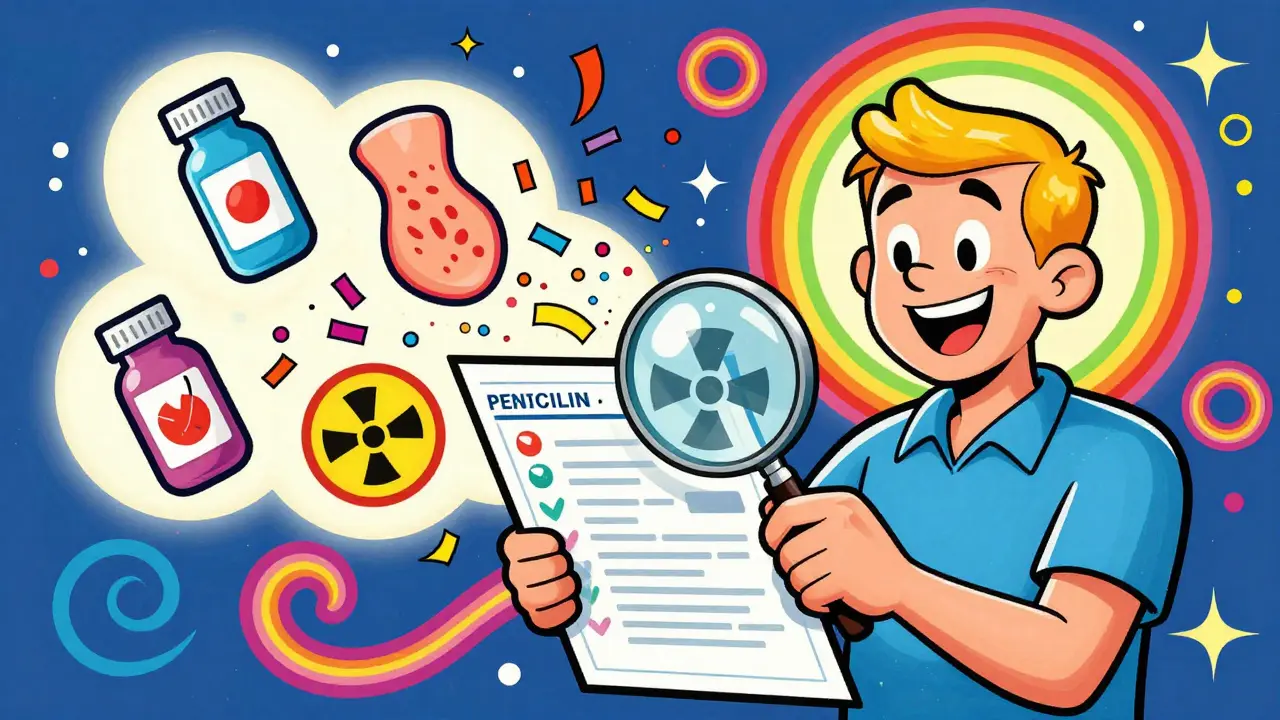
More than 10% of people in the U.S. say they’re allergic to penicillin. But here’s the truth: 9 out of 10 of them aren’t. That’s not a typo. Most people who think they have a penicillin allergy don’t actually have one. And that mislabeling is putting their health-and the health of everyone around them-at risk.
Why Most Penicillin Allergies Are Wrong
Penicillin was discovered in 1928, and for decades, it was the go-to antibiotic for everything from strep throat to pneumonia. But back then, doctors didn’t have the tools to tell the difference between a real allergic reaction and a side effect. If someone got a rash after taking penicillin, they were labeled “allergic.” That label stuck-even if they never took it again. Fast forward to today, and that old label is still in medical records. The CDC says about 10% of Americans report a penicillin allergy. But when these people are properly tested, only about 1% turn out to have a true allergy. That means over 90% of people who think they’re allergic can safely take penicillin or related antibiotics like amoxicillin. Why does this matter? Because if you’re labeled allergic, doctors avoid the best, safest, and cheapest antibiotics. Instead, they give you stronger, broader-spectrum drugs like vancomycin or clindamycin. These alternatives aren’t just more expensive-they’re more likely to cause side effects, lead to longer hospital stays, and fuel the rise of dangerous superbugs like MRSA and C. difficile.What a Real Penicillin Allergy Looks Like
Not every bad reaction is an allergy. If you got nausea, diarrhea, or a headache after taking penicillin, that’s not an allergy. That’s a side effect. True penicillin allergies involve your immune system reacting to the drug. There are two main types:- Immediate reactions (within 1 hour): These are the dangerous ones. They’re IgE-mediated and can cause anaphylaxis-swelling of the throat, trouble breathing, a drop in blood pressure, or loss of consciousness. This is rare, but it’s life-threatening. If you’ve ever had this, you need to be evaluated by an allergist.
- Delayed reactions (after 1 hour, often days later): These include rashes that appear 3-5 days after starting the drug. Most of these are mild and not IgE-mediated. A common example is a flat, red, itchy rash that spreads over the body. These rarely mean you’re truly allergic for life.
High-Risk vs. Low-Risk: Know Your Category
Not all “allergy” histories are created equal. Doctors now use risk categories to decide what to do next.- Low-risk: You had a rash more than 10 years ago, only had itching, or your reaction was just nausea or a headache. You’re probably not allergic. In fact, you can often safely take a cephalosporin like cefazolin-even without testing.
- Moderate-risk: You had hives, swelling of the face or lips, or a rash within the last 5 years. You need testing before taking any penicillin or related drugs.
- High-risk: You had anaphylaxis, Stevens-Johnson Syndrome, DRESS, or organ damage (like liver or kidney problems) after penicillin. You should avoid all beta-lactam antibiotics unless evaluated by an allergist in a controlled setting.
How Testing Works-And Why It’s Safe
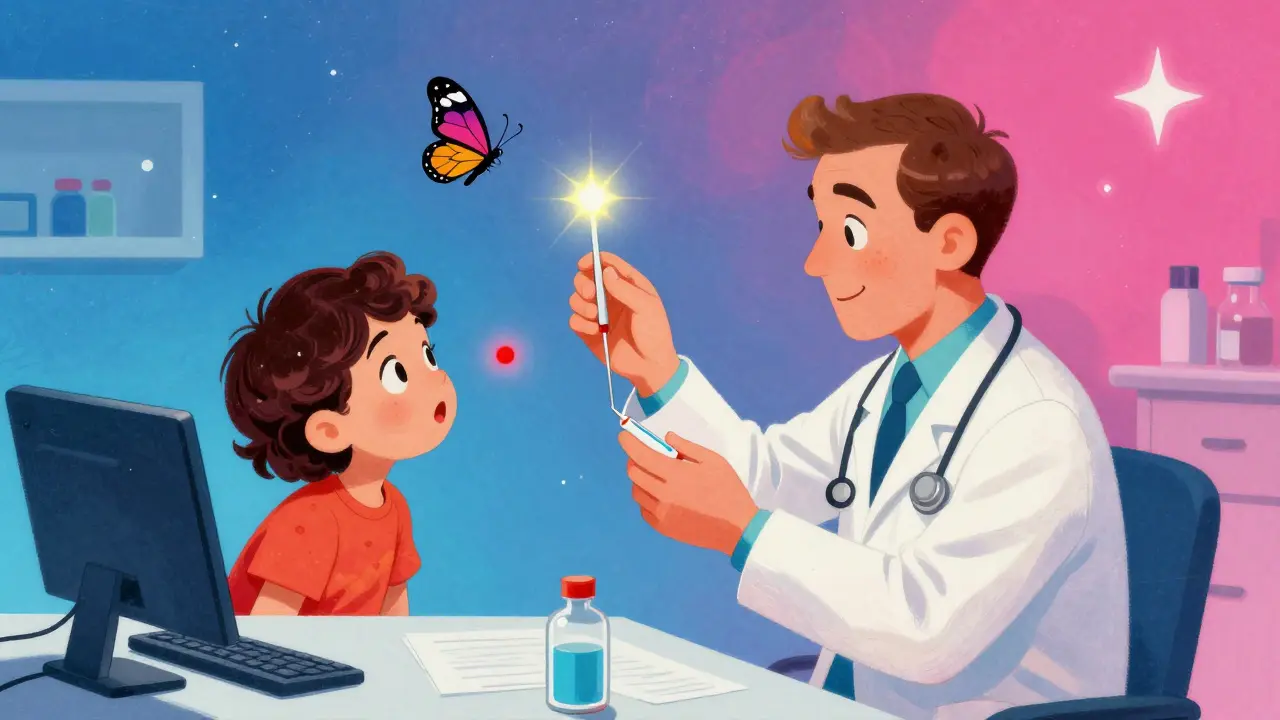
If you’re unsure whether you’re truly allergic, testing is the only way to know for sure. And it’s safer than you think. The standard test has two parts:- Penicillin skin testing: A tiny amount of penicillin (and related molecules) is placed under your skin with a tiny needle. If you’re allergic, a red, itchy bump appears within 15-20 minutes. This test is over 95% accurate for IgE-mediated allergies.
- Oral challenge: If the skin test is negative, you’re given a small dose of amoxicillin (usually 250 mg) and watched for at least an hour. No reaction? You’re not allergic.
What Happens After Testing?
If you test negative, your medical record should be updated. No more “penicillin allergy” in your file. That means next time you have an infection, your doctor can prescribe the right drug-fast, cheap, and effective. And it’s not just about you. When hospitals run de-labeling programs-where they systematically test and remove false allergy labels-they see fewer cases of drug-resistant infections. One study found that for every 112-124 patients tested, one surgical site infection was prevented. That’s a win for the whole healthcare system.What You Should Do Now
If you’ve been told you’re allergic to penicillin, here’s what to do:- Check your medical records. Is “penicillin allergy” listed? If so, how was it determined? Was it based on a childhood rash? A stomach ache?
- If your reaction was mild or happened more than 5 years ago, ask your doctor about getting tested. Many primary care clinics now offer penicillin allergy evaluations.
- If you’ve had a severe reaction (anaphylaxis, swelling, breathing issues), see an allergist. Don’t assume the label is permanent.
- Don’t wear a medical alert bracelet unless you’ve had confirmed anaphylaxis. False alerts can lead to worse treatment in emergencies.

Katelyn Slack
January 4, 2026 AT 17:12i thought i was allergic to penicillin cause i got a rash when i was 7… turns out it was just heat rash and the doctor was in a hurry. so glad i got tested last year. no more ‘allergy’ in my file 😅
Melanie Clark
January 5, 2026 AT 06:45they’re hiding the truth… big pharma doesn’t want you to know that penicillin testing is a scam to sell you expensive antibiotics. they profit off fear. your ‘allergy’ was probably caused by glyphosate in your food. the system is rigged. don’t trust your doctor. check your blood for mold toxins. they’re not telling you this
Tiffany Adjei - Opong
January 5, 2026 AT 10:56okay but let’s be real - if you had a rash at 12 and haven’t taken penicillin since, you’re not allergic. you’re just someone who got mislabeled by a doctor who didn’t feel like explaining the difference between ‘itchy’ and ‘anaphylactic.’ i’m 34 and got tested last year - turned out i was fine. now i take amoxicillin like it’s candy. why did it take 22 years to figure this out?
Stuart Shield
January 7, 2026 AT 00:59the sheer elegance of this piece - it’s not just medical info, it’s a quiet rebellion against decades of lazy diagnosis. i used to think ‘penicillin allergy’ was some sacred label, like a birthright. turns out it’s just a scribble on a chart from a 1987 ER visit after i ate a bad taco. now i feel like i’ve been freed from a ghost. thank you for writing this. the healthcare system needs more of this clarity
Tom Swinton
January 8, 2026 AT 01:20OMG I CRIED READING THIS!!! I’VE BEEN TOLD I’M ALLERGIC SINCE I WAS 5 AND I’VE HAD TO TAKE CLINDAMYCIN FOR EVERY INFECTION - IT KILLED MY GUT, I GOT C. DIFF THREE TIMES, I WAS IN THE HOSPITAL FOR WEEKS - AND IT WAS ALL BECAUSE OF A RASH I GOT WHEN I WAS 7?!?!?! I JUST GOT TESTED LAST MONTH AND I’M NOT ALLERGIC AT ALL!!! NOW I CAN TAKE THE RIGHT DRUGS, I’M NOT SCARED TO GO TO THE DOCTOR, AND MY INSURANCE ISN’T BANKRUPTING ME!!! THIS IS THE MOST IMPORTANT THING I’VE EVER READ IN MY LIFE!!!
Saylor Frye
January 9, 2026 AT 01:05interesting how the medical establishment still relies on 1950s diagnostic logic. the fact that we’re still using ‘patient self-report’ as a primary diagnostic tool for allergies is… quaint. in an age of genomic sequencing, we’re still treating penicillin allergies like astrology. the real scandal is that no one’s been held accountable for the mislabeling epidemic
Kiran Plaha
January 10, 2026 AT 15:34in india we don’t have much access to testing. my aunt was told she’s allergic because she threw up once. now she gets weaker drugs and gets sick longer. i hope this changes soon. maybe someone can start a free testing clinic here?
Kelly Beck
January 11, 2026 AT 18:56Y’ALL I JUST GOT MY RESULTS BACK AND I’M NOT ALLERGIC 😭🎉 I’VE BEEN AFRAID OF PENICILLIN SINCE I WAS 6 AND NOW I CAN TAKE AMOXICILLIN FOR MY SINUS INFECTION WITHOUT PANICKING!!! I’M SO HAPPY I WANT TO HUG MY DOCTOR AND BUY HER A CAKE 🎂💖 THANK YOU FOR THIS ARTICLE - IT CHANGED MY LIFE!!!
Isaac Jules
January 11, 2026 AT 21:37so let me get this straight - you’re telling me people are dying from superbugs because doctors are too lazy to test for allergies? wow. that’s not negligence. that’s malpractice on a national scale. and you wonder why healthcare is broken? it’s because we treat patients like paperwork, not people. this isn’t science - it’s bureaucratic negligence dressed up as medicine
Amy Le
January 13, 2026 AT 16:41penicillin? the american drug cartel’s favorite tool for control. they want you dependent on expensive alternatives so you keep paying. the CDC? a puppet of Big Pharma. don’t be fooled. real allergies are rare - but so are honest doctors. your ‘allergy’ is a marketing ploy. wake up.
Pavan Vora
January 14, 2026 AT 15:06in india, we don’t even have penicillin allergy testing in most hospitals… my cousin got labeled allergic because he got a rash after eating mangoes - yes, mangoes - and the doctor just wrote ‘penicillin allergy’ because he was tired. now he can’t get any good antibiotics. i wish we had this awareness here. maybe someone should translate this into Hindi
Indra Triawan
January 14, 2026 AT 17:16is it possible that our entire concept of immunity is a social construct? if we stop believing in allergies, do they cease to exist? perhaps penicillin is not the enemy - our fear of it is. the body remembers trauma, not molecules. maybe we are allergic to the idea of being wrong
Ashley S
January 15, 2026 AT 06:16so you’re saying people are dying because doctors can’t write properly? this is why america is falling apart. no one takes responsibility anymore. someone should sue every doctor who ever misdiagnosed an allergy. this is a national disgrace.
Jeane Hendrix
January 15, 2026 AT 22:29as someone who works in clinical informatics, i can confirm: the ‘penicillin allergy’ flag is one of the most persistent and dangerous EHR artifacts out there. it auto-populates across systems, overrides clinical judgment, and triggers unnecessary antibiotic stewardship protocols. the data shows that 90% of these flags are false, yet 70% of providers still avoid beta-lactams anyway. it’s not ignorance - it’s algorithmic inertia. we need automated de-labeling triggers triggered by negative test results. this isn’t just a patient issue - it’s a systems failure