
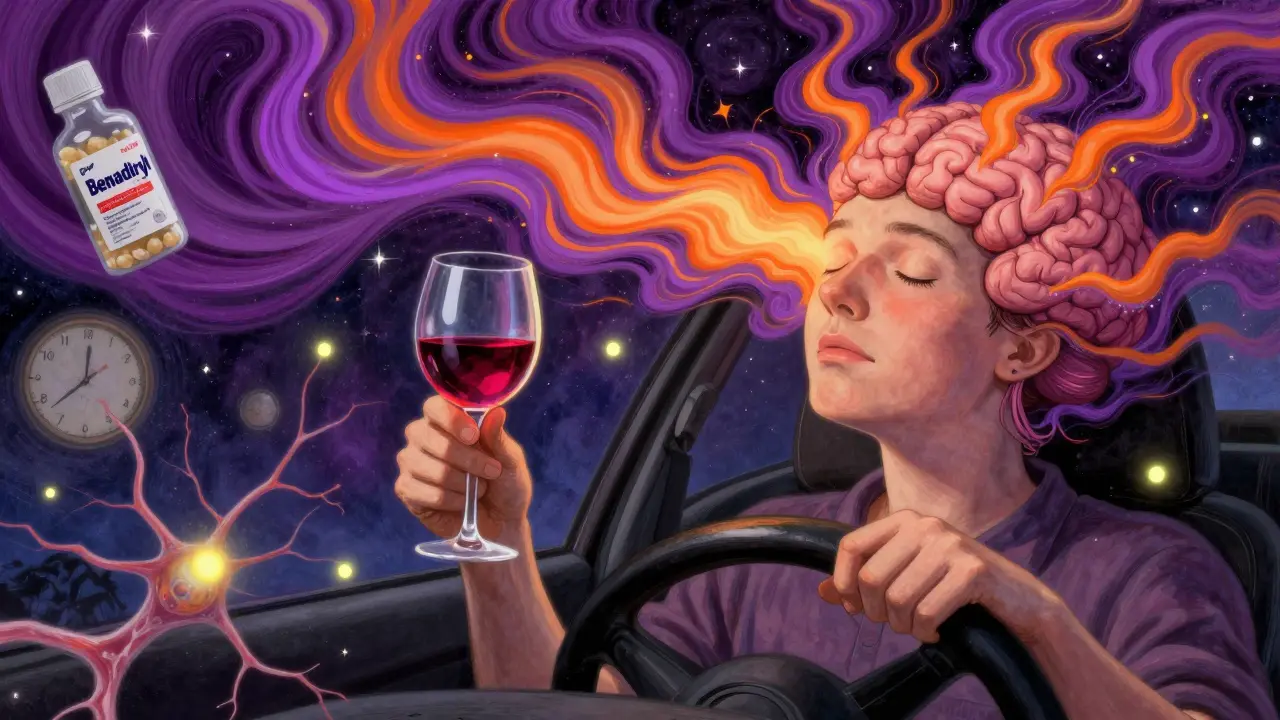
It’s a common scenario: you’ve got a stuffy nose from allergies, so you pop a Benadryl before heading out for drinks with friends. Or maybe you’re taking Claritin daily and figure one glass of wine won’t hurt. But here’s the truth-mixing antihistamines and alcohol isn’t just a bad idea. It’s a silent, dangerous combo that can turn a normal night into a medical emergency.
Why Drowsiness Gets Worse Than You Think
Both alcohol and antihistamines slow down your brain. Alcohol does it by boosting GABA, a chemical that calms your nervous system. First-generation antihistamines like diphenhydramine (the active ingredient in Benadryl) block histamine in your brain, which is what makes you sleepy. When you put them together, they don’t just add up-they multiply. Studies show the drowsiness effect can jump by up to 300% compared to either substance alone. That’s not exaggeration. That’s science.Imagine driving home after two drinks and a Benadryl. Your reaction time drops by nearly half compared to just drinking. That’s the same as having a blood alcohol level of 0.12%-well over the legal limit of 0.08%. And you might not even feel drunk. That’s the worst part. You think you’re fine. But your brain is barely working.
Not All Antihistamines Are the Same
There are two big types of antihistamines: first-generation and second-generation. The difference isn’t just marketing. It’s life or death when alcohol’s involved.First-generation antihistamines-like diphenhydramine (Benadryl), chlorpheniramine (Chlor-Trimeton), and hydroxyzine (Vistaril)-were made in the 1940s. They’re cheap, effective, and cross right into your brain. About half of people who take them feel sleepy. Add alcohol? That number jumps to 60% or higher. These are the ones behind most ER visits linked to this combo.
Second-generation antihistamines-like loratadine (Claritin), cetirizine (Zyrtec), and fexofenadine (Allegra)-were designed to avoid the brain. They’re called “non-drowsy” for a reason. Alone, they cause drowsiness in only 10-15% of users. But when you mix them with alcohol? That number climbs to 30-45%. Yes, even the “safe” ones aren’t safe with booze.
Here’s what the numbers look like side by side:
| Antihistamine | Drowsiness Alone | Drowsiness with Alcohol |
|---|---|---|
| Benadryl (diphenhydramine) | 50-60% | 70-85% |
| Claritin (loratadine) | 10-15% | 30-35% |
| Zyrtec (cetirizine) | 15-20% | 40-45% |
| Allegra (fexofenadine) | 2-5% | 15-20% |
Even Allegra, the least sedating, still triples your risk of drowsiness with alcohol. There’s no such thing as zero risk here.
What Happens in Your Body
Your liver tries to process both alcohol and antihistamines at the same time. It uses the same enzymes-CYP3A4 and CYP2D6-to break them down. But alcohol clogs those enzymes. So instead of clearing out quickly, the antihistamine stays in your system 25-40% longer. That means you’re getting a stronger, longer-lasting hit of sedation than you expect.And it’s not just about sleepiness. That same brain fog can make you forget to breathe properly, especially if you’re older or have asthma. In 2021, the CDC found that 28% of traffic deaths involved drivers with both alcohol and sedating medications in their system. That’s not just drowsy. That’s deadly.

Who’s at Highest Risk?
It’s not just young people who party. Older adults face the biggest danger. People over 65 process alcohol and drugs slower. Their brains are more sensitive to CNS depressants. The FDA says they experience 2.3 times more brain slowing from this combo than younger adults. That means a single drink and a Benadryl could leave them confused, unsteady, and at high risk of falling.One 2022 study found older adults who mixed these substances had a 75% higher chance of hip fractures from falls. And it’s not just physical. Many report memory loss, confusion, or feeling “out of it” for hours after. One Reddit user, 68, wrote: “I took my Zyrtec and had a glass of wine. Next thing I knew, it was 3 a.m. and I was on the floor. I didn’t remember how I got there.”
It’s Not Just Allergy Pills
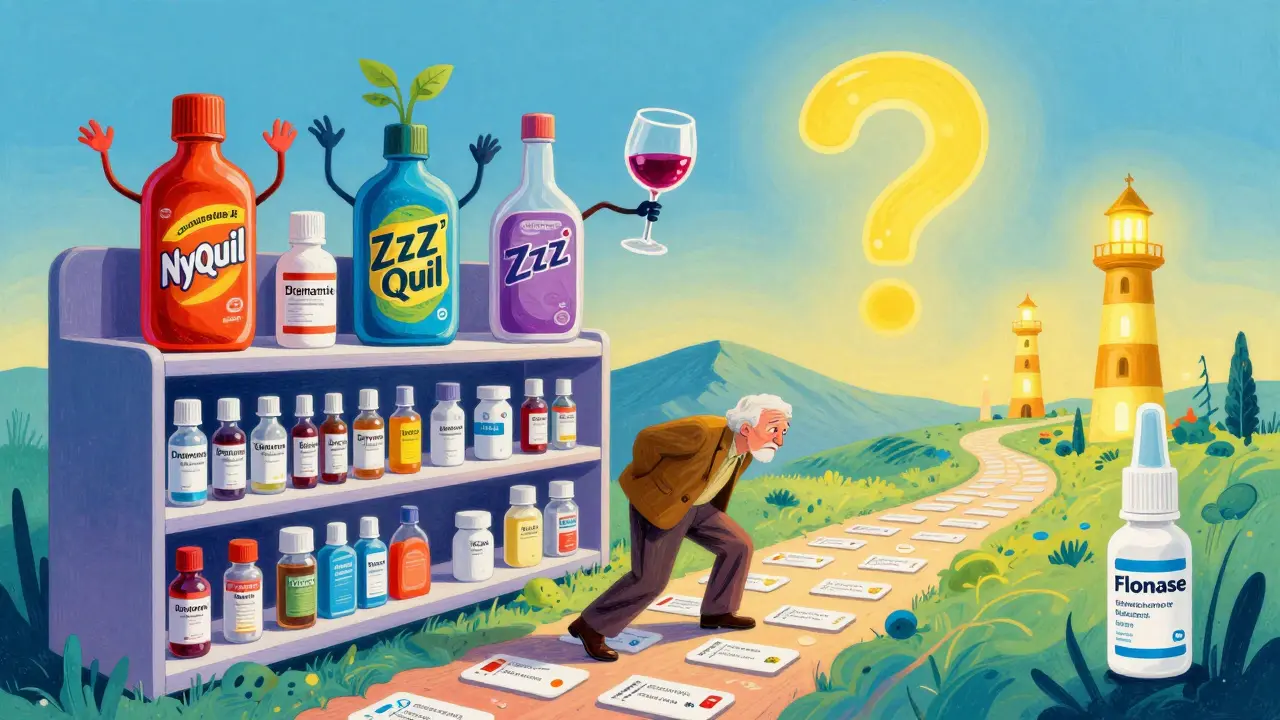
Here’s where people get caught off guard. Diphenhydramine isn’t just in allergy meds. It’s in over 70 over-the-counter products: sleep aids like NyQuil and ZzzQuil, cold and flu remedies like Dimetapp, motion sickness pills like Dramamine, and even some pain relievers. You might not even realize you’re taking an antihistamine.And the labels? They say “may cause drowsiness.” Not “do not mix with alcohol.” That’s not enough. A 2023 Consumer Reports survey found 63% of antihistamine users drink within 12 hours of taking their meds. Only 28% knew the risk. That’s a dangerous gap between what people think and what’s true.
What Should You Do Instead?
If you need allergy relief and plan to drink, here’s what works:- Switch to a nasal spray like Flonase or Nasacort. These don’t enter your bloodstream the same way. No brain fog. No interaction with alcohol.
- Try Singulair (montelukast). It’s a leukotriene inhibitor. Works for seasonal allergies. No drowsiness. No alcohol interaction.
- If you’re using Benadryl for sleep, find a better solution. It’s not meant for long-term use. Talk to your doctor about safer sleep aids if needed.
And if you must take a first-generation antihistamine? Wait at least 12 to 16 hours before drinking. For second-gen, wait 8 to 12. But even then, start slow. Your body might be slower than average. Your tolerance isn’t a safety net.
When to Seek Help
If you or someone else takes this combo and experiences:- Extreme drowsiness or trouble staying awake
- Slurred speech or confusion
- Difficulty breathing
- Loss of coordination or fainting
Call emergency services immediately. This isn’t just “feeling tired.” This is CNS depression. It can lead to coma or death.
Even if you feel fine, don’t drive. Don’t operate machinery. Don’t make important decisions. Your brain is impaired, even if you don’t feel it.
What’s Coming Next?
Pharmaceutical companies are working on third-generation antihistamines like bilastine, which show almost no brain penetration-even with alcohol-in European trials. But these aren’t available in the U.S. yet. And even if they were, experts warn: no antihistamine can be considered completely safe with alcohol.The bottom line? If you’re taking any antihistamine, assume alcohol will make you drowsy. And if you’re drinking, assume your meds will make you more impaired than you think. Don’t gamble with your brain. Don’t risk your life for a drink. There are safer ways to manage allergies.
Can I have one drink with Claritin or Zyrtec?
Even "non-drowsy" antihistamines like Claritin and Zyrtec can cause increased drowsiness when mixed with alcohol. While the risk is lower than with Benadryl, studies show drowsiness rates jump from 10-20% to 30-45% when combined with even one drink. You might not feel drunk, but your reaction time, judgment, and coordination are still impaired. It’s not worth the risk.
How long should I wait after taking Benadryl before drinking?
Wait at least 12 to 16 hours after your last dose of Benadryl before consuming alcohol. Diphenhydramine can stay in your system for up to 24 hours, especially in older adults or those with liver issues. Even if you feel awake, your body is still processing it. Don’t rely on how you feel-rely on the clock.
Is it safe to take antihistamines after drinking?
No. Your body is still processing alcohol when you take an antihistamine. Alcohol slows down how fast your liver breaks down the drug, causing higher levels to build up in your blood. This increases sedation and raises the risk of overdose. Wait until alcohol is fully cleared-typically 6 to 8 hours for one drink, longer for more.
Can antihistamines and alcohol cause breathing problems?
Yes. Both substances depress the central nervous system, which controls breathing. When combined, they can slow or even stop your breathing, especially in older adults, people with asthma, or those taking higher doses. This is why emergency rooms see cases of severe respiratory depression from this mix. It’s rare, but it happens-and it’s fatal.
What are safer alternatives to antihistamines for allergies?
Nasal corticosteroids like Flonase, Nasacort, or Rhinocort are excellent alternatives. They work locally in the nose and don’t cause drowsiness or interact with alcohol. Leukotriene blockers like Singulair are another option, though they take several days to work. For quick relief, saline nasal rinses or allergy eye drops are safe with alcohol. Always check with your doctor before switching meds.
Do prescription antihistamines have stronger warnings than OTC ones?
Yes. Prescription antihistamines carry FDA-required black box warnings about alcohol interactions. OTC products only have small print like “may cause drowsiness.” That’s not enough. Many people don’t realize they’re taking a first-generation antihistamine because it’s hidden in cold, flu, or sleep meds. Always read the active ingredients-look for diphenhydramine, chlorpheniramine, or hydroxyzine.
Joanna Brancewicz
January 8, 2026 AT 09:36First-gen antihistamines + alcohol = CNS depression cocktail. CYP3A4 saturation, prolonged half-life, additive GABAergic effects. No gray area. Even Zyrtec at 40% drowsiness risk isn't 'safe'-it's statistically dangerous. Stop normalizing this.
Molly Silvernale
January 10, 2026 AT 00:21It’s like your brain’s throwing a silent rave-lights out, bass thumping, no one dancing… just… floating. You think you’re fine because your feet haven’t left the floor, but your thoughts? They’re already in orbit. And the worst part? You don’t even know you’re gone until you wake up on the bathroom floor at 3 a.m., wondering why your socks are in the fridge.
Alcohol doesn’t just ‘add’ to the drowsiness-it hijacks the whole system. Like letting a toddler loose in a nuclear plant and calling it ‘a little extra fun.’
We treat this like a party trick. Like it’s cool to be ‘that guy’ who took Benadryl before tequila night. But it’s not cool. It’s a slow-motion car crash you didn’t see coming because your brain forgot how to process danger.
And the labels? ‘May cause drowsiness.’ Like a warning on a banana peel: ‘Caution: slippery surface.’ No. This isn’t a slip. This is a full-body collapse. We need bigger letters. Red. Flashing. Screaming.
It’s not about willpower. It’s about biochemistry. Your liver isn’t a bouncer. It’s a tired janitor trying to clean up two spilled vats of poison at once.
And don’t even get me started on NyQuil. That’s not medicine. That’s a sedative disguised as a holiday tradition. ‘Here, grandma, have some sleep aid and a glass of wine.’
It’s not just risky. It’s a cultural blind spot. We’ve normalized it so hard that we don’t even call it what it is: a quiet, invisible, domestic tragedy waiting to happen.
I’ve seen it. A friend. 62. Took Claritin. Had one glass. Forgot her own name. Walked into traffic. Didn’t remember how she got there. That’s not a story. That’s a statistic with a heartbeat.
We need to stop treating this like a ‘maybe’ and start treating it like a ‘hell no.’
Luke Crump
January 11, 2026 AT 09:47Oh wow, another fear-mongering article from the medical-industrial complex. You’re telling me I can’t have a single beer with my allergy meds? What’s next? No coffee with Advil? No water with oxygen? This is just Big Pharma trying to sell you more expensive ‘non-drowsy’ nonsense. Benadryl’s been around since 1946. Millions have taken it with alcohol. And I’m still typing this. You’re exaggerating to get clicks.
Also, ‘third-generation antihistamines’? That’s just marketing. Everything’s ‘next-gen’ now. Wake up. People have been mixing these for decades. If it were that dangerous, we’d all be dead by now.
Aubrey Mallory
January 12, 2026 AT 22:42Luke, your comment is reckless. And it’s not just about you. You’re putting others at risk-your passengers, your coworkers, the people on the road who didn’t choose to be part of your experiment. This isn’t about ‘Big Pharma.’ It’s about your brain slowing down while you think you’re fine. That’s not bravery. It’s ignorance with consequences.
And if you think ‘millions have done it’ means it’s safe, then let’s also say ‘millions have driven drunk’-and we still outlawed it. Because science doesn’t care about tradition. It cares about survival.
Stop romanticizing risk. This isn’t a debate. It’s a public health emergency disguised as a lifestyle choice.
Lois Li
January 13, 2026 AT 18:33Just wanted to say I read this after taking Zyrtec and having a glass of wine last night. I didn't feel drunk but I did feel weirdly slow. Like my thoughts were underwater. I didn't drive but I also didn't do anything important. Just sat and stared at the wall for an hour. I didn't know it could happen with Zyrtec. I thought 'non-drowsy' meant safe. Thanks for the clarity. I'll wait 12 hours now. I'm sorry I ever thought it was fine.
christy lianto
January 14, 2026 AT 11:01My mom took Benadryl and had a glass of wine after dinner. She fell asleep standing up. Then woke up on the kitchen floor. Broke her wrist. Didn’t remember how she got there. She’s 71. This isn’t theoretical. It’s happening to people we love. Please, if you’re reading this and you take antihistamines-stop. Just stop. Your liver doesn’t owe you a drink.
Ken Porter
January 15, 2026 AT 23:29America’s over-medicated. Everyone’s scared of a little drowsiness. Just don’t drink if you’re on meds. Problem solved. Stop making everything a crisis.
swati Thounaojam
January 17, 2026 AT 09:30i live in india and here people mix all kinds of med with alcohol. no one cares. but this article made me think. i took cetirizine and beer last week and felt so sleepy i slept 8 hours straight. i thought it was just tiredness. now i know. thanks.
Annette Robinson
January 18, 2026 AT 12:43Thank you for writing this with such care. I’ve been a nurse for 18 years, and I’ve seen the aftermath of this combo too many times. Elderly patients. Young adults. Even people who thought they were being careful. It’s not about judgment. It’s about awareness. Please share this. Someone’s life could depend on it.