
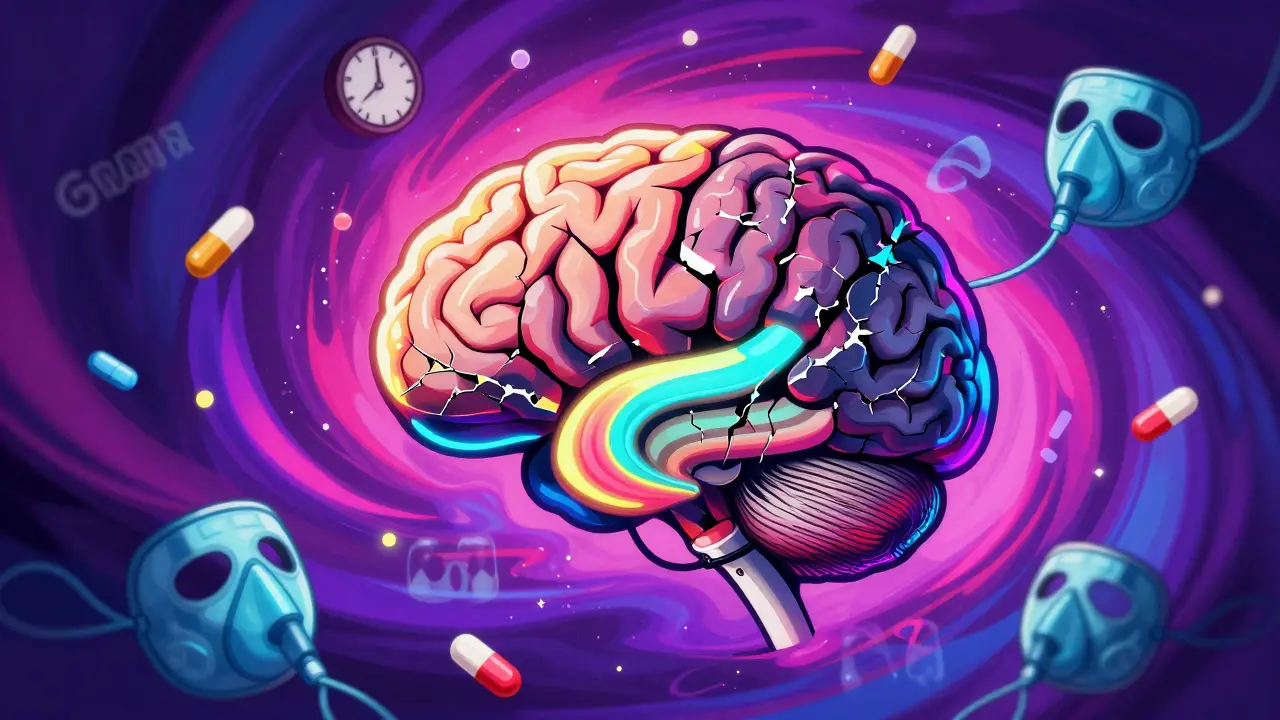
When someone survives a medication overdose, the emergency room is just the beginning - not the end. Many assume that if you wake up after naloxone or stomach pumping, you’re okay. But the truth is far more serious. Even if you don’t die, your body and brain may be permanently changed. The damage doesn’t always show up right away. Sometimes, it creeps in months later - in the form of memory loss, confusion, tremors, or depression that won’t go away.
Brain Damage Starts in Minutes
Most medication overdoses - especially with opioids, benzodiazepines, or even high doses of stimulants - cause breathing to slow or stop. That means your brain isn’t getting oxygen. And without oxygen, brain cells begin dying. Just four minutes without adequate oxygen can cause irreversible damage. This isn’t theoretical. Studies show that survivors who were without oxygen for more than 10 minutes are over three times more likely to suffer permanent cognitive problems than those who got help within five minutes.
What does that look like in real life? Sixty-three percent of survivors report lasting memory issues - both short-term and long-term. Over half struggle with concentration. Nearly 40% have trouble controlling movements, walking steadily, or holding objects. One in three can’t make simple decisions anymore. And 29% have trouble speaking clearly. These aren’t temporary side effects. They’re brain injuries. The same kind you’d see after a car crash or stroke - just caused by a drug, not impact.
Toxic Changes in the Brain’s Wiring
It’s not just about oxygen. The drugs themselves wreck the brain’s chemical balance. Opioids flood the system with artificial signals that shut down natural neurotransmitters. Benzodiazepines over-sedate the nervous system. Stimulants burn out dopamine pathways. After an overdose, even if you stop using, your brain doesn’t reset. A 2022 report from the National Institute on Drug Abuse found that 78% of overdose survivors had permanent changes in their neurotransmitter systems. That means the brain’s natural ability to feel pleasure, manage stress, or stay focused is damaged.
That’s why so many survivors say they feel "foggy" - not tired, not drunk, but mentally stuck. One Reddit user, two years after an oxycodone overdose, wrote: "I can’t remember conversations from 10 minutes ago." Another, after taking 30 Xanax at once, described her daily life as "walking through fog." These aren’t metaphors. They’re clinical symptoms of chemical brain injury.
Organs Don’t Escape Unscathed
Your brain isn’t the only organ at risk. Overdoses cause multi-system trauma. Opioid overdoses trigger respiratory depression, which starves your kidneys, heart, and liver of oxygen. About 22% of non-fatal overdose survivors develop kidney problems. 18% suffer heart complications like irregular rhythms or high blood pressure. 15% get fluid in their lungs. 8% have strokes. Even if you survive the initial event, your organs may never fully recover.
Paracetamol (acetaminophen) overdoses are especially sneaky. You might feel fine for two days. Then, suddenly, your liver starts failing. By the time symptoms appear - nausea, yellow skin, confusion - it’s often too late. A 2022 study in the Journal of Hepatology found that 45% of survivors who waited more than eight hours for treatment ended up with chronic liver damage, including cirrhosis. There’s no second chance once the damage is done.
The Hidden Mental Health Crisis
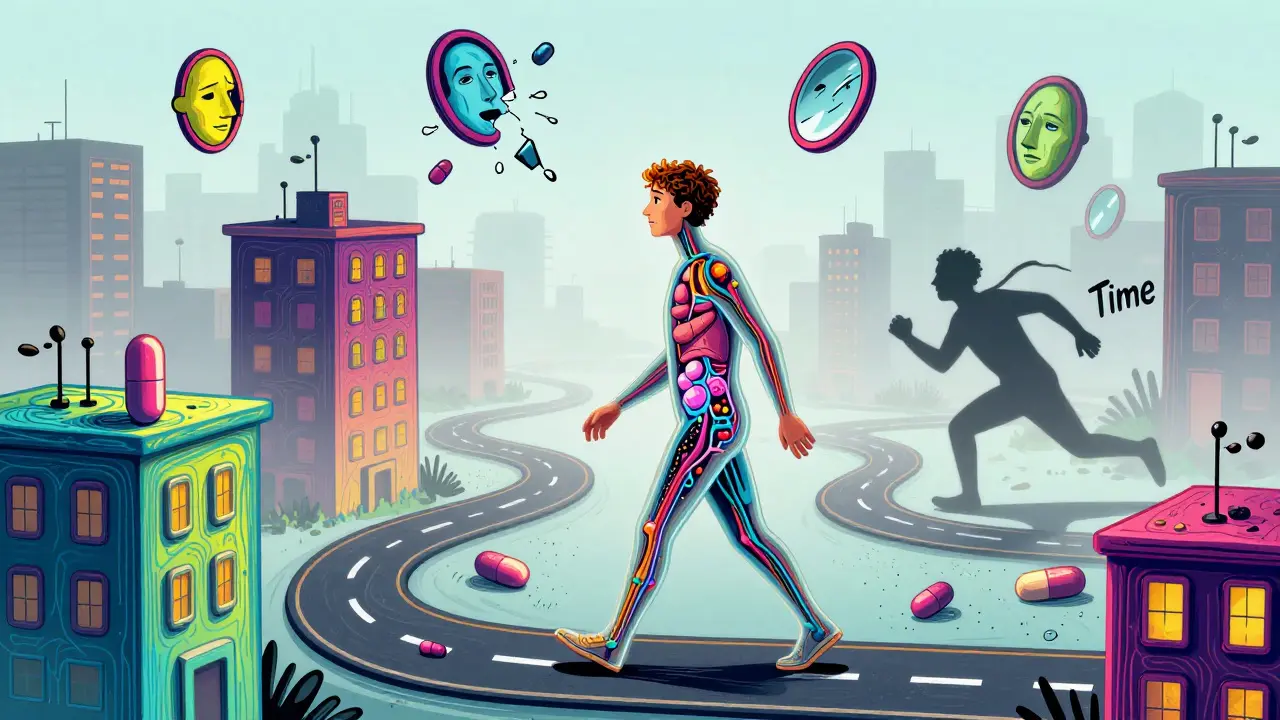
Surviving an overdose isn’t just a physical trauma - it’s a psychological one. Nearly three out of four survivors develop a diagnosable mental health condition afterward. Forty-one percent get PTSD from the terror of nearly dying. Thirty-eight percent develop major depression. Thirty-three percent battle chronic anxiety. These aren’t just reactions to life circumstances. They’re biological consequences of brain injury and chemical disruption.
And here’s the worst part: only 28% of overdose survivors get proper mental health care within 30 days of leaving the hospital. The Substance Abuse and Mental Health Services Administration found that overdose survivors are 4.7 times more likely to develop new depression and 3.2 times more likely to develop anxiety than other substance users. And these conditions don’t fade after a few months. In over half of cases, they last longer than a year.
Delayed Care = Permanent Damage
Time is the enemy in overdose recovery. For opioids, giving naloxone within 4 to 5 minutes can prevent brain injury. But in rural areas, the average time to treatment is over 22 minutes. For paracetamol, the critical window to prevent liver failure is 8 hours. Yet 32% of patients arrive after that window closes because they didn’t feel sick yet.
Even when people make it to the hospital, care is inconsistent. Only 47% of emergency rooms document follow-up plans for long-term effects. Over 40% of survivors are discharged without a single referral to neurology, psychiatry, or rehab. The system treats overdose like a one-time emergency - not the start of a lifelong health journey.

The Cost of Being "Lucky"
Surviving an overdose doesn’t mean you’re out of the woods. It means you’ve entered a new phase of chronic illness. The average lifetime healthcare cost for someone with permanent brain damage from an overdose is over $1.2 million. That’s more than four times the cost for someone who recovers fully. Insurance doesn’t cover everything. Many survivors lose jobs because they can’t focus. Relationships break down because they forget names or get angry for no reason. Some can’t drive anymore. Others need help bathing or eating.
And the infrastructure to help them? It’s barely there. Only 31% of U.S. counties have access to specialized neurological rehab for overdose survivors. Federal funding for long-term brain injury research only started in 2023 - and even then, it’s underfunded by 87% compared to expert recommendations.
What Can Be Done?
There’s no magic fix. But there are steps that can reduce long-term harm:
- Act fast. If someone is unresponsive, not breathing, or has pinpoint pupils, give naloxone immediately - even if you’re unsure. Call 911 right away.
- Don’t assume recovery = healing. Even if someone wakes up, they need neurological and psychological screening within 72 hours.
- Push for follow-up care. Ask for referrals to neurologists, psychiatrists, and addiction specialists before leaving the hospital.
- Know the signs. Memory loss, confusion, balance issues, mood swings, or trouble speaking months after an overdose aren’t "just stress." They’re signs of brain injury.
Medication overdose isn’t just a statistic. It’s a life-altering event that leaves behind invisible scars. The body can heal from many injuries. But when the brain is starved of oxygen or poisoned by chemicals, recovery is never guaranteed. The best way to avoid these long-term effects? Never overdose. But if it happens - get help immediately, and never stop asking for care after you leave the ER.
Can you recover fully from a medication overdose?
Some people do recover with no lasting effects, especially if help came quickly and the overdose was mild. But for many, especially those with prolonged oxygen deprivation or delayed treatment, permanent damage occurs. Memory loss, brain fog, motor issues, and mental health conditions often persist for years - or for life. Recovery isn’t guaranteed, even if you survive.
How long after an overdose can brain damage appear?
Brain damage happens during the overdose itself - within minutes of oxygen loss. But the symptoms often show up days, weeks, or months later. Memory problems, difficulty concentrating, or balance issues might not be noticed until someone tries to return to work or school. Liver damage from paracetamol can take 48-72 hours to become visible. The delay makes it easy to miss - and harder to treat.
Is it possible to prevent long-term damage after an overdose?
Yes - but only if you act fast. For opioids, giving naloxone within 4-5 minutes of respiratory arrest can prevent brain injury. For paracetamol, getting treatment within 8 hours can stop liver failure. After surviving, getting a neurological and psychiatric evaluation within 72 hours improves outcomes. Long-term rehab, therapy, and support groups also help manage ongoing symptoms.
Why don’t hospitals always check for long-term effects?
Most emergency rooms are designed to handle acute crises - not chronic conditions. Overdose is treated as a one-time event, not the start of a lifelong health issue. Only 47% of ERs document follow-up care plans. Many staff aren’t trained to recognize the signs of brain injury or mental health decline after overdose. And without funding or protocols, long-term care often falls through the cracks.
Are certain medications more likely to cause long-term damage?
Yes. Opioids cause brain damage from oxygen deprivation. Benzodiazepines lead to persistent cognitive impairment. Stimulants like Adderall can cause lasting heart and psychiatric problems. Paracetamol (acetaminophen) destroys the liver if not treated within 8 hours. Each class of drug has its own pattern of long-term harm - and none are safe in overdose.
Lauren Wall
January 21, 2026 AT 16:42This is why people need to stop treating overdoses like a joke. You don’t just ‘get lucky’ and walk away. Your brain doesn’t reboot like a phone. I’ve seen it firsthand - my cousin forgot how to spell her own name after one night. No recovery. Just silence.
Philip House
January 22, 2026 AT 15:13Let’s be honest - most of these cases are just poor life choices. If you’re dumb enough to OD, you shouldn’t expect taxpayer-funded rehab for the rest of your life. America’s already broke from people who think consequences don’t apply to them.
Mike P
January 24, 2026 AT 07:40Bro, you’re telling me some guy took 30 Xanax and now he can’t remember his kid’s birthday? That’s not a tragedy - that’s a consequence. But here’s the real problem: hospitals discharge these people like they just had a cold. No follow-up. No brain scans. No therapy. We treat overdoses like a traffic ticket - slap a wrist and send ‘em on their way. Meanwhile, their hippocampus is toast. And yeah, it’s worse in the red states where they cut mental health funding to build more prisons. Pathetic.
Jasmine Bryant
January 24, 2026 AT 16:48I’m a nurse in rural Ohio and I see this every week. People come in after an overdose, get naloxone, and are discharged with a pamphlet. No neuro consult. No depression screen. No follow-up call. One guy came back three months later with tremors and couldn’t tie his shoes. We didn’t even know he’d OD’d before. The system is broken. We need mandatory 72-hour brain scans post-overdose - it’s not optional anymore.
Margaret Khaemba
January 25, 2026 AT 12:04As someone from Kenya, I’m shocked how little we talk about this in the U.S. In my village, if someone overdoses, the whole community helps them heal - not just medically, but emotionally. Here, it’s like you’re a ghost after you survive. No one wants to talk about the invisible wounds. We need more cultural awareness, not just medical protocols. Healing isn’t just pills and scans - it’s belonging.
Malik Ronquillo
January 27, 2026 AT 06:05So basically, if you’re dumb enough to OD, you’re stuck with brain damage forever? Cool. Guess I won’t be taking any more Advil. 😅
Brenda King
January 28, 2026 AT 02:18My brother OD’d on oxycodone. He’s been fine for two years - no memory loss, no tremors, works full time. So not everyone gets wrecked. But yeah, if you wait too long for help? Yeah, it’s bad. Don’t wait. Call 911. Always. 🙏
Keith Helm
January 29, 2026 AT 14:38It is imperative that public health policy be restructured to address the neurotoxicological sequelae of non-fatal pharmacological overdoses. The current paradigm is clinically inadequate and ethically indefensible.
Daphne Mallari - Tolentino
January 31, 2026 AT 05:00One cannot help but observe the tragic commodification of suffering in contemporary American discourse. The reduction of complex neurobiological trauma into viral Reddit posts is not merely reductive - it is a form of cultural necrophilia.
arun mehta
February 1, 2026 AT 06:48India has same problem but no one talks. My cousin took too much painkillers - now he can't remember his wife's birthday. Hospital gave him medicine and said "go home". No brain check. No counseling. We need more awareness. 🇮🇳💔
Ryan Riesterer
February 1, 2026 AT 20:44Neurocognitive deficits post-overdose are primarily mediated by hypoxic-ischemic injury and glutamatergic excitotoxicity, with secondary neuroinflammatory cascades. The 78% neurotransmitter dysregulation statistic aligns with recent fMRI studies on opioid-induced synaptic pruning. However, the lack of longitudinal neuroimaging cohorts in the U.S. makes clinical generalizations premature.
Akriti Jain
February 2, 2026 AT 17:08Or… what if the whole thing is a lie? What if the brain damage stats are inflated to scare people away from meds? What if Big Pharma wants you to think you’re broken so you keep buying their expensive "recovery" programs? 🤔💊👁️
shivani acharya
February 3, 2026 AT 16:38I knew this girl who OD’d on Adderall. She said she was just trying to study. Now she can’t remember her own birthday, cries for no reason, and says she feels like she’s underwater all the time. Her mom says the hospital didn’t even test her liver. I swear, if you don’t have money, you just die slowly and nobody notices. They just call it "bad luck". But it’s not luck. It’s neglect. And it’s everywhere. I’ve seen it. I’ve lived it. And now I’m scared to take anything - even ibuprofen. 😭
Sarvesh CK
February 4, 2026 AT 22:05There is a profound philosophical tension here between individual responsibility and societal obligation. While personal agency must be acknowledged - one does choose to consume - the infrastructure of care, the absence of accessible mental health services, and the normalization of pharmaceutical overuse are systemic failures. To blame the victim is to ignore the architecture of suffering. Healing requires both compassion and structural reform. We must ask not only "why did this happen?" but also "how did we allow this to be possible?"