
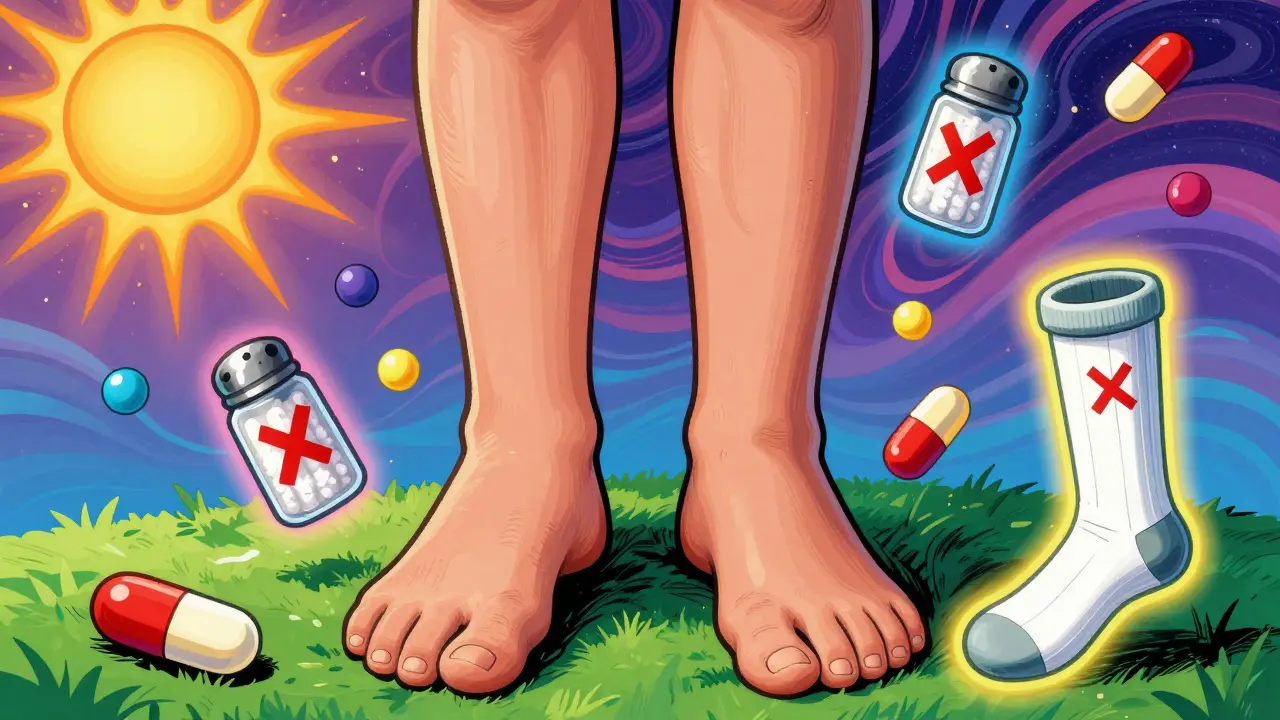
When your kidneys start to fail, fluid doesn’t just disappear-it builds up. You notice it in your ankles, your legs, sometimes even your face. This swelling, called edema, isn’t just uncomfortable. It’s a warning sign your body is struggling to balance fluid and salt. For people with chronic kidney disease (CKD), edema is common, especially in stages 3 and beyond. And managing it isn’t about one magic fix. It’s about three things working together: diuretics, salt restriction, and compression therapy.
Why Edema Happens in CKD
Your kidneys don’t just filter waste. They also control how much water and sodium stays in your blood. When kidney function drops below 60 mL/min/1.73m² (stage 3 CKD), they start to lag. Sodium slips through the cracks, and water follows it. That extra fluid pools in your tissues, especially in your lower legs because gravity pulls it down. It’s not just about swollen ankles-it can mean bloating, shortness of breath, or even fluid in the belly (ascites). The more advanced the kidney disease, the harder it becomes to get rid of that excess fluid naturally.Diuretics: The Fluid Flush
Diuretics are the go-to medications for pulling fluid out fast. But not all diuretics work the same, especially in CKD. If your eGFR is below 30, loop diuretics like furosemide, bumetanide, or torsemide are the standard. They act high up in the kidney’s filtering system, where most of the sodium reabsorption happens. A typical starting dose is 40-80 mg of furosemide daily. If that doesn’t cut it, doctors may increase it by 20-40 mg every few days, sometimes up to 320 mg a day. For people with milder CKD (eGFR above 30), thiazide diuretics like hydrochlorothiazide can still help. But here’s the catch: when kidney function gets really low, thiazides stop working. That’s why doctors sometimes combine them with loop diuretics-a strategy called sequential nephron blockade. It’s more effective, but it also raises the risk of sudden kidney injury by 23%, according to a 2016 NIH study. And then there’s spironolactone. It’s not a typical diuretic. It blocks aldosterone, a hormone that makes your body hold onto sodium. It’s especially useful if you also have heart failure or liver disease with ascites. But it comes with a big risk: high potassium levels. In advanced CKD, over 25% of people on spironolactone develop dangerous hyperkalemia. That’s why blood tests are non-negotiable. The FDA’s March 2025 approval of IV furosemide for CKD patients with eGFR under 15 is a game-changer. Oral pills just don’t get absorbed well when kidneys are this damaged. IV delivery gives 38% more fluid removal in these patients. But even with better tools, diuretics aren’t risk-free. People using them regularly lose kidney function 3.2 mL/min/year faster than those who don’t. And nearly half of those on high doses end up needing dialysis within a year.Salt Restriction: The Foundation
No matter how strong the diuretic, it won’t work well if you’re still eating a ton of salt. The National Kidney Foundation’s KDOQI guidelines say you should aim for no more than 2,000 mg of sodium a day-about 5 grams of salt. For advanced CKD, they recommend 1,500 mg. That’s not easy. Most of your sodium doesn’t come from the salt shaker. It comes from bread, canned soup, deli meats, sauces, and even breakfast cereals. Two slices of bread? That’s 300-400 mg sodium. One cup of canned soup? 800-1,200 mg. Two ounces of deli turkey? 500-700 mg. That’s already over half your daily limit before you even cook dinner. And it’s not just food. Yogurt, soups, fruits like watermelon-they all count as fluids too. In advanced CKD, total fluid intake (including food moisture) is often limited to 1,500-2,000 mL per day. Strict sodium control can reduce swelling by 30-40% in early CKD, even without diuretics. But it takes education. Most people need 3-4 sessions with a renal dietitian to learn how to read labels, swap out processed foods, and cook meals that don’t taste like cardboard. The American Kidney Fund found that 68% of patients struggle with this. Taste, social events, and lack of low-sodium options make it hard. But those who stick with it see real results: less swelling, lower blood pressure, and fewer hospital trips.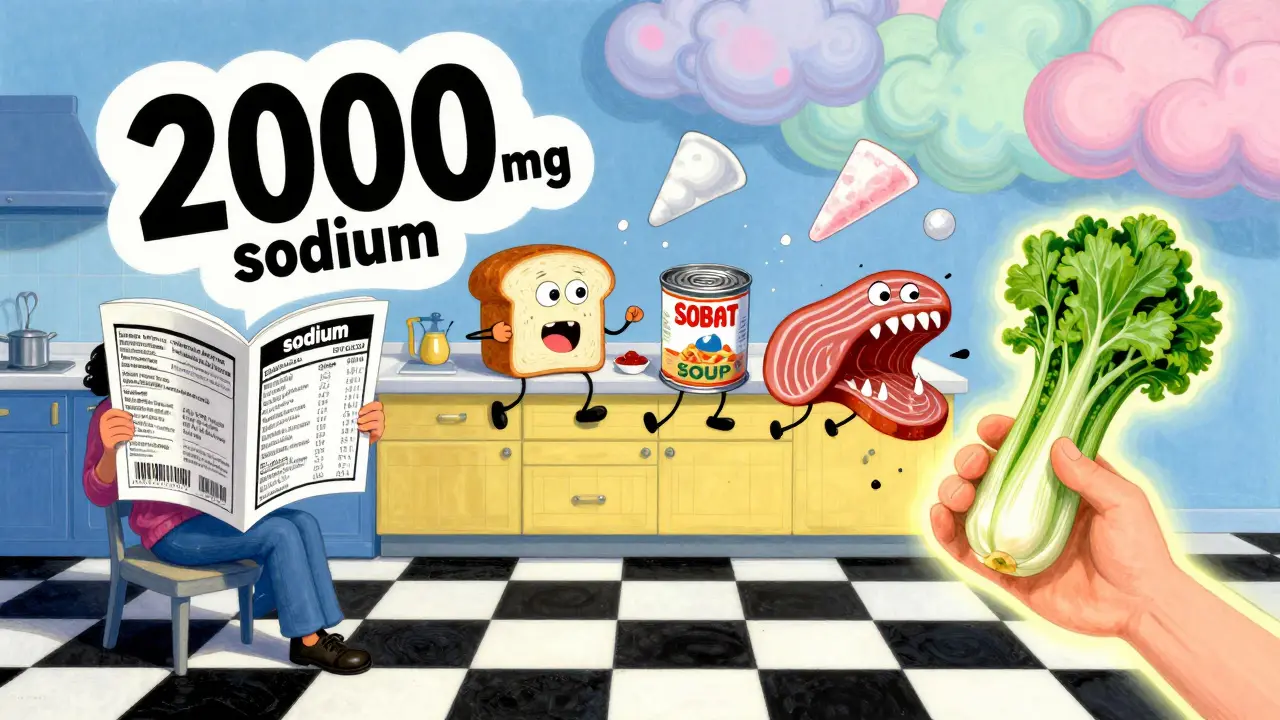
Compression Therapy: The Physical Help
Diuretics and salt control work from the inside. Compression works from the outside. For swollen legs, graduated compression stockings (30-40 mmHg at the ankle) are a simple, proven tool. Studies show they can reduce leg volume by 15-20% in four weeks. They don’t cure the problem, but they stop fluid from pooling in your feet and calves. But wearing them consistently? That’s the challenge. A 2022 study found only 38% of people still used them after three months. Why? They’re hard to put on, they itch, they feel tight. Some people avoid them because they’re embarrassed. But the payoff is real: less pain, fewer skin sores, and better mobility. Elevating your legs above heart level for 20-30 minutes a few times a day helps too. It uses gravity to pull fluid back toward your heart. Combine that with walking 30 minutes, five days a week, and you boost lymphatic drainage. A Cochrane review found this combo improved edema control by 22% compared to just resting. For severe cases-like nephrotic syndrome or massive leg swelling-intermittent pneumatic compression devices can help. These machines inflate and deflate sleeves around your legs, mimicking muscle movement. One study showed they cleared 35% more fluid than regular stockings alone.The Balancing Act
There’s no perfect solution. Diuretics help you feel better now but may speed up kidney decline. Salt restriction works but is hard to maintain. Compression helps your legs but doesn’t fix the root cause. The key is balance. Dr. David Wheeler from KDIGO warns that pushing diuretics too hard in stage 4 CKD can trigger acute kidney injury. One study showed a 4.1-fold higher risk of hospitalization when furosemide doses hit 160 mg or more daily. But Dr. Ronald J. Falk from the American Society of Nephrology reminds us: untreated fluid overload kills. People with persistent edema have a 28% higher risk of dying than those who achieve dry weight. The goal isn’t to remove every drop of fluid. It’s to get you to your “dry weight”-the weight where you’re not swollen, not dizzy, not short of breath, and not overworked by your heart. That’s usually a loss of 0.5-1.0 kg per day in acute cases. Too fast? You risk low blood pressure, cramps, or kidney damage. Too slow? Swelling returns, and your heart keeps straining.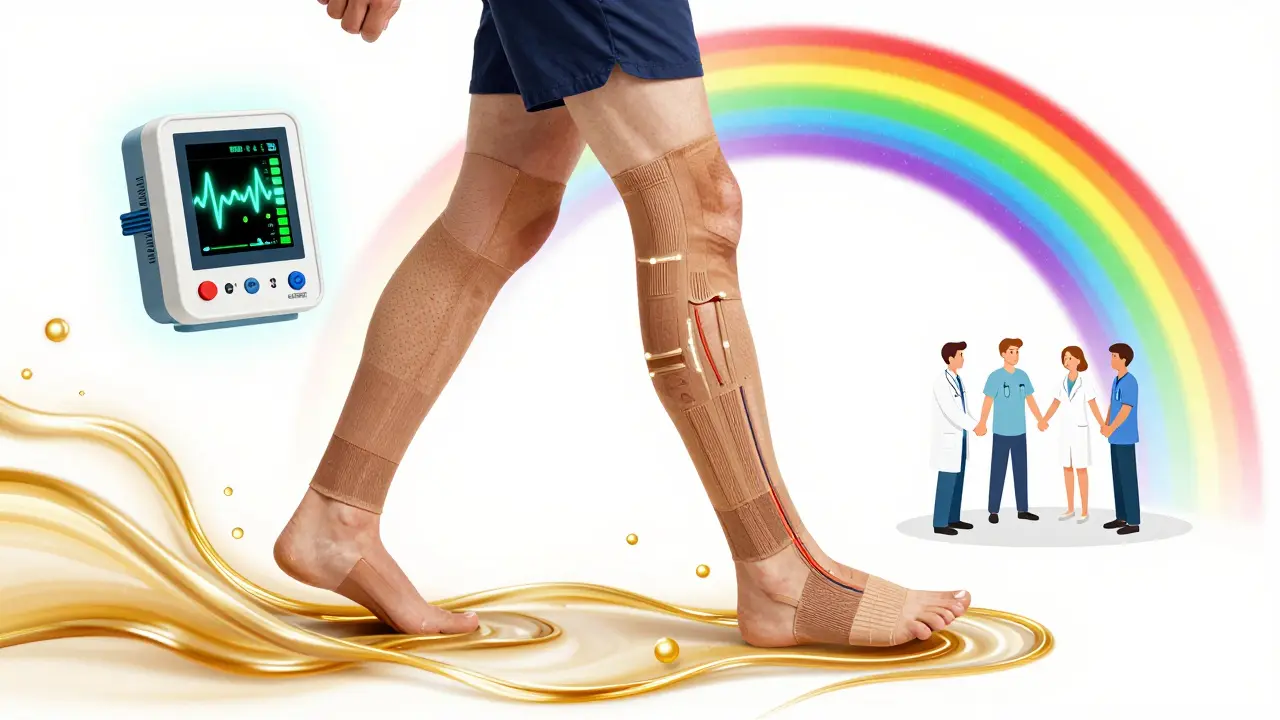
What Works in Real Life
The best outcomes come from teamwork. A Mayo Clinic registry found that patients managed by a nephrologist, dietitian, and physical therapist had a 75% success rate controlling edema within eight weeks. Those on standard care? Only 45%. Real people report real struggles. Nearly 80% of diuretic users say they wake up multiple times at night to pee. Over a third feel dizzy. One in five had a fall from low blood pressure. Compression socks? Most quit because they’re uncomfortable. But those who stuck with the full plan-low salt, right diuretic dose, daily walks, and compression-reported better sleep, more energy, and fewer ER visits. New tools are coming. The NIH’s FOCUS trial, ending in late 2025, is testing bioimpedance devices that measure body fluid levels in real time. Imagine knowing exactly how much fluid to remove, not guessing based on weight or swelling. And new drugs like vaptans are being studied, but early trials showed liver risks.What You Can Do Today
- Track your sodium. Use an app or journal. Aim for under 2,000 mg/day. Avoid canned, packaged, and restaurant food. - Take diuretics exactly as prescribed. Don’t skip doses to avoid nighttime bathroom trips. Talk to your doctor if side effects are bad. - Wear compression stockings daily. Start with 20-30 mmHg if 30-40 is too tight. Put them on before you get out of bed. - Elevate your legs for 20 minutes, three times a day. Use pillows under your calves, not just your feet. - Walk 30 minutes, five days a week. Movement helps your lymph system. - Weigh yourself every morning. Report sudden gains (more than 1 kg in a day) to your care team. It’s not about perfection. It’s about consistency. Small changes add up. And when you control fluid, you don’t just reduce swelling-you protect your heart, your kidneys, and your future.Can edema in CKD go away on its own?
No. Edema in chronic kidney disease doesn’t resolve without intervention because the kidneys can’t remove excess fluid and sodium on their own. Left untreated, fluid buildup worsens over time and increases the risk of heart strain, high blood pressure, and hospitalization. Management requires a combination of diet, medication, and mechanical support.
Are diuretics safe for long-term use in CKD?
Diuretics can be used long-term, but they’re not without risks. Studies show people on diuretics lose kidney function faster-about 3.2 mL/min/year compared to 1.7 mL/min/year in those not using them. There’s also a 47% higher chance of needing dialysis within a year. They’re necessary for symptom control, but doctors aim for the lowest effective dose and monitor kidney function and electrolytes closely.
How much salt should I eat if I have CKD and edema?
The National Kidney Foundation recommends no more than 2,000 mg of sodium per day for all CKD stages with edema. For advanced stages (4-5), 1,500 mg is preferred. That’s less than one teaspoon of salt. Most of your sodium comes from processed foods, not table salt, so reading labels and avoiding packaged meals is essential.
Do compression stockings really help with kidney-related leg swelling?
Yes. Graduated compression stockings (30-40 mmHg) reduce leg volume by 15-20% in four weeks, according to clinical studies. They don’t fix the kidney problem, but they prevent fluid from pooling in your lower legs, reducing pain, heaviness, and skin damage. They’re most effective when worn daily and combined with movement and leg elevation.
What happens if I don’t manage my edema?
Unmanaged edema puts stress on your heart, raises blood pressure, and can lead to pulmonary edema (fluid in the lungs), which causes shortness of breath and can be life-threatening. It also increases the risk of skin breakdown, infections, and hospitalizations. Studies show a 28% higher death rate in CKD patients with persistent swelling compared to those who maintain dry weight.
Can I stop taking diuretics if I eat less salt?
Maybe, but never without your doctor’s guidance. In early-stage CKD, strict salt restriction can reduce swelling enough to lower or eliminate diuretic doses. But in advanced CKD, the kidneys often can’t keep up-even with perfect diet control. Stopping diuretics suddenly can cause rapid fluid buildup. Always adjust medications under medical supervision.
Ted Conerly
January 10, 2026 AT 01:39Diuretics are a necessary evil in CKD. They buy you time, but they don’t fix the root problem. The real win is salt restriction - cut the processed crap, cook real food, and you’ll see results even before the pills kick in. It’s not glamorous, but it works.
Faith Edwards
January 11, 2026 AT 08:45How quaint. One would assume that a population so thoroughly indoctrinated in the cult of convenience would struggle to comprehend the concept of dietary discipline. Yet here we are - patients who expect a pharmaceutical panacea while simultaneously consuming 3,000 mg of sodium in a single microwaveable ‘meal.’ The tragedy isn’t the edema. It’s the willful ignorance.
Mario Bros
January 12, 2026 AT 15:52Compression socks are a nightmare to put on, but once you do, you forget they’re there. I started with 20-30 mmHg and worked my way up. Don’t wait until your legs look like balloon animals. Just do it. You’ll thank yourself later.
Ian Cheung
January 12, 2026 AT 22:22Been on furosemide for 3 years. Dose went from 40 to 160. Woke up 5x a night. Fell twice. Lost 10 lbs of fluid but gained 15 lbs of anxiety. Salt restriction helped more than any pill. I cook everything from scratch now. No more canned soup. No more bread. My wife thinks I’m insane. My kidneys think I’m a hero
Jay Amparo
January 14, 2026 AT 05:00Living in India, I see this daily - families cooking with minimal salt because they’ve always done it that way. No processed food. No hidden sodium. Their kidneys hold up longer. We don’t need fancy devices. We need to remember what food used to be. Simple. Real. Unpackaged.
Lisa Cozad
January 16, 2026 AT 00:47I’ve been managing CKD for 5 years. The combo of low sodium, daily walks, and compression socks changed everything. I used to be exhausted by 3pm. Now I garden. I cook. I sleep through the night. It’s not perfect, but it’s sustainable. And that’s what matters.
anthony martinez
January 16, 2026 AT 01:55Let’s be real - if you’re still eating deli meat and canned soup, no diuretic in the world is going to save you. The science is clear. The problem is compliance. And no, your ‘I’m not that bad’ excuse doesn’t fly.
Jake Nunez
January 16, 2026 AT 16:00As someone raised in the South, I used to think salt was life. Then I got CKD. Learned to use herbs, citrus, smoked paprika. Food doesn’t have to taste like cardboard. It just has to be real. Took 3 dietitian visits. Now I’m proud of what’s on my plate.
McCarthy Halverson
January 18, 2026 AT 06:53IV furosemide for eGFR under 15? Long overdue. Oral absorption is garbage at that stage. The data’s solid. If you’re still on pills and your kidneys are this bad, you’re not being treated - you’re being ignored.
Michael Marchio
January 19, 2026 AT 12:23It’s amusing how the medical community treats edema like a puzzle to be solved with pills and stockings, while ignoring the elephant in the room - systemic inflammation, gut dysbiosis, and the relentless assault of ultra-processed foods. We’re bandaging a hemorrhage with duct tape and calling it medicine. The real solution? A complete dietary overhaul. But that requires willpower, education, and accountability - things our culture has outsourced to Big Pharma and convenience stores.
Dwayne Dickson
January 19, 2026 AT 16:02While the clinical data presented is methodologically sound, one must acknowledge the epistemological limitations inherent in population-based guidelines when applied to individual phenotypes. The heterogeneity of renal tubular response to loop diuretics, particularly in the context of comorbid insulin resistance and adipokine dysregulation, renders the one-size-fits-all approach to sodium restriction statistically robust yet clinically insufficient. A personalized, biomarker-driven protocol - incorporating urinary sodium excretion profiles and bioimpedance vector analysis - is not merely preferable; it is ethically imperative.
Saumya Roy Chaudhuri
January 20, 2026 AT 10:05You think you’re doing well with 2,000 mg of sodium? That’s amateur hour. In my nephrology fellowship, we taught patients to aim for under 1,200 mg - no exceptions. And if you’re using salt substitutes, you’re just trading potassium for a false sense of security. Read the labels. Know your potassium. Your heart will thank you - or your funeral will.
Christine Milne
January 21, 2026 AT 10:54Why are we letting Big Pharma dictate kidney care? In Germany, they use natural diuretics like dandelion root and parsley tea alongside diet - and their hospitalization rates are lower. We’re addicted to pills because it’s profitable. Not because it’s right. This isn’t medicine. It’s capitalism with a stethoscope.
Bradford Beardall
January 22, 2026 AT 09:41What’s the long-term data on bioimpedance devices? I’ve seen the NIH trial design - it’s promising, but I’m skeptical. Can it really replace clinical judgment? Or are we just automating guesswork? I’d love to see the raw data before I start trusting a machine over my nephrologist’s eyes.