

Medication-Induced Nosebleed Risk Checker
Medication Risk Assessment
It’s not rare to wake up with a bit of blood on your pillow or notice a trickle while blowing your nose. But when nosebleeds start happening often-especially if you’re on regular medication-it’s not just a nuisance. It could be your drugs at work.
Why Medications Cause Nosebleeds
Nosebleeds, or epistaxis, happen because the inside of your nose is packed with tiny blood vessels. One cluster, called Kiesselbach’s plexus, is especially fragile. It’s right near the front of your nasal septum, where most nosebleeds start. When something weakens those vessels or stops your blood from clotting properly, even a light bump or dry air can trigger bleeding. Certain medications make this worse in two main ways: they thin your blood, or they dry out your nasal lining. Blood thinners like aspirin, warfarin, and clopidogrel don’t actually make your blood thinner-they stop platelets from sticking together. Aspirin, even at the low 81mg dose used for heart protection, blocks an enzyme that helps platelets form clots. That’s why even a minor nosebleed can last longer than usual. Anticoagulants like warfarin work differently: they interfere with vitamin K, which your body needs to make clotting factors. If your INR (a blood test that measures clotting time) goes too high, your risk of bleeding, including nosebleeds, spikes. Then there are the decongestants and antihistamines. Sprays like oxymetazoline (Afrin) shrink blood vessels at first, giving quick relief from congestion. But use them longer than three days, and your nose rebounds-blood vessels swell back bigger than before. At the same time, these drugs dry out the mucous membrane. No moisture means no protective layer. The vessels become brittle and crack easily. Even common pain relievers like ibuprofen and naproxen can be culprits. They’re NSAIDs, and they reduce thromboxane A2, a chemical that helps platelets stick together. One study showed that people taking NSAIDs daily were 40% more likely to have recurrent nosebleeds than those who didn’t.Who’s Most at Risk?
Not everyone on these meds gets nosebleeds. But some groups are more vulnerable. Older adults (especially 45-80) have naturally drier nasal passages and thinner skin. Their blood vessels are more fragile. Add in multiple medications-like blood pressure pills, statins, and daily aspirin-and the risk stacks up. Children are another high-risk group. They pick their noses, have sensitive nasal linings, and are often given ibuprofen for fevers. Even a single dose can tip the balance if their nasal tissue is already irritated. Pregnant people experience increased blood flow and swelling in nasal tissues. Combine that with prenatal vitamins or pain relievers, and nosebleeds become more frequent. It’s usually not dangerous, but it’s worth discussing with your provider. People with high blood pressure or bleeding disorders face compounded risks. High pressure pushes harder on already weakened vessels. Bleeding disorders mean even small injuries don’t clot well. If you’re on anticoagulants and have hypertension, your doctor should monitor you closely.What Medications Are Most Likely to Cause Nosebleeds?
Here’s a clear list of the top offenders, based on clinical evidence:- Aspirin (even low-dose, 81mg daily)
- Warfarin (Coumadin)
- Clopidogrel (Plavix)
- Ibuprofen (Advil, Motrin)
- Naproxen (Aleve, Naprosyn)
- Oxymetazoline (Afrin nasal spray)-especially after 3+ days of use
- Heparin (can trigger rare but serious heparin-induced thrombocytopenia)
How to Prevent Medication-Induced Nosebleeds
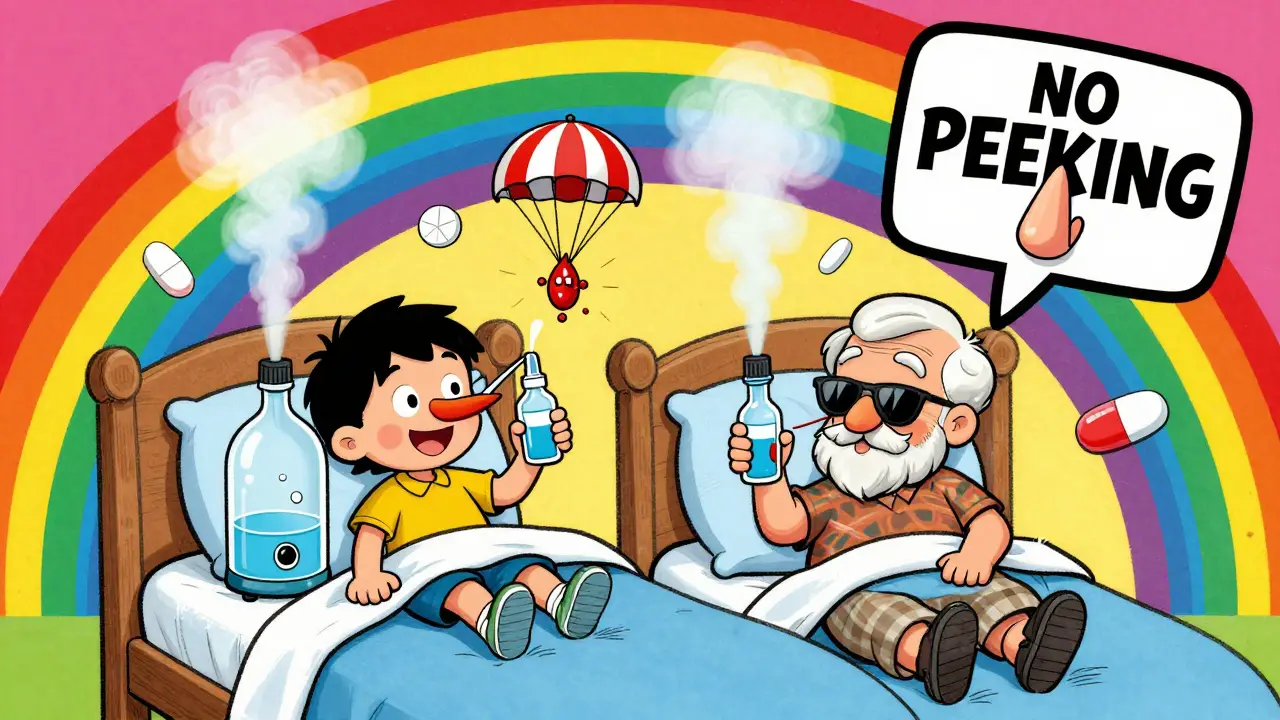
Prevention isn’t about stopping your meds-it’s about protecting your nose while you take them. 1. Moisturize daily. Dry air is the enemy. Use a saline nasal spray twice a day-morning and night. For extra protection, apply a thin layer of petroleum jelly (Vaseline) inside each nostril before bed. This creates a barrier that keeps moisture in and stops crusts from forming. 2. Use a humidifier. Especially in winter, indoor air can drop below 30% humidity. That’s like desert conditions for your nose. A cool-mist humidifier in your bedroom helps. Keep it clean to avoid mold. 3. Swap NSAIDs for acetaminophen. If you need pain or fever relief, choose acetaminophen (Tylenol). It doesn’t affect platelets. It’s safe for people prone to nosebleeds. This switch alone can cut bleeding episodes in half for many. 4. Avoid nasal picking and rubbing. It sounds simple, but it’s the #1 trigger. Even gentle rubbing after a cold can irritate the lining. Keep nails short. If your nose itches, use a saline spray instead. 5. Limit decongestant sprays. Never use oxymetazoline for more than 3 days in a row. If congestion lasts longer, see your doctor. There are safer long-term options like steroid nasal sprays (fluticasone) that don’t dry you out. 6. Stay hydrated. Drink water throughout the day. Dehydration makes your mucous membranes dry out faster. Aim for at least 1.5-2 liters daily, especially if you’re on diuretics or live in a dry climate.What to Do When a Nosebleed Happens
Most nosebleeds stop on their own. But how you handle them matters.- Stay calm. Panic raises your blood pressure and makes bleeding worse.
- Sit upright and lean slightly forward. Don’t tilt your head back-that sends blood down your throat, which can cause nausea or choking.
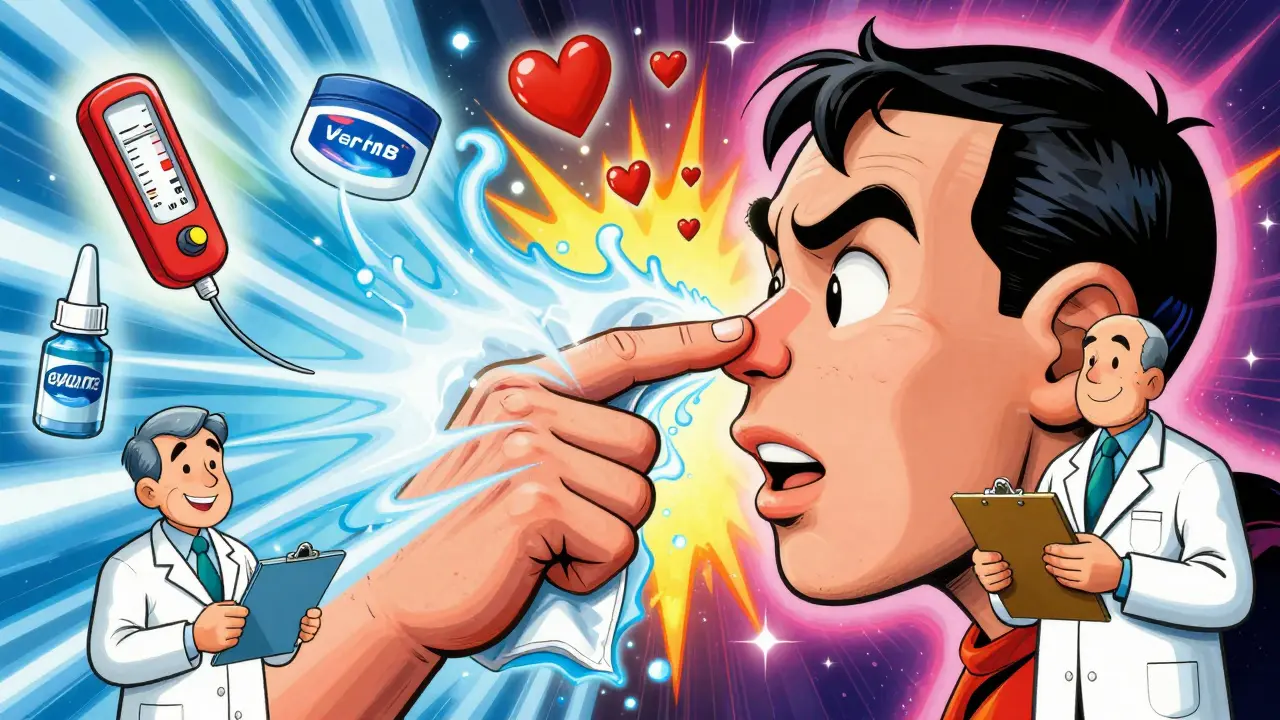
- Pinch the soft part of your nose (just below the bony bridge) with your thumb and index finger. Hold for 10-15 minutes. Use a timer. Most people think they’re holding it long enough-but they’re not.
- Apply a cold pack or ice wrapped in a towel to the bridge of your nose. It helps constrict blood vessels.
- After the bleeding stops, avoid blowing your nose, bending over, or lifting heavy things for 24 hours.
When to See a Doctor
You don’t need to rush to the ER for every nosebleed. But these signs mean it’s time to get checked:- Bleeding doesn’t stop after 20-30 minutes of pressure
- You’re feeling lightheaded, faint, or short of breath
- You’re bruising easily or bleeding from gums or other areas
- You’ve had more than three or four nosebleeds in a week
- The nosebleed followed a fall, blow to the face, or head injury
- You’re on anticoagulants and have any bleeding that lasts more than 10 minutes
The Role of Your Pharmacist
Many people don’t realize pharmacists are trained to spot drug interactions and side effects. If you’re on multiple medications and getting frequent nosebleeds, ask your pharmacist to do a medication review. They can suggest alternatives, flag risky combinations, or help you space out doses to reduce side effects. For example, switching from daily ibuprofen to acetaminophen, or changing from a decongestant spray to a steroid nasal spray, can make a big difference. Pharmacists also know when to recommend a blood test to check clotting function.Bottom Line: Don’t Stop Your Meds-Fix the Nose
Nosebleeds from medications are frustrating, but they’re usually manageable. The goal isn’t to stop your heart medication or pain relief. It’s to protect your nose while you stay healthy. Start with the basics: moisturize, humidify, avoid picking, swap NSAIDs for acetaminophen. Track your nosebleeds. Talk to your doctor and pharmacist. Most people see a big drop in episodes within a few weeks of making these changes. If you’re on blood thinners, remember: the risk of a stroke or heart attack from not taking your med is far greater than the risk of a nosebleed. But that doesn’t mean you have to live with them. With the right care, you can have both safety and comfort.Can aspirin really cause nosebleeds even at low doses?
Yes. Even the low 81mg daily dose used for heart protection can interfere with platelet function enough to increase nosebleed risk. Studies show people taking daily aspirin are more likely to have recurrent nosebleeds than those who don’t. If you’re prone to nosebleeds, talk to your doctor about switching to acetaminophen for pain relief.
Is it safe to use Afrin (oxymetazoline) for nasal congestion if I get nosebleeds?
Only for up to 3 days. Afrin shrinks blood vessels quickly, but after that, it causes rebound congestion and dries out your nasal lining. This makes the vessels more fragile and increases bleeding risk. For long-term congestion, use saline sprays or steroid nasal sprays like fluticasone instead.
Should I stop my blood thinner if I keep getting nosebleeds?
Never stop a blood thinner on your own. Stopping warfarin, clopidogrel, or aspirin without medical advice can raise your risk of stroke, heart attack, or blood clots. Instead, track your nosebleeds, see your doctor, and ask if your dose can be adjusted or if other preventive steps can help-like nasal moisturizing or switching to acetaminophen for pain.
Can children get nosebleeds from ibuprofen?
Yes. Children’s nasal passages are more delicate, and they often pick their noses. Ibuprofen can reduce platelet function enough to make bleeding last longer. If your child has frequent nosebleeds, ask your pediatrician if switching to acetaminophen for fever or pain might help.
What’s the best way to stop a nosebleed quickly?
Sit up, lean forward, and pinch the soft part of your nose just below the bridge. Hold for 10-15 minutes without checking. Use a timer. Don’t tilt your head back. Apply a cold pack to the bridge of your nose. Most nosebleeds stop within 15 minutes with proper pressure.
Can dry air alone cause nosebleeds, or do I need to be on medication?
Dry air alone can cause nosebleeds, especially in winter or in air-conditioned spaces. But if you’re on blood thinners or decongestants, dry air makes it much worse. Medications weaken your nose’s natural defenses, so even mild dryness becomes a trigger. Moisturizing and humidifying help regardless of whether you’re on meds-but they’re essential if you are.
Juan Reibelo
January 24, 2026 AT 17:12I used to get nosebleeds every other week until I switched from ibuprofen to Tylenol. No joke-it cut them in half. Also started using Vaseline at night. Simple stuff, but it works. Don’t overcomplicate it.
Dolores Rider
January 24, 2026 AT 19:14EVERYONE knows the government adds chemicals to nasal sprays to make us bleed so they can sell us more meds... 😒💉 Also, your doctor? They’re paid by Big Pharma. Ask yourself-why do they never mention the REAL cause? THE WEATHER CONTROL SYSTEM. 🌧️🩸
Vatsal Patel
January 26, 2026 AT 01:32Ah yes, the modern paradox: we take pills to live longer, but our noses become Swiss cheese in the process. How poetic. We’ve outsourced our biology to chemistry, and now we’re surprised when the machine malfunctions? 🤔
Perhaps the real question isn’t ‘which drug causes bleeding’-but why we’ve accepted a life where our bodies are collateral damage for convenience. The nosebleed is just the body’s sigh. A quiet protest. And we ignore it until it’s on the pillow.
Sharon Biggins
January 27, 2026 AT 04:15you guys are amazing!! i was so scared i was doing something wrong but this post made me feel so much better!! i started using the saline spray and it’s been a game changer!! 🙌 even my husband noticed i’m not waking up with blood on the pillow anymore!! you’re all such a support!! 💕
John McGuirk
January 28, 2026 AT 20:57They don’t want you to know this-but nosebleeds are a sign your body is detoxing from the vaccines. The meds? Just a cover. Look at the timeline. After the jab, the nosebleeds started. Coincidence? Nah. The CDC won’t tell you because they’re part of the system. You think warfarin causes it? No. It’s the nano-particles in the air. You’re being poisoned by 5G + pharmaceuticals. Stay vigilant.
lorraine england
January 30, 2026 AT 20:56My mom’s on blood thinners and gets nosebleeds all the time. We started using a humidifier and she hasn’t had one in 3 months. It’s not magic-it’s just keeping things moist. Also, she stopped using Afrin cold turkey and switched to fluticasone. Big difference. Don’t overthink it. Just hydrate, moisturize, and talk to your doc. You got this!
Himanshu Singh
February 1, 2026 AT 04:13Life is a balance, isn’t it? We take medicine to live, but we forget our bodies are still alive. The nosebleed isn’t the enemy-it’s a whisper. A reminder that we’re not machines. Maybe the real solution isn’t just swapping ibuprofen for acetaminophen… but learning to listen. To breathe. To slow down. 🌿
Moisturize your nose. But also moisturize your soul. The two are connected, even if science won’t admit it.
Helen Leite
February 2, 2026 AT 05:47OMG I thought I was the only one!! 😭 My kid got nosebleeds after every ibuprofen and I was freaking out!! Now I use Tylenol and it’s like night and day!! Also, I put Vaseline in his nose before bed and he doesn’t even pick anymore!! 🤯❤️