
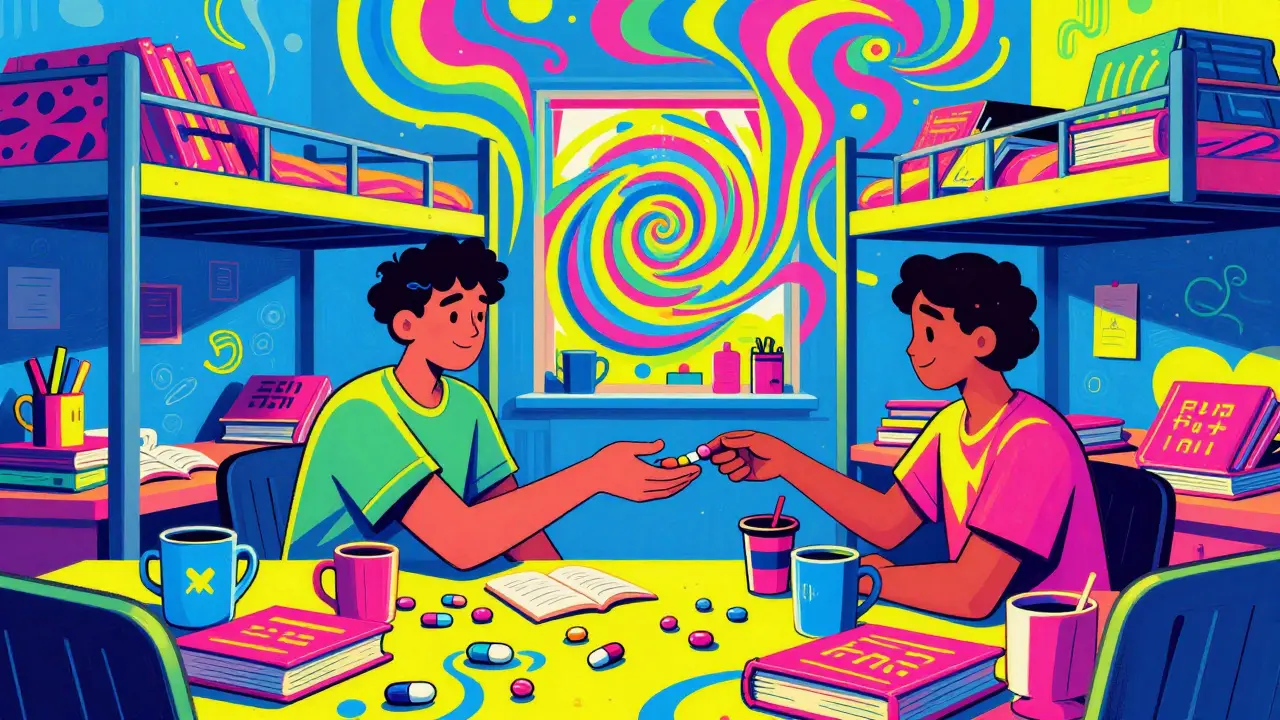
Imagine walking into a dorm room during finals week. In many cases, you won't just find coffee and textbooks; you'll find prescription pills being passed around like candy. For many college students, taking a "study drug" feels like a harmless shortcut to an A. But the reality is far more dangerous. From unexpected heart palpitations to long-term dependency, the risks of nonmedical prescription use are high, and the line between a helpful tool and a health crisis is thinner than most realize.
| Medication Class | Commonly Misused Drug | Primary Driver | Key Risk |
|---|---|---|---|
| Stimulants | Adderall | Academic Pressure | Heart/Blood Vessel Issues |
| Pain Relievers | Vicodin | Pain/Stress Management | Opioid Dependence |
| Sedatives | Benzodiazepines | Anxiety/Insomnia | Severe Respiratory Depression |
The Hidden Epidemic of "Study Drugs"
When we talk about medication safety on campus, the biggest elephant in the room is stimulant misuse. It's not just a few students; research shows that stimulants account for a staggering 75% of all reported prescription drug misuse among college students. Why? Because the pressure to perform is relentless. Between erratic sleep schedules and a competitive academic culture, many turn to Adderall to keep up. However, these aren't just "focus pills." Using stimulants without a prescription can lead to serious psychiatric issues and cardiovascular strain. In fact, emergency room visits for stimulant-related issues in this age group tripled in a five-year span between 2005 and 2010.
The danger is amplified by a common misconception: "It's a prescription, so it must be safe." This belief leads to a culture of sharing. About 60% of misused drugs are obtained from friends or roommates. When you take a pill from a peer, you aren't just taking a chemical; you're taking a dose that wasn't calibrated for your body weight, medical history, or heart health.
Beyond the Library: Painkillers and Sedatives
While stimulants dominate the academic scene, other medication classes pose different, often more lethal, risks. Opioids, such as OxyContin or Vicodin, have seen a slight decline in use among college students compared to their non-college peers, but the danger remains. Opioid misuse can spiral into addiction rapidly, and the overlap with other substances often leads to accidental overdoses.
Then there are the sedatives and tranquilizers. Young adults often use these to combat the anxiety and insomnia that come with a high-stress environment. While they might help you fall asleep, the long-term impact includes cognitive impairment and a high risk of dependence. The problem is that these substances are often used together-stimulants to stay up and sedatives to crash-creating a volatile cycle that wreaks havoc on the nervous system.

How to Handle Your Meds Safely
If you are prescribed medication, managing it in a shared living space like a dorm requires a strategy. You can't just leave a bottle on a desk. The first rule of safety is secure storage. Using a lockbox is the most effective way to prevent theft or accidental ingestion by others. Programs like the "Safe Meds" initiative at the University of Florida have shown that simply providing storage tools can significantly drop misuse rates.
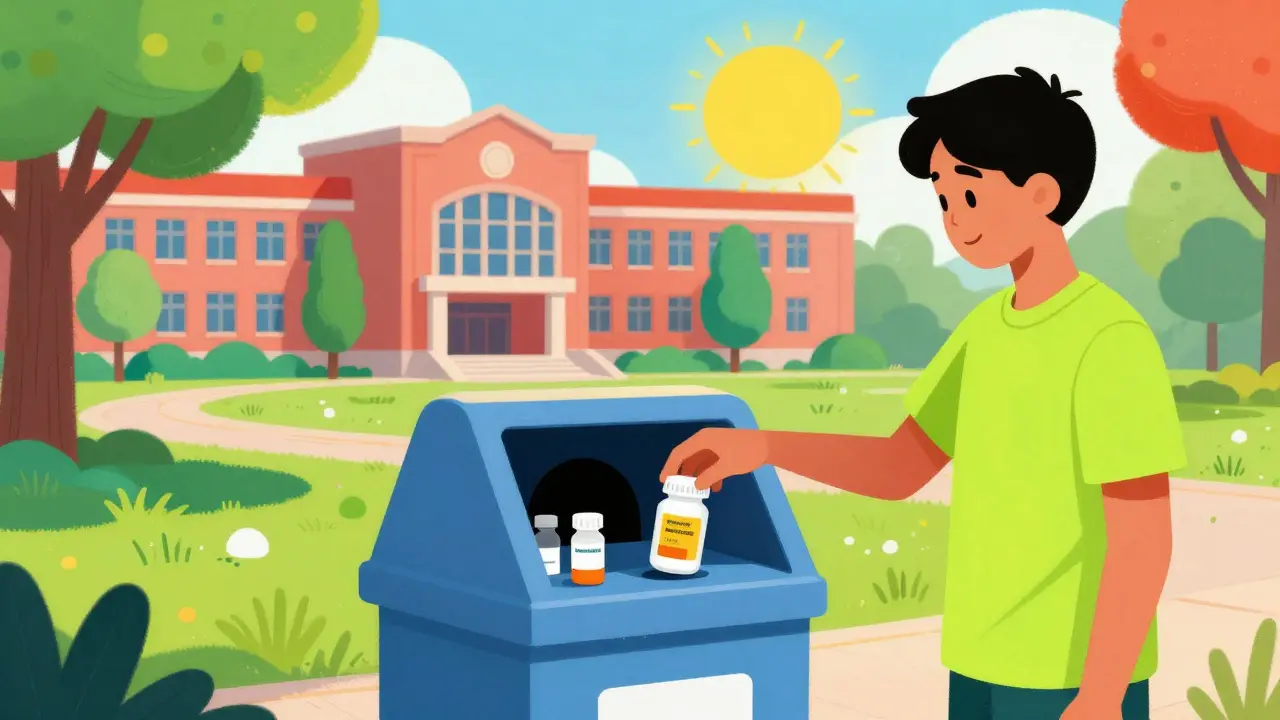
Equally important is how you get rid of old meds. Flushing pills down the toilet or throwing them in the trash is a disaster for the environment and a risk to others. Look for campus-wide disposal kiosks or pharmacy take-back programs. Surprisingly, while many students know how to get stimulants illegally, only about 29% know where to properly dispose of medications. Always check with your student health center for the nearest official drop-off point.
Spotting the Red Flags
Knowing when a friend is in trouble can be the difference between a recovery and a tragedy. Medication misuse doesn't always look like "drug use" in the movies. It often looks like a student who is suddenly unable to sleep for three days, someone exhibiting extreme irritability, or a friend whose academic performance is crashing despite "studying" more than ever.
If you notice a peer becoming overly dependent on a specific substance, encourage them to seek academic coaching rather than more pills. Integrated approaches-combining mental health support with academic help-have been proven to reduce stimulant misuse by up to 22%. The goal is to address the cause of the stress, not just the symptom.
The Role of Campus Health and Policy
Universities are finally waking up to the scale of this problem. More colleges are now employing dedicated medication safety coordinators to bridge the gap between students and healthcare providers. One major shift has been the move toward electronic prescriptions for Schedule II medications, which has slashed prescription forgery on campuses by about 31%.
Furthermore, the move toward "abuse-deterrent formulations" is helping. These are versions of medications designed to be harder to crush or dissolve, making it more difficult to misuse them. While no pill is perfectly safe, these innovations provide a critical layer of protection for vulnerable populations.
Is taking a study drug once for a final exam really that dangerous?
Yes. Even a single dose of a stimulant like Adderall can cause severe reactions in people with underlying heart conditions or anxiety disorders. Beyond the physical risk, it creates a psychological reliance on a substance to achieve success, which often leads to a cycle of dependency.
What is the safest way to dispose of expired prescription meds in a dorm?
Never flush medications or throw them in the regular trash. The best method is using a designated pharmaceutical disposal kiosk, often found at campus health centers or local pharmacies. If these aren't available, mix the meds with an undesirable substance like coffee grounds or cat litter in a sealed bag before discarding.
Why do so many students misuse prescriptions instead of using illegal drugs?
There is a perceived "safety" associated with prescription drugs. Because they are prescribed by doctors, students often mistakenly believe they are less addictive or dangerous than street drugs. This makes them more socially acceptable in academic circles.
What should I do if a friend is addicted to prescription stimulants?
Avoid judging and instead guide them toward professional help. Most universities have student health centers that offer confidential counseling and medication-assisted treatment. Encourage them to visit academic support services to help manage the stress that may be driving the use.
Can I get into legal trouble for sharing my prescribed medication?
Absolutely. Distributing prescription medication-even for free-is a crime in most jurisdictions. Depending on the drug's classification (such as Schedule II), it can be treated as a felony, leading to expulsion from college and legal prosecution.
Next Steps for Students and Parents
If you're a student feeling overwhelmed, start by auditing your sleep and stress habits. The CDC suggests that maintaining a regular sleep schedule is the most effective non-drug way to combat the insomnia that often leads to sedative misuse. If you feel you can't keep up with your coursework, reach out to your university's academic coaching or mental health services before looking for a chemical solution.
For parents, the key is open communication. Ask your student how they're handling the pressure and whether they've been offered "study aids." Understanding that this is a normalized part of some campus cultures allows you to provide the support and resources they need to avoid the trap of prescription misuse.