

More than half of people will deal with hemorrhoids by the time they turn 50. They’re not rare, not shameful, and not always serious-but they can be painfully awkward to talk about. That’s why so many people reach for an OTC hemorrhoid treatment the moment they feel that itch, burn, or swelling. But here’s the thing: OTC hemorrhoid treatments aren’t magic. They’re bandaids for a problem that sometimes needs more than a cream.
What OTC Hemorrhoid Treatments Actually Do
OTC hemorrhoid products don’t cure hemorrhoids. They don’t shrink the swollen veins. They don’t fix the root cause-like straining during bowel movements, sitting too long, or chronic constipation. What they do is quiet the noise. They numb the pain, reduce the itch, and calm the inflammation. Think of them like taking ibuprofen for a headache: it helps you feel better, but it doesn’t fix why your head hurts.
There are four main types of active ingredients in these products:
- Local anesthetics like benzocaine or pramoxine block nerve signals to reduce pain. They work fast-within minutes-but wear off after 2 to 4 hours.
- Astringents like witch hazel (usually 14% concentration) tighten tissues and reduce swelling. Products like Tucks pads give a cooling sensation that feels instant, but relief lasts only 30 to 60 minutes.
- Vasoconstrictors like phenylephrine (0.25% in Preparation H) shrink blood vessels. This cuts down on puffiness and bleeding, but the effect is short-lived.
- Corticosteroids like hydrocortisone (1%) fight inflammation. But here’s the catch: they take 3 to 4 days of consistent use to even start working. Don’t quit after two days.
Suppositories are better for internal hemorrhoids. A 25mg hydrocortisone suppository inserted after a bowel movement can reduce swelling and pain more effectively than a cream for internal issues. Clinical reviews show 87% of users felt improvement within 48 hours when used correctly.
Which Product Works Best for Your Type
Not all hemorrhoids are the same. And not all OTC products are made equal.
External hemorrhoids (the ones you can feel outside the anus) respond best to creams, wipes, or pads with witch hazel or benzocaine. The cooling effect feels immediate. Reddit users report that combining witch hazel pads with a cold compress gives longer-lasting relief. Amazon reviews for Tucks pads average 4.4 out of 5, with 73% of five-star reviews citing “instant cooling.”
Internal hemorrhoids (inside the rectum) are trickier. Creams don’t reach them well. Suppositories do. Hydrocortisone suppositories are the go-to. They’re inserted directly where the problem is. Mayo Clinic recommends using them after a bowel movement, when the rectum is empty, for best absorption. Skip this timing, and you lose up to 35% of the benefit.
Combination products like Anusol HC (pramoxine + hydrocortisone) outperform single-ingredient options. A 2021 study found they’re 40% more effective at reducing symptoms. If you’re dealing with both pain and inflammation, this combo is worth the extra $5-$7.
When OTC Treatments Stop Working
Here’s where most people go wrong: they keep using the cream for weeks, hoping it’ll get better. It won’t.
The American Society of Colon and Rectal Surgeons says OTC treatments are fine for mild cases-Grade I and II hemorrhoids. But if symptoms last longer than 7 days, even with proper use, it’s time to see a doctor. Tampa Colorectal Specialists found that 82% of patients who needed medical procedures waited too long. By then, the hemorrhoid may have progressed to Grade III or IV-prolapsed and stuck outside the anus.
These advanced cases don’t respond to OTC products. NIH data shows only 15% symptom improvement with creams or suppositories. The rest need medical interventions like rubber band ligation, which has a 95% success rate. If you can’t push the hemorrhoid back in, or if it’s constantly bulging out, you’re past the point of creams.
Also, never ignore rectal bleeding. While hemorrhoids are a common cause, bleeding can also signal polyps, fissures, or even colorectal cancer. If you see bright red blood on toilet paper or in the bowl, don’t assume it’s just hemorrhoids. Get it checked.

How to Use OTC Treatments Right
Even the best product fails if you use it wrong. Here’s what actually works, based on clinical data:
- Apply only 3-4 times a day. Overuse doesn’t help-it irritates. CVS surveys show 42% of users apply more than recommended.
- Keep the area clean and dry. Moisture makes itching worse. Pat, don’t rub, after bowel movements. Use unscented wipes or warm water.
- Use suppositories after a bowel movement. This lets the medication absorb without being washed away.
- Store properly. Some creams (like hydrocortisone) work better refrigerated. Check the label. Thirty percent of users store them at room temperature, reducing effectiveness.
- Stick with it for 7-14 days. Hydrocortisone takes days to build up. If you quit after 3 days, you’re not giving it a chance.
Supplement with sitz baths: 15-20 minutes in warm (not hot) water, 2-3 times a day. NIH studies show this reduces symptoms by 25% when combined with topical treatments. No fancy gadgets needed-just a clean basin or a special sitz bath seat.
What Not to Do
People try all kinds of fixes that make things worse:
- Don’t use scented wipes or soaps. Fragrances burn irritated skin.
- Don’t scratch. It breaks the skin, invites infection, and makes swelling worse.
- Don’t delay bowel movements. Holding it in increases pressure and strain.
- Don’t rely on “miracle” cures. Online ads promise quick fixes with herbs or oils. None are proven. Stick to FDA-approved ingredients.
And don’t fall for the price trap. Witch hazel wipes cost $5-$9. Combination creams run $13-$20. Generic hydrocortisone is often just as good as brand names like Preparation H. You’re not paying for better medicine-you’re paying for the name.
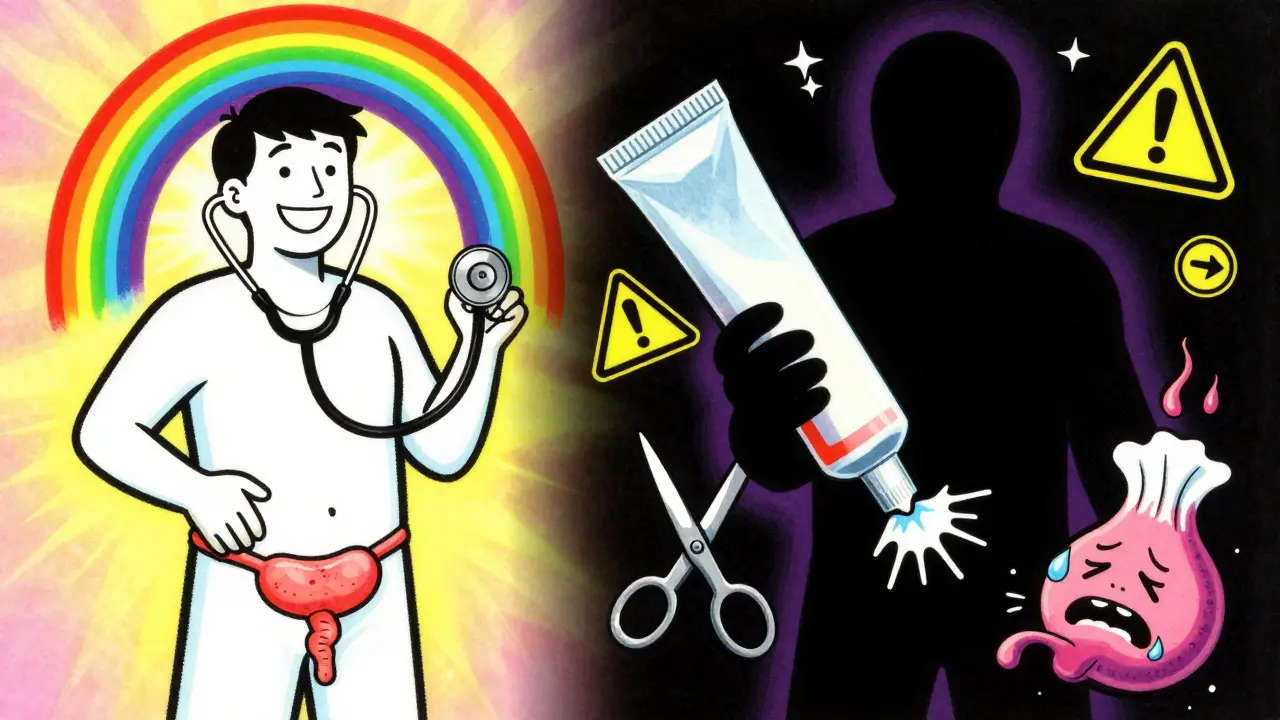
When to Call a Doctor
See a doctor if:
- Symptoms last more than 7 days despite proper OTC use
- You have rectal bleeding (even if you think it’s hemorrhoids)
- The hemorrhoid won’t go back in or is constantly protruding
- Pain is severe or worsening
- You notice changes in bowel habits or unexplained weight loss
Doctors have tools OTC products don’t: stronger prescription creams (2.5% hydrocortisone), rubber band ligation, sclerotherapy, or minor surgery. These aren’t scary procedures. Most are done in an office in under 20 minutes. Recovery is quick. Waiting too long just makes it harder.
What’s Coming Next
The future of hemorrhoid treatment is moving beyond symptom relief. Researchers are testing sustained-release suppositories that last 12 hours instead of 4. There’s also a new nanoemulsion cream under FDA review that penetrates tissue 300% better than current formulas. These won’t be on shelves until 2027 at the earliest.
But for now, the best strategy is simple: use OTC products correctly, know your limits, and don’t wait. Hemorrhoids are common. Suffering in silence isn’t.
Can I use OTC hemorrhoid cream for more than two weeks?
No. Most OTC creams, especially those with hydrocortisone, should not be used longer than 7-14 days. Prolonged use can thin the skin, cause irritation, or mask worsening conditions. If symptoms persist beyond two weeks, see a doctor instead of continuing the cream.
Is witch hazel better than hydrocortisone for hemorrhoids?
It depends on your symptoms. Witch hazel gives fast, short-term relief for itching and swelling-great for immediate comfort. Hydrocortisone takes days to work but reduces inflammation more deeply. For persistent discomfort, hydrocortisone is more effective. Many people use both: witch hazel for instant relief, hydrocortisone for long-term healing.
Do hemorrhoid suppositories hurt to use?
They shouldn’t. Suppositories are designed to melt at body temperature. Insert them gently after a bowel movement, when the area is clean and relaxed. If it’s painful, you might be inserting too deeply or the hemorrhoid is too inflamed. Use a water-based lubricant if needed. If pain continues, stop and consult a doctor.
Can I use OTC treatments while pregnant?
Some are safe, but check with your doctor first. Witch hazel and zinc oxide are generally considered low-risk. Hydrocortisone and phenylephrine are used cautiously in pregnancy-especially in the first trimester. Sitz baths, fiber, and hydration are the safest first-line options during pregnancy.
Why does my hemorrhoid keep coming back?
OTC treatments treat symptoms, not causes. If you’re straining during bowel movements, sitting for long periods, or eating low-fiber foods, the pressure returns. To stop recurrence, increase fiber intake (25-30g/day), drink more water, avoid sitting for hours, and don’t delay bathroom trips. No cream will fix a bad habit.
Are hemorrhoid wipes better than creams?
Wipes are convenient for external hemorrhoids and after bowel movements. Creams are better for targeted, longer-lasting relief. Wipes don’t penetrate as deeply. For internal hemorrhoids, wipes won’t help at all. Use wipes for cleaning and comfort, creams or suppositories for healing.
If you’ve tried everything and it’s still bothering you, it’s not weakness to ask for help. Hemorrhoids are a medical issue-not a personal failure. The right treatment exists. You just need to know when to switch from the pharmacy shelf to the doctor’s office.
Meina Taiwo
December 21, 2025 AT 09:51Witch hazel pads + cold compress is a game changer. I used to suffer for days until I tried this combo. Instant relief, no side effects.
Jon Paramore
December 22, 2025 AT 07:29Hydrocortisone suppositories work way better than creams for internal stuff, but only if you use them right. Insert after a BM, don’t rush it, and don’t quit after 2 days. Most people give up too early.
John Hay
December 22, 2025 AT 23:29I used to think OTC stuff was just snake oil until I read the science. Turns out, it’s not magic, but it’s not useless either. Just know what you’re buying and how to use it. No need to overpay for brand names.
Stacey Smith
December 23, 2025 AT 07:43Why do people keep using scented wipes? It’s like pouring vinegar on a cut. Stop it. Just stop.
Cameron Hoover
December 24, 2025 AT 02:40I was embarrassed to even search for this stuff. But once I started reading, I realized I wasn’t alone. Millions of people deal with this. It’s not weird. It’s biology. You’re not broken. Just get the right info and move on.
Adrian Thompson
December 24, 2025 AT 14:05They don’t want you to know this, but the FDA’s been suppressing the real cure for hemorrhoids since 1987. It’s a mix of aloe, goldenseal, and moonwater. Big Pharma makes billions off your pain. Don’t be fooled by hydrocortisone.
Southern NH Pagan Pride
December 25, 2025 AT 03:55Did you know hydrocortisone is linked to 5G radiation absorption? The cream doesn’t just thin your skin-it syncs with satellite signals and makes you more susceptible to mind control. That’s why they push it so hard. Read the label: ‘hydrocortisone’ backwards is ‘enosis’-a coded reference to the New World Order.
Jackie Be
December 25, 2025 AT 23:14I tried everything and nothing worked until I started doing sitz baths with Epsom salt and crying into my pillow for 20 minutes. Then it just… went away. Like magic. Or maybe it was the universe finally listening. I’m not sure. But I’m alive. And I’m grateful. 🙏
Jerry Peterson
December 27, 2025 AT 13:57My dad had hemorrhoids for 15 years and never saw a doctor. Just kept using Preparation H until he couldn’t sit down. By the time he went in, it was Grade IV. Got a rubber band ligation in 15 minutes. Now he’s fine. Don’t wait. Seriously.
Orlando Marquez Jr
December 29, 2025 AT 08:28While the pharmacological efficacy of topical agents in mitigating symptomatic manifestations of hemorrhoidal pathology is well-documented, the broader public health imperative lies in patient education regarding the temporal limits of self-administered therapy. Prolonged utilization of corticosteroid-containing formulations may engender cutaneous atrophy and diagnostic obfuscation, thereby delaying definitive intervention. It is therefore prudent to encourage timely consultation with a colorectal specialist when symptomatology persists beyond the recommended therapeutic window.