
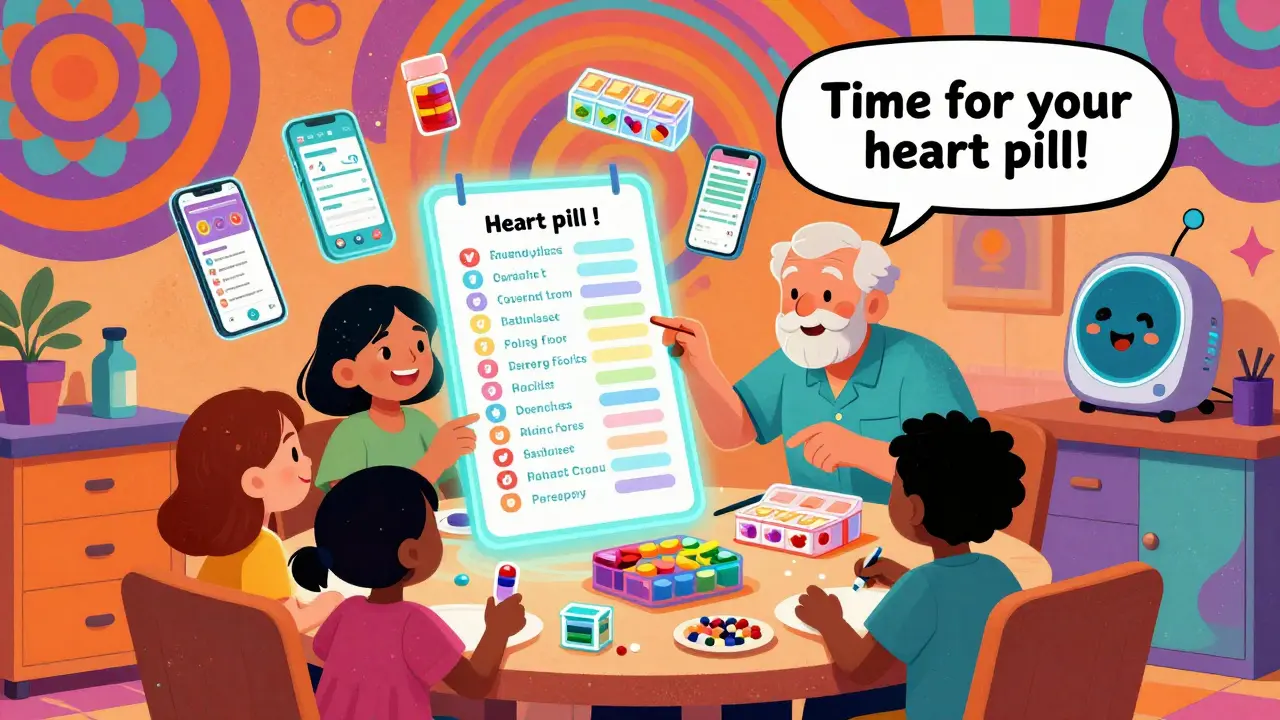
Managing medications at home isn’t just about remembering to take pills. It’s about keeping track of doses, spotting dangerous interactions, knowing what to do when a dose is missed, and handling emergencies-all while juggling work, family, and personal stress. For older adults or those with chronic conditions, this task can be overwhelming. That’s where family members and caregivers come in. But simply saying, “Can you remind Mom to take her pills?” isn’t enough. Effective medication support needs structure, tools, and clear communication.
Start with a Complete Medication List
The first step in involving caregivers is creating a master list of every medication the person takes. Not just the names. Every detail matters. Write down the brand name and generic name, exact dosage (like “Lisinopril 10mg”), how often to take it (e.g., “once daily at 8 AM with breakfast”), why it’s prescribed, and any known side effects or interactions. Include over-the-counter drugs, vitamins, and supplements too. Many people forget these, but they can cause serious problems. For example, mixing ibuprofen with blood thinners increases bleeding risk.The Agency for Healthcare Research and Quality (AHRQ) says this list should have 17 specific data points per medication. A 2023 study in the Journal of Palliative Medicine found that caregivers using a full list reduced medication errors by 33%. Keep it printed and digital. Update it within 24 hours of any change-new prescriptions, dose adjustments, or stops. Bring it to every doctor’s visit. One caregiver in Ohio told the Caregiver Action Network she caught a dangerous interaction between her mother’s blood pressure and arthritis meds because she had the full list handy.
Use Tools That Actually Work
Paper reminders fade. Memory fades faster. Tools make a real difference. A simple 7-day pill organizer with morning and evening compartments reduces errors by 37%, according to a 2022 study in the Journal of the American Geriatrics Society. For more complex regimens, electronic dispensers like Hero Health beep, flash, and even call caregivers if a dose is missed. Clinical trials show these reduce missed doses by 62%.Smartphone apps like Medisafe and Round Health send push notifications and let caregivers track adherence remotely. A 2022 study found they improve adherence by 45% compared to paper logs. For those with memory issues, voice assistants like Amazon Alexa can be programmed to say, “It’s time for your heart pill,” and even remind caregivers to refill prescriptions. University of Pittsburgh research showed Alexa reminders cut missed doses by 37% for patients with dementia.
Don’t forget automatic refills. Most major pharmacies-CVS, Walgreens, and Medicare Part D plans-offer this. Set it up 7-10 days before running out. About 85% of pharmacies provide it as of early 2024. No more last-minute pharmacy runs or missed doses because the bottle’s empty.
Build Routines, Not Reminders
Habits stick better than alarms. Link medication times to daily routines you already do. Brush your teeth? Take your blood pressure pill right after. Eat breakfast? That’s when you take your cholesterol med. This technique, called “habit stacking,” is backed by the National Institute on Aging. A 2022 study showed it increases adherence by 28%.Why does this work? Your brain remembers actions tied to other actions. If you always brush your teeth at 7 AM, you’ll start associating that moment with taking pills. No need to remember a separate schedule. Just follow your existing rhythm.
Know When to Call the Pharmacist
Pharmacists are the most accessible medication experts in the healthcare system. Over 92% of U.S. pharmacies have pharmacists available for free consultations without an appointment, as of late 2023. Don’t wait until something goes wrong. Schedule a 10-minute chat when a new prescription arrives.Ask these four questions:
- When should this be taken-before, during, or after meals?
- Are there foods, drinks, or other meds to avoid?
- What if I miss a dose?
- How long until I notice it’s working?
Dr. Michael Steinman from UCSF says these simple questions prevent most avoidable errors. Pharmacists also check for dangerous combinations using the American Geriatrics Society’s Beers Criteria-a list of 30 medications that are risky for older adults. If a new drug is on that list, ask if there’s a safer alternative.
Do Quarterly Medication Reviews
People on five or more medications are at higher risk for side effects, falls, and hospitalization. That’s why the American Geriatrics Society recommends a full medication review every three months. Look at every pill, patch, inhaler, and injection. Ask: Is this still needed? Are any drugs doing the same job? Can any be stopped?A 2022 study in JAMA Internal Medicine found that quarterly reviews reduced inappropriate prescriptions by 22%. One caregiver in Michigan stopped her father’s sleep aid after realizing it was making him dizzy and increasing his fall risk. The doctor agreed-no new prescription needed.
Prepare for Emergencies
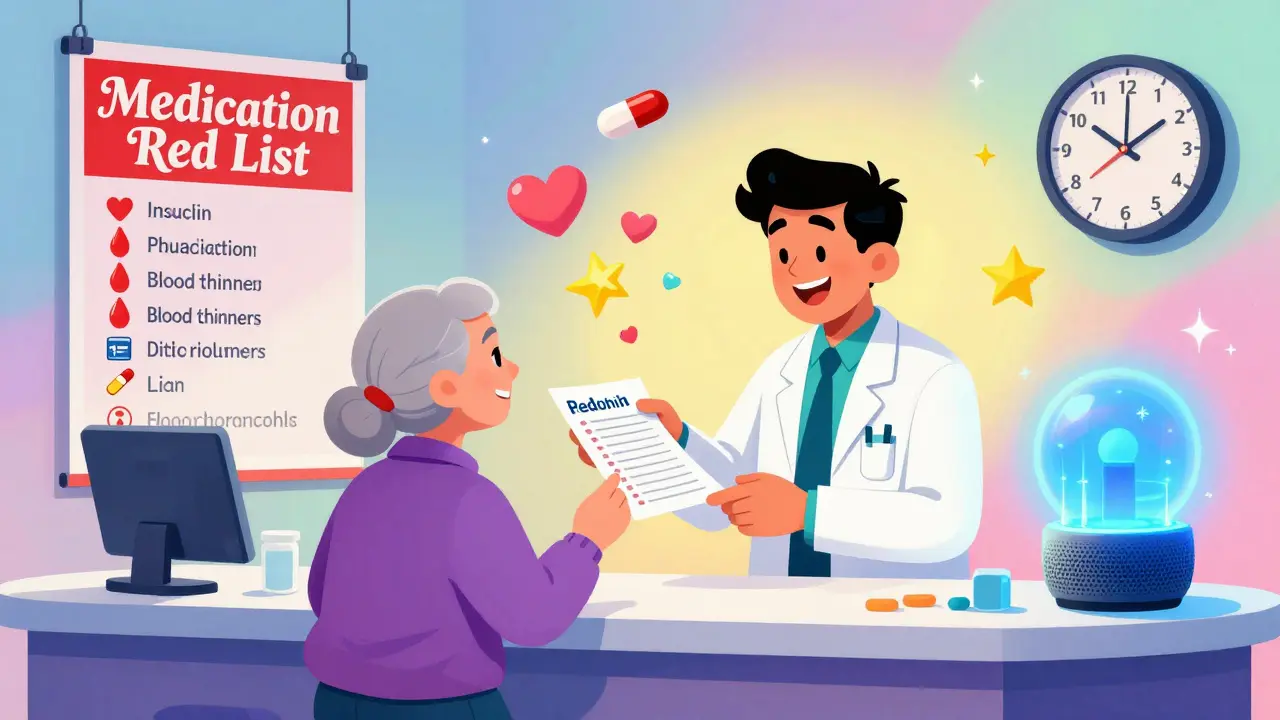
Not all missed doses are equal. Some are dangerous. Make a “medication red list” for drugs that need immediate attention if skipped. These include:- Insulin
- Blood thinners like warfarin or apixaban
- Heart medications like beta-blockers or digoxin
- Anti-seizure drugs
- Steroids like prednisone
Write down what to do if one is missed. For example: “If insulin is missed, check blood sugar now. Call doctor if over 250.” Keep this list taped to the fridge and in the caregiver’s phone. A 2023 study in the Annals of Internal Medicine showed families with a red list reduced emergency room visits by 19%.
Attend Appointments Together
Caregivers who go to doctor’s visits with their loved ones understand the plan better. The AARP’s 2023 Caregiving Survey found that 89% of caregivers who attended appointments reported clearer understanding of medication instructions. Bring the full medication list. Write down questions ahead of time. Take notes. Ask: “Is this the best option?” or “Are there cheaper alternatives?”One caregiver on Reddit said his dad saw four different specialists-and none knew what the others prescribed. He brought the master list to every appointment. Within weeks, two duplicate drugs were stopped. His dad’s blood pressure improved.

Watch for Burnout
Medication management is one of the most stressful parts of caregiving. The National Alliance for Caregiving reports that 42% of caregivers say it’s their top stressor. If you’re feeling overwhelmed, it’s not weakness-it’s a sign you need support.Don’t try to do it alone. Ask other family members to share tasks. One person handles refills, another sets alarms, a third calls the pharmacy. Use technology to automate what you can. Talk to your doctor about Medication Therapy Management (MTM) services. Medicare Part D requires these for people on eight or more drugs with three or more chronic conditions. In 2023, 68% of eligible beneficiaries used them. These services include one-on-one pharmacist reviews, refill coordination, and side effect monitoring.
Plan for Transitions
The biggest risk for medication errors happens when someone leaves the hospital and goes home. A 2021 study in the Journal of General Internal Medicine found that 50-60% of errors occur during this transition. Hospitals often change medications without telling caregivers. Discharge papers are confusing. Pills are packed differently.Before discharge, ask: “What’s changed?” and “Can I get a printed list of all current meds?” Take the list to the pharmacy and have the pharmacist compare it to the hospital’s instructions. If something doesn’t match, ask why. Don’t assume the hospital got it right.
What’s Next?
The future of medication support is digital. The FDA has cleared over a dozen smart pill systems since 2017. AI assistants like Alexa Care Hub saw 200% growth in 2023. By 2027, two-thirds of caregiver medication support may use AI tools. But the core won’t change: people still need clear lists, trusted routines, and someone to ask questions to.Start small. Pick one step: make the list today. Set up automatic refills this week. Talk to the pharmacist next time you pick up a prescription. Progress isn’t about perfection. It’s about consistency. And when done right, it keeps people safer, healthier, and at home longer.
What if my loved one refuses to take their meds?
Don’t force it. First, find out why. Is it because of side effects, cost, confusion, or fear? Talk to their doctor or pharmacist. Sometimes a simpler regimen or cheaper alternative helps. Use habit stacking to make taking meds part of a routine they already enjoy, like after morning coffee. If memory is the issue, use a pill dispenser with alarms. If they’re depressed or anxious, ask their doctor about screening-mental health affects medication adherence more than people realize.
Can I use a pill organizer for all medications?
Not always. Some pills shouldn’t be removed from their original packaging. Enteric-coated tablets, capsules that dissolve in the gut, and time-release pills can lose effectiveness if taken out. Check with the pharmacist before putting any medication in a pill organizer. Also, avoid storing meds in humid places like the bathroom. Keep them in a cool, dry spot.
How do I know if a medication is still necessary?
Ask for a medication review every three months. Look at each drug and ask: Is this still treating a condition I have? Has my health improved enough to stop it? Are there safer alternatives? Some meds, like painkillers or sleep aids, are meant for short-term use. Others, like blood pressure drugs, need to be taken for life. Your pharmacist can help you sort through what’s essential and what’s not.
Are there free resources for caregivers?
Yes. Medicare Part D beneficiaries can get free Medication Therapy Management (MTM) services if they take eight or more prescriptions and have three or more chronic conditions. Many pharmacies offer free consultations. The Caregiver Action Network provides free downloadable medication trackers and checklists. AARP also offers a caregiver toolkit with templates for medication lists and appointment notes-all free.
What should I do if I suspect a medication error?
Don’t wait. If you notice unusual symptoms-dizziness, confusion, rash, nausea, or sudden weakness-contact the prescribing doctor or pharmacist immediately. If it’s an emergency, call 911 or go to the ER. Bring the medication list and the actual bottles. Many errors happen because the wrong dose or drug was given. Having the physical bottles helps the medical team spot the mistake fast.
Jerry Rodrigues
January 21, 2026 AT 10:53Jarrod Flesch
January 22, 2026 AT 07:33Stephen Rock
January 24, 2026 AT 01:21Yuri Hyuga
January 26, 2026 AT 01:07Rod Wheatley
January 27, 2026 AT 03:45Andrew Rinaldi
January 28, 2026 AT 12:57Gerard Jordan
January 29, 2026 AT 12:20michelle Brownsea
January 31, 2026 AT 02:03Roisin Kelly
January 31, 2026 AT 08:36Malvina Tomja
January 31, 2026 AT 13:52Glenda Marínez Granados
January 31, 2026 AT 14:44Dee Monroe
February 2, 2026 AT 01:47Alex Carletti Gouvea
February 3, 2026 AT 21:35