

Macrolide Antibiotic Risk Calculator
This tool estimates your individual risk of QT prolongation when taking macrolide antibiotics based on key medical factors. Risk levels are determined using validated clinical criteria from the article.
When you take an antibiotic like azithromycin or clarithromycin for a sinus infection or bronchitis, you’re probably not thinking about your heart. But for some people, these common drugs can trigger a dangerous electrical disturbance in the heart - one that can lead to sudden cardiac arrest. The issue isn’t rare, and it’s not theoretical. It’s called QT prolongation, and it’s a real, measurable risk tied to macrolide antibiotics.
What Exactly Is QT Prolongation?
Your heartbeat is controlled by electrical signals that move through your heart muscle in a precise sequence. The QT interval on an ECG measures how long it takes for your heart’s lower chambers (ventricles) to recharge between beats. If that interval gets too long, your heart can slip into a chaotic rhythm called Torsades de pointes - a type of ventricular tachycardia that can turn fatal within minutes if not treated. Macrolide antibiotics like erythromycin, clarithromycin, and azithromycin interfere with a specific potassium channel in heart cells called the hERG channel. This channel helps the heart reset after each beat. When the antibiotic blocks it, the heart takes longer to recharge. That delay shows up on an ECG as a longer QT interval. It’s not just a lab curiosity - it’s a trigger for life-threatening arrhythmias.Not All Macrolides Are the Same
Many people assume all macrolides are equally safe. They’re not. Clarithromycin carries the highest risk. It doesn’t just block potassium channels - it also shuts down a liver enzyme (CYP3A4) that breaks down other drugs. That means if you’re taking another QT-prolonging medication - say, a statin or an antifungal - clarithromycin can cause dangerous drug buildup. Studies show clarithromycin is responsible for more cases of Torsades de pointes than any other macrolide. Erythromycin is a close second. It’s a weaker blocker of the hERG channel, but it causes severe nausea and vomiting in many people. That leads to low potassium levels - a known trigger for arrhythmias. Even if your QT interval starts normal, dropping your potassium can push you over the edge. Azithromycin was once considered the safest option. It barely affects CYP3A4 and has weaker hERG binding. But that perception changed after a 2012 study of over 1.3 million patients found azithromycin was linked to 2.85 extra cardiovascular deaths per 1,000 courses compared to amoxicillin. The risk peaked in the first five days of use - right when most people are feeling better and think they’re out of danger.Who’s at Real Risk?
The truth is, most healthy people won’t have a problem. But certain factors stack the deck. If you have two or more of these, your risk jumps dramatically:- You’re over 65 - risk doubles
- You’re female - nearly 7 out of 10 TdP cases occur in women
- Your baseline QTc is over 450 ms - that’s a 4.7x higher risk
- You’re on another QT-prolonging drug - each one adds 1.8x more risk
- You have low potassium or magnesium - hypokalemia triples your risk
- You have heart failure or structural heart disease - that’s a 5.3x increase

What Doctors Are Doing About It
In 2020, the American Heart Association officially labeled clarithromycin, erythromycin, and azithromycin as drugs with a known risk of Torsades de pointes. That changed prescribing habits. Clarithromycin prescriptions dropped 23.5% among Medicare patients in just one year. Azithromycin still dominates the market - it’s used in 65% of all macrolide prescriptions in the U.S. - but doctors are far more cautious. Current guidelines say: if you have two or more risk factors, get a baseline ECG before starting a macrolide. If your QTc is over 470 ms in men or 480 ms in women, avoid macrolides entirely. If your QTc increases by more than 60 ms after starting the drug, stop it immediately. The FDA warns against using macrolides if you already have QT prolongation, a history of TdP, or are taking other drugs that prolong the QT interval - like certain antidepressants, antifungals, or antiarrhythmics. Clarithromycin carries a black box warning in the U.S. Azithromycin’s label has a warning too, but not the highest-level alert. That difference influences what doctors choose - even if the actual risk isn’t that far apart.Monitoring Is Getting Easier
In the past, checking your QT interval meant a trip to the hospital for an ECG. Now, there are point-of-care devices like the CardioCare QT Monitor - a handheld tool that gives accurate QTc readings in under a minute with less than 5 ms error. It’s being used in urgent care centers and even some pharmacies. A new tool called the Macrolide Arrhythmia Risk Calculator (MARC) is also gaining traction. Developed at Brigham and Women’s Hospital, it uses 12 variables - age, sex, kidney function, current meds, electrolyte levels - to predict your individual risk of TdP. In validation studies, it was 89% accurate. That’s not perfect, but it’s a big step toward personalized prescribing.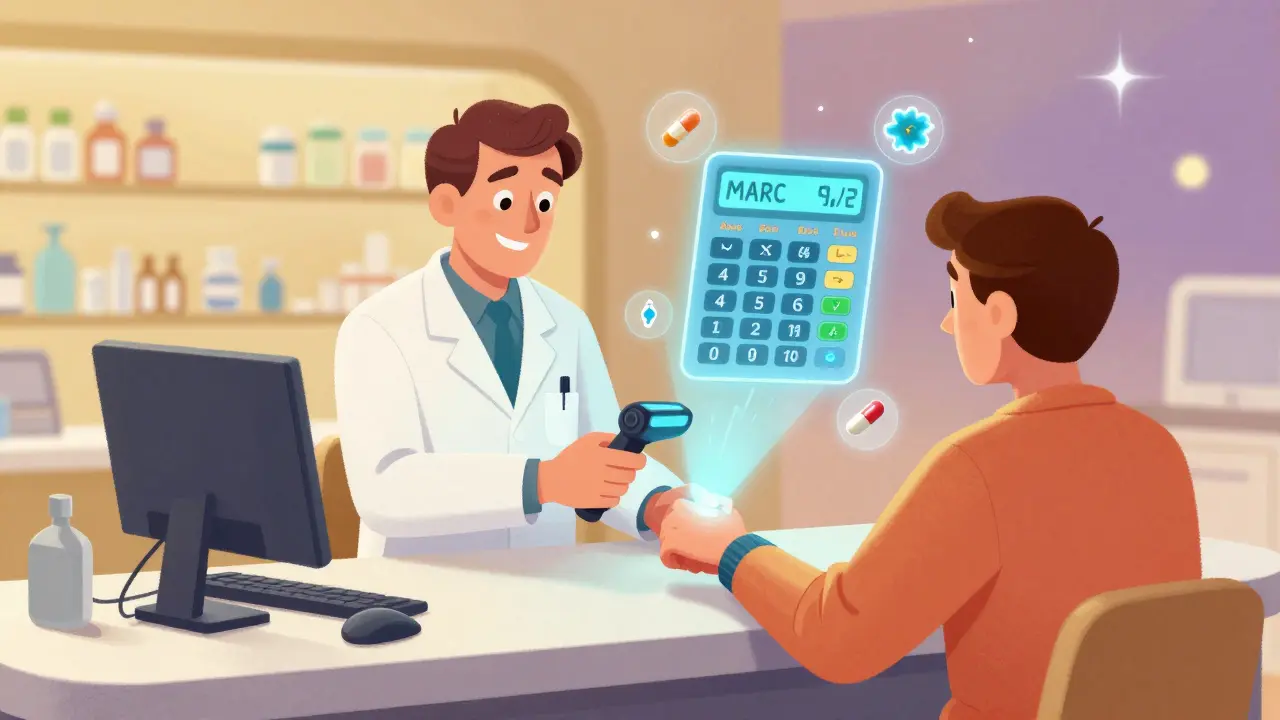
What You Should Do
If your doctor prescribes a macrolide:- Ask: “Is this the safest option for me, given my health history?”
- Know your baseline QTc - if you’ve had an ECG in the last year, bring the report.
- Don’t assume azithromycin is “safe.” It still carries risk, especially if you’re older, female, or on other meds.
- Report symptoms: dizziness, fainting, palpitations, or sudden fatigue. These aren’t normal side effects - they could be early signs of arrhythmia.
- Don’t stop the antibiotic without talking to your doctor - but don’t ignore warning signs either.
The Bigger Picture
This isn’t just about antibiotics. It’s about how we think about drug safety. For decades, we focused on whether a drug killed bacteria - not whether it could kill the person taking it. Now we know: every drug has a profile. Some affect the liver. Others affect the kidneys. Macrolides affect the heart’s electrical system. Research is moving toward “cardiosafe” versions of these drugs. One candidate, solithromycin, showed 78% less hERG blockade than clarithromycin in trials. But it was pulled from development due to liver toxicity - a reminder that fixing one risk can create another. The future lies in genetics. Early studies suggest 15% of people carry gene variants that make them 4.2 times more sensitive to macrolide-induced QT prolongation. Imagine a future where your pharmacist runs a quick genetic screen before filling your prescription. That’s not science fiction - it’s already being tested in clinical trials. For now, the message is simple: macrolides are useful, but they’re not harmless. The risk is low for most - but for some, it’s deadly. Awareness, screening, and smart prescribing can prevent tragedies. Your heart doesn’t just fight infection - it needs protection too.Can azithromycin really cause heart problems?
Yes. While azithromycin is considered the safest macrolide, studies have shown it can still prolong the QT interval and increase the risk of sudden cardiac death, especially in people with existing heart conditions, electrolyte imbalances, or those taking other QT-prolonging drugs. The risk is highest in the first five days of use.
Is clarithromycin more dangerous than azithromycin?
Yes. Clarithromycin has stronger hERG channel blockade and significantly inhibits the CYP3A4 liver enzyme, which can raise levels of other heart-risking drugs. It’s linked to more cases of Torsades de pointes than azithromycin and carries a black box warning from the FDA. Azithromycin has a lower risk profile but is not risk-free.
Should I get an ECG before taking a macrolide antibiotic?
If you have two or more risk factors - such as being over 65, female, on other QT-prolonging medications, or having heart disease or low potassium - yes. A baseline ECG helps determine if your QT interval is already extended. If it is, your doctor may choose a different antibiotic.
What are the warning signs of a dangerous heart rhythm from macrolides?
Sudden dizziness, fainting, palpitations (a racing or fluttering heartbeat), chest pain, or unexplained fatigue during the first few days of treatment could signal a dangerous arrhythmia. These aren’t normal side effects. Stop the medication and seek medical help immediately.
Can I take azithromycin if I have a history of heart arrhythmias?
No. If you’ve had Torsades de pointes, ventricular arrhythmias, or congenital long QT syndrome, macrolide antibiotics - including azithromycin - are generally contraindicated. Your doctor should prescribe an alternative, like doxycycline or amoxicillin, depending on your infection.
Are there safer antibiotics than macrolides for respiratory infections?
Yes. For many common infections like sinusitis or bronchitis, amoxicillin, doxycycline, or cefdinir are equally effective and carry no QT prolongation risk. Macrolides are often overprescribed. Ask your doctor if a non-macrolide option is appropriate for your case.
Does taking potassium supplements reduce the risk?
Maintaining normal potassium levels is important - low potassium increases arrhythmia risk by over 3 times. But taking extra potassium supplements without medical supervision can be dangerous, especially if you have kidney problems. Always get your levels checked first and follow your doctor’s advice.
Laura Rice
January 23, 2026 AT 01:43This article scared me half to death. I took azithromycin last winter for a bad cough and felt like my heart was trying to escape my chest. I thought it was just anxiety-turns out, maybe it wasn’t. I’m 68, female, and on a statin. Why didn’t my doctor warn me? I’m not mad, just... stunned.
Everyone thinks antibiotics are harmless. They’re not. They’re like tiny grenades in your bloodstream, and your heart’s just sitting there holding the pin.
Oladeji Omobolaji
January 24, 2026 AT 08:51Man, this is wild. Back home in Nigeria, we just get whatever the pharmacy gives us. No ECG, no questions. If it’s cheap and it’s blue, you take it. But now I’m thinking-maybe we need to start asking more. My aunt died suddenly last year. No one ever said why. Now I wonder.
Janet King
January 26, 2026 AT 02:47Based on current clinical guidelines, patients with two or more risk factors should undergo baseline electrocardiographic evaluation prior to macrolide administration. This is not optional. It is standard of care. The FDA has issued clear warnings. Clinicians must prioritize patient safety over convenience.
Stacy Thomes
January 27, 2026 AT 09:39STOP. RIGHT. NOW. If you’re over 50, female, or on any med that isn’t aspirin-DON’T take azithromycin without asking for an ECG. I’m not being dramatic. I’m a nurse. I’ve seen the monitors go flat. One minute they’re fine. The next-nothing. It’s not ‘rare.’ It’s just silent until it’s too late.
Ask your doctor. Demand the test. Your heart doesn’t owe you a second chance.
dana torgersen
January 27, 2026 AT 12:12Okay, but… what if… the real problem… isn’t the antibiotic… but the fact that we treat our bodies like… vending machines? We pop pills like candy… and then act shocked when… something breaks? We don’t listen… we don’t learn… we just… take… and take… and take… until… our hearts… forget… how to beat…
…I’m not mad… I’m just… sad.
Dawson Taylor
January 29, 2026 AT 08:36The data is clear. The risk is quantifiable. The interventions are available. The question is not whether macrolides are dangerous-they are, in specific contexts. The question is whether our systems are designed to prevent harm, or merely to respond to it.
Anna Pryde-Smith
January 29, 2026 AT 14:22My mom died from a ‘routine’ antibiotic. They told her it was ‘safe.’ She was 71, on blood pressure meds, and had a 460ms QT. No one checked. No one cared. Now I fight every doctor who tries to prescribe this stuff. I don’t care if it’s ‘the most common.’ If it can kill, it’s not ‘just a cold pill.’
Stop normalizing this. People are dying because we’re too lazy to ask.
Vanessa Barber
January 31, 2026 AT 04:56Yeah, but… have you ever actually seen someone die from this? Like, in real life? Or is this just… fearmongering with a fancy ECG chart? I mean, I’ve taken azithromycin three times. Still here. Maybe the risk is tiny? Or maybe we’re just scared of everything now?
Sallie Jane Barnes
February 1, 2026 AT 20:59As a primary care provider, I’ve changed my prescribing habits entirely. I now use amoxicillin as first-line for uncomplicated respiratory infections. If a patient has risk factors, I order a baseline ECG before even considering a macrolide. It takes 5 minutes. It could save a life. The cost of inaction is not worth the convenience.
Education, not fear, is the answer.
Andrew Smirnykh
February 2, 2026 AT 05:16This is a global issue. In the U.S., we have ECG machines and guidelines. In many countries, antibiotics are sold over the counter. No screening. No monitoring. No follow-up. We talk about personalized medicine, but for billions, medicine is still a gamble. Until we fix that, this won’t just be a medical issue-it’ll be a moral one.