
Beers Criteria Medication Safety Checker
Medication Safety Assessment Tool
Check if medications are potentially inappropriate for older adults (65+) based on the Beers Criteria. Enter medications to see risks and alternatives.
Safety Assessment Summary
Total Medications
0
High-Risk Count
0
Risk Score
0
Every year, more than 1.3 million older adults in the U.S. end up in the emergency room because of a medication problem. For many, it’s not one wrong pill-it’s the combination of five, six, or even ten drugs, each prescribed with good intent but stacked together like a house of cards. The risks aren’t theoretical. Older adults are 91% more likely to be hospitalized from an adverse drug event than younger patients. And the numbers keep climbing as the population ages. By 2030, one in five Americans will be over 65. If we don’t fix how we manage medications for this group, the system will buckle under the weight of preventable harm.
Why Older Bodies Handle Drugs Differently
As we age, our bodies change in ways that make medications behave differently. Kidneys slow down. The liver processes drugs less efficiently. Body fat increases while water content drops. All of this means a drug that was safe at 50 can become dangerous at 75. A standard dose of a blood pressure pill might cause an elderly person’s pressure to crash. A sleep aid meant to help with insomnia can leave them confused, unsteady, and at risk of falling. Even common over-the-counter drugs like ibuprofen or diphenhydramine (Benadryl) can trigger serious side effects in older adults-dizziness, confusion, urinary retention, or even heart rhythm problems.
One of the biggest culprits is polypharmacy-taking five or more medications regularly. It’s not unusual. About 40% of older adults take at least five prescription drugs. Some need them. Others don’t. But without careful review, the list just keeps growing. A patient sees a cardiologist, then a rheumatologist, then a pain specialist. Each adds a new script. No one steps back to ask: Is this still helping? Is it safe with everything else?
The Beers Criteria: The Gold Standard for Safer Prescribing
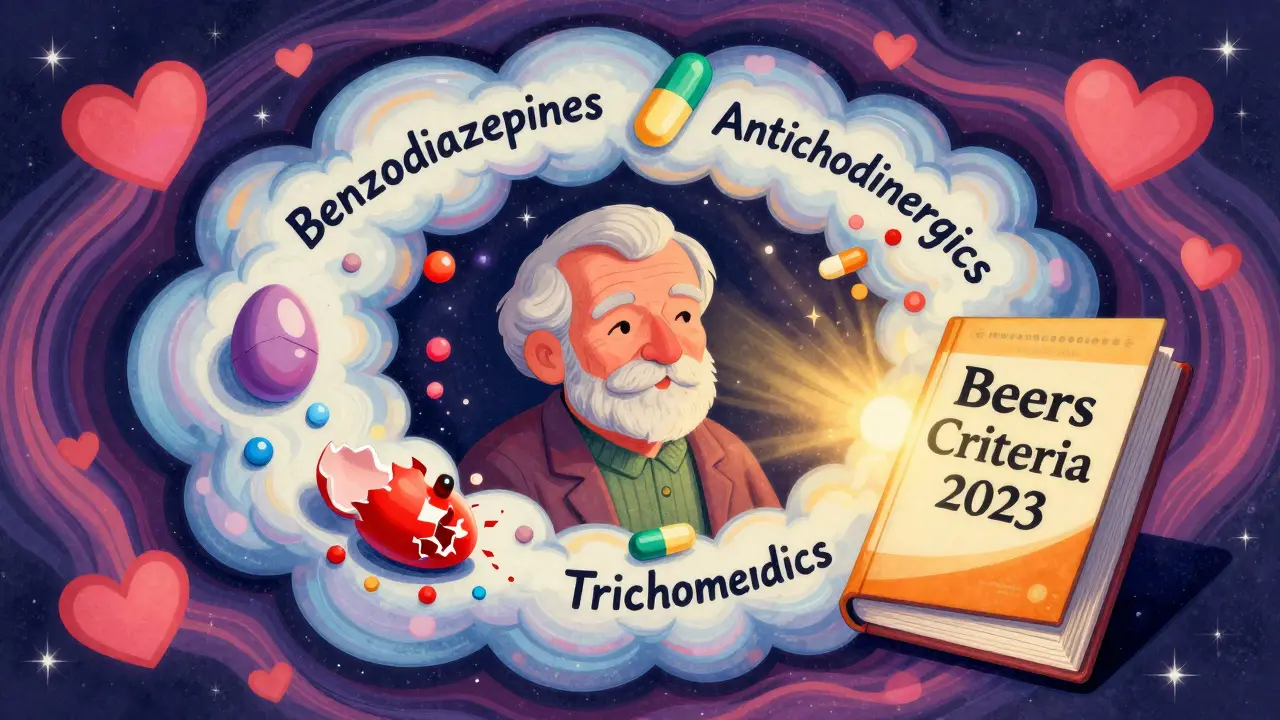
The American Geriatrics Society (AGS) created the Beers Criteria in 1991 to give doctors a clear, evidence-based guide to avoid dangerous drugs in older patients. It’s been updated every three years, with the latest version released in 2023. The 2023 list identifies 139 medications or classes that should be avoided-or used with extreme caution-in adults 65 and older.
Some drugs are flagged because they’re too risky for almost anyone over 65. For example, benzodiazepines like diazepam (Valium) and lorazepam (Ativan) are linked to increased falls, confusion, and dementia risk. Non-steroidal anti-inflammatory drugs (NSAIDs) like ketorolac and indomethacin raise the chance of stomach bleeding and kidney failure. Anticholinergic drugs-used for overactive bladder, allergies, or depression-can cause memory loss and delirium.
Other drugs on the list aren’t banned outright but require adjustments. Tramadol, for instance, was added in 2023 because it can cause dangerously low sodium levels, especially when combined with diuretics or antidepressants. Aspirin, once widely used for heart disease prevention, is now only recommended for primary prevention up to age 70-after that, bleeding risks outweigh benefits for most people.
What makes the Beers Criteria powerful is that it’s not just a list. It’s integrated into major electronic health record systems like Epic. In 87% of geriatric-focused installations, the system flags high-risk prescriptions before they’re written. But alerts alone aren’t enough. Many clinicians override them because they’re too broad. A warfarin warning pops up for a patient with atrial fibrillation-even though warfarin is essential in that case. That’s alert fatigue, and it’s a real problem.
The Missing Piece: What to Use Instead
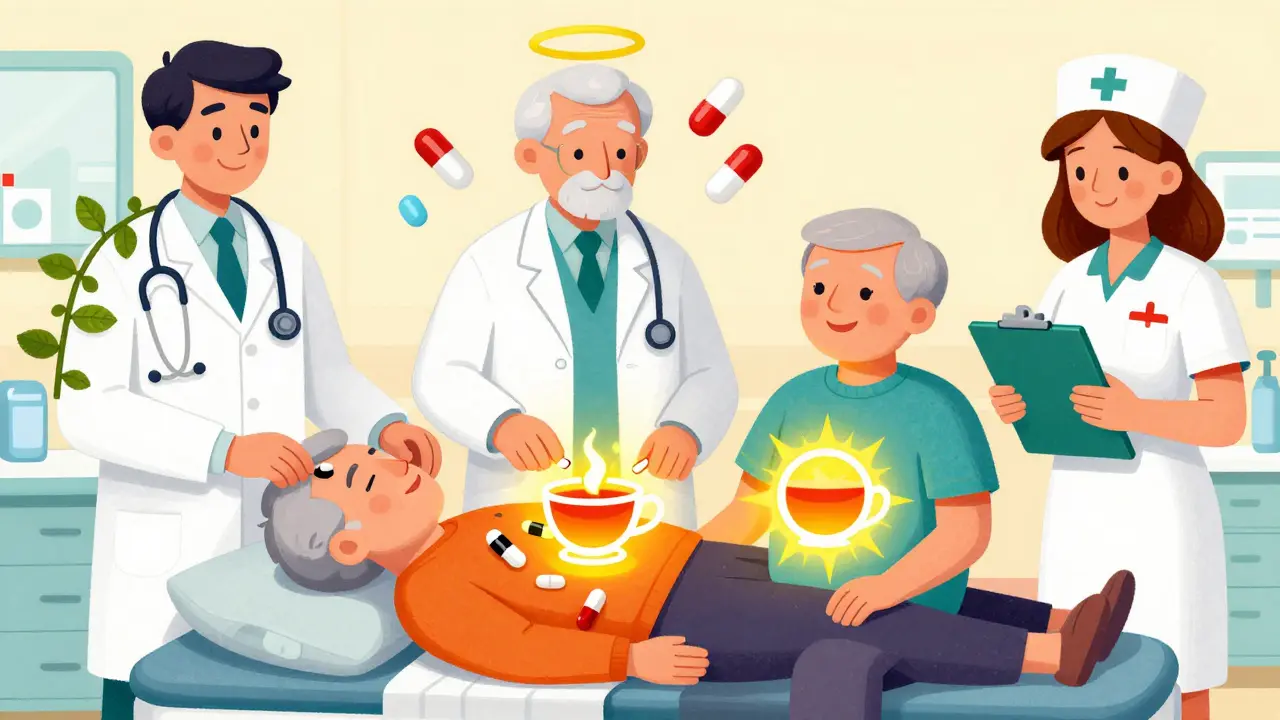
In July 2025, the AGS released something new: the AGS Beers Criteria® Alternatives List. This wasn’t just another guideline. It was a response to a cry for help from doctors. A 2023 survey found that 68% of primary care providers had no idea what to prescribe when they wanted to stop a problematic drug.
The Alternatives List offers 47 evidence-based options-38% of them are non-drug treatments. For example:
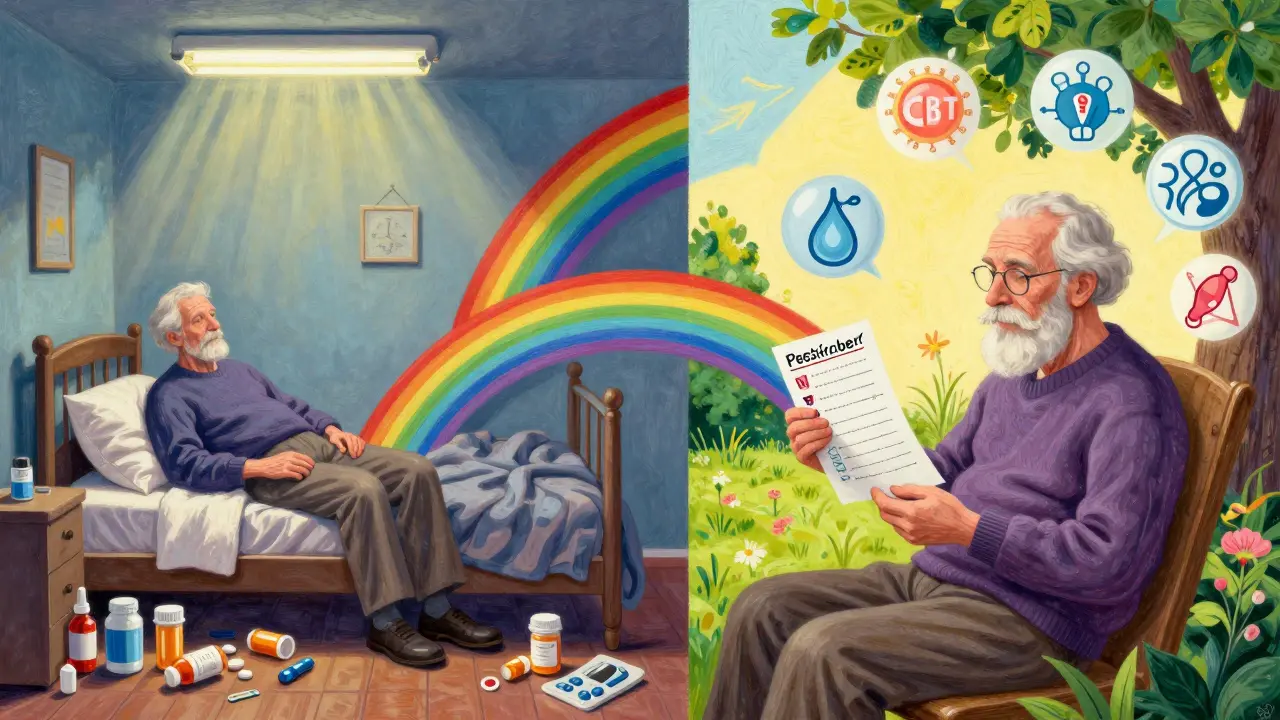
- Instead of benzodiazepines for anxiety or insomnia: cognitive behavioral therapy (CBT), sleep hygiene routines, or melatonin (in low doses).
- Instead of anticholinergics for overactive bladder: pelvic floor exercises, timed voiding, or bladder training.
- Instead of NSAIDs for chronic pain: physical therapy, heat/cold therapy, acupuncture, or acetaminophen (with liver monitoring).
This shift-from don’t use this to here’s what to use instead-is a game-changer. It gives clinicians a path forward, not just a stop sign.
How Hospitals Are Making It Work
Emergency departments are on the front lines. Older adults show up with falls, confusion, or unexplained weakness-and often, the root cause is a bad drug interaction. Programs that combine the Beers Criteria with a multidisciplinary team are making real progress.
At the Mayo Clinic Rochester ED, a team of pharmacists, geriatricians, and emergency physicians redesigned their workflow. They trained staff on the Beers Criteria and Alternatives List. They added pharmacist-led medication reviews before discharge. Within six months, they cut high-risk prescriptions by 38%. The secret? They didn’t just rely on computer alerts. They had people-experts-talking to patients and doctors.
Other successful models include:
- University of Alabama at Birmingham: Reduced 30-day readmissions by 22% through pharmacist-led medication reconciliation in the ED.
- Rural EDs using GEMS-Rx: Reported a 29% drop in high-risk medication errors after adopting simplified decision tools.
But success isn’t automatic. It takes time. One hospital spent 12 weeks training staff and redesigning workflows. Another needed to hire a full-time clinical pharmacist just to manage the program. CMS now requires emergency departments to track specific high-risk medications (Measure 238), and non-compliant hospitals face reimbursement cuts. That’s forcing change-but not always smoothly.
Where It’s Still Falling Short
Even with all the tools available, big gaps remain. In rural areas, only 31% of emergency departments have full geriatric medication safety programs. Many clinics don’t have pharmacists on staff. Primary care doctors are stretched thin. And some patients don’t even know what they’re taking.
Another issue? One-size-fits-all rules. The Beers Criteria are powerful, but they can’t replace clinical judgment. A 2024 JAMA Internal Medicine commentary warned that rigid application can lead to harm. For example, stopping aspirin in a 68-year-old with a history of heart attack and no bleeding risk might be dangerous. The guidelines are meant to guide, not replace conversation.
Alert fatigue is another silent killer. When EHR systems fire off 20 warnings per patient, clinicians start ignoring them. The AGS is working on AI-driven updates for 2026 that will make alerts smarter-only popping up when context matters.
What You Can Do
If you’re caring for an older adult-whether it’s a parent, grandparent, or neighbor-here’s what you can do right now:
- Keep a written list of every medication, supplement, and OTC drug they take-including doses and why.
- Ask their doctor: “Is this still necessary?” and “Could any of these be causing dizziness or confusion?”
- Request a medication review with a pharmacist. Many pharmacies offer free consultations.
- Watch for signs of trouble: falls, memory lapses, fatigue, nausea, or sudden mood changes.
- Don’t be afraid to question a new prescription. If it’s not clear why it’s needed, ask for alternatives.
Medication safety for older adults isn’t about eliminating drugs. It’s about matching the right treatment to the right person-with the right dose, at the right time. The science is here. The tools exist. What’s missing is consistent, intentional action-from clinicians, hospitals, and families alike.
What is the Beers Criteria?
The Beers Criteria is a list of medications that are potentially inappropriate for adults aged 65 and older, developed and updated every three years by the American Geriatrics Society. It identifies drugs that carry higher risks of side effects, interactions, or harm in older adults-such as benzodiazepines, NSAIDs, anticholinergics, and certain opioids. The 2023 version includes 139 medications or classes and is used by clinicians, hospitals, and electronic health record systems to guide safer prescribing.
What is polypharmacy and why is it dangerous for older adults?
Polypharmacy means taking five or more medications regularly. While sometimes necessary, it becomes dangerous in older adults because aging changes how the body processes drugs. Kidneys and liver slow down, increasing the risk of drug buildup and side effects. The more medications someone takes, the higher the chance of harmful interactions, falls, confusion, or hospitalization. Studies show that each additional potentially inappropriate medication raises the risk of an adverse drug event.
What are some common dangerous medications for seniors?
Common dangerous medications for older adults include benzodiazepines (like Valium and Xanax), NSAIDs (like ibuprofen and ketorolac), anticholinergics (like Benadryl and oxybutynin), certain opioids (like meperidine), and long-term proton pump inhibitors. These can cause falls, confusion, kidney damage, bleeding, or delirium. The 2023 Beers Criteria also added tramadol due to its risk of causing low sodium levels, especially when combined with other drugs.
What should doctors use instead of risky medications?
The AGS Beers Criteria® Alternatives List (2025) offers 47 evidence-based options. For anxiety or insomnia, non-drug options like cognitive behavioral therapy or sleep hygiene are preferred. For overactive bladder, pelvic floor exercises and timed voiding work better than anticholinergics. For chronic pain, physical therapy, heat therapy, or low-dose acetaminophen are safer than NSAIDs. Even when drugs are needed, alternatives like melatonin, low-dose SSRIs, or non-pharmacological approaches are often more appropriate.
Can medication safety programs really reduce hospital readmissions?
Yes. Studies show that emergency departments using multidisciplinary teams-including pharmacists and geriatricians-can reduce potentially inappropriate prescriptions by up to 37%. The University of Alabama at Birmingham cut 30-day readmissions by 22% through pharmacist-led medication reviews. Programs that combine the Beers Criteria with structured deprescribing and patient education cut ADE-related hospitalizations by more than 30%. The key is not just technology, but human expertise.
Christina VanOsdol
February 25, 2026 AT 18:48Emily Wolff
February 27, 2026 AT 06:26Alfred Noble
February 28, 2026 AT 09:41Maranda Najar
March 2, 2026 AT 06:00Matthew Brooker
March 3, 2026 AT 02:39Lou Suito
March 5, 2026 AT 00:01Joseph Cantu
March 6, 2026 AT 02:45Jacob Carthy
March 7, 2026 AT 12:13Lisandra Lautert
March 7, 2026 AT 23:28