
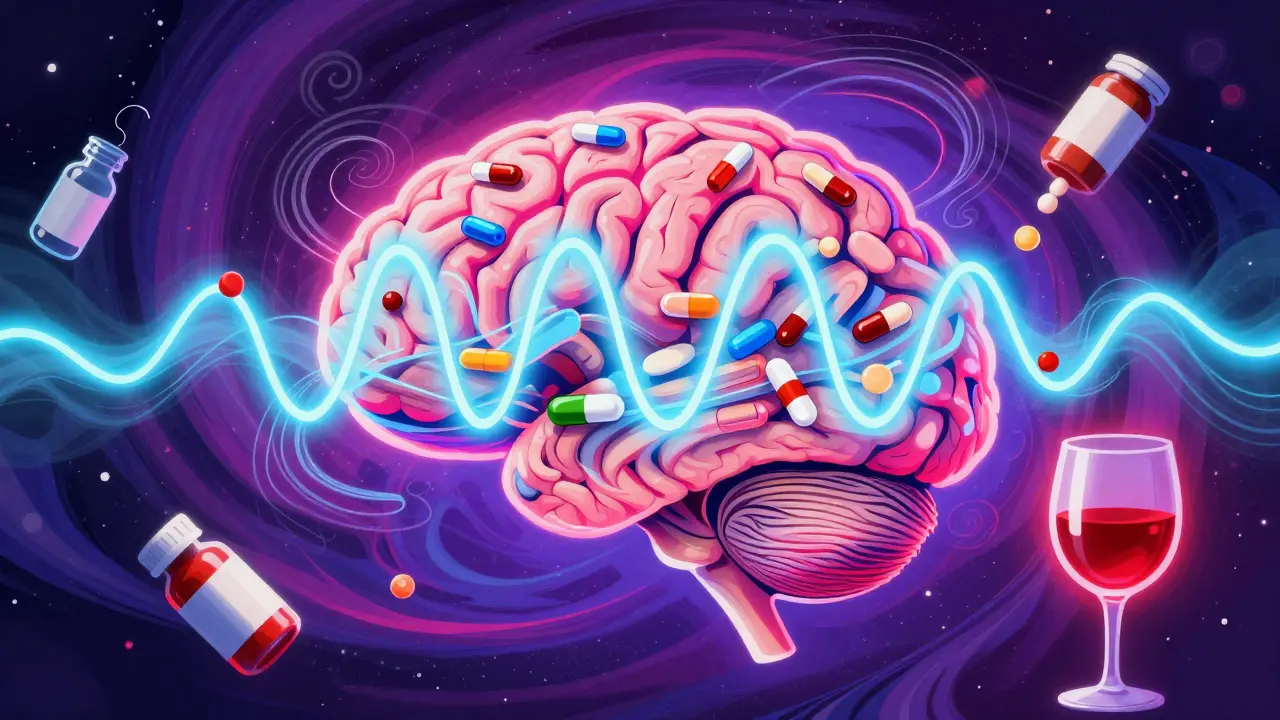
When you take more than one sedating medication at the same time, the effects don’t just add up-they multiply. This isn’t a guess. It’s science. And it’s deadly. In 2020, nearly one in six opioid overdose deaths in the U.S. also involved a benzodiazepine. That’s not a coincidence. It’s a pattern. And it’s happening right now, in homes, clinics, and nursing facilities across the country.
Why Mixing Sedatives Is Dangerous
Medications like opioids, benzodiazepines, sleep aids, muscle relaxants, and even some antidepressants all work the same way: they slow down your brain. Specifically, they boost a calming chemical called GABA. When one of these drugs is taken alone, your body can usually handle it. But when two or more are combined, they team up. That’s called synergy. And it’s why a single dose of Ambien with a glass of wine can knock you out harder than either would alone.
The most dangerous combo? Opioids and benzodiazepines. Together, they suppress the part of your brain that tells you to breathe. Studies show people on both drugs are more than twice as likely to overdose compared to those taking opioids alone. In fact, the risk of fatal overdose jumps by nearly 400% when these two are taken together. That’s not a small increase. It’s a crisis.
What Medications Are Involved?
You might not realize you’re taking multiple sedatives. Here’s what to look for:
- Opioids: Oxycodone, hydrocodone, morphine, fentanyl, tramadol
- Benzodiazepines: Xanax, Valium, Ativan, Klonopin
- Sleep aids: Ambien, Lunesta, Sonata
- Antidepressants: Certain SSRIs and SNRIs (especially when mixed with MAOIs)
- Alcohol: Even one drink can turn a safe dose into a dangerous one
- Muscle relaxants: Cyclobenzaprine, carisoprodol, baclofen
It’s not just prescriptions. Over-the-counter sleep aids, antihistamines like Benadryl, and herbal supplements like valerian root or melatonin can also add to the pile. And here’s the scary part: many doctors don’t ask about all of them.
Warning Signs You Can’t Ignore
There are clear red flags that mean your body is struggling. If you or someone you know shows any of these, act immediately:
- Slowed or shallow breathing-fewer than 12 breaths per minute
- Unresponsiveness-can’t wake up, even with loud shaking or shouting
- Blue lips or fingertips
- Gurgling or choking sounds while sleeping
- Extreme dizziness, confusion, or inability to stand
- Memory blackouts or not remembering the last few hours
These aren’t side effects. They’re signs your breathing is failing. Every minute counts. Call emergency services right away. Don’t wait. Don’t hope it passes. This isn’t a bad night’s sleep. This is a medical emergency.
Who’s at Highest Risk?
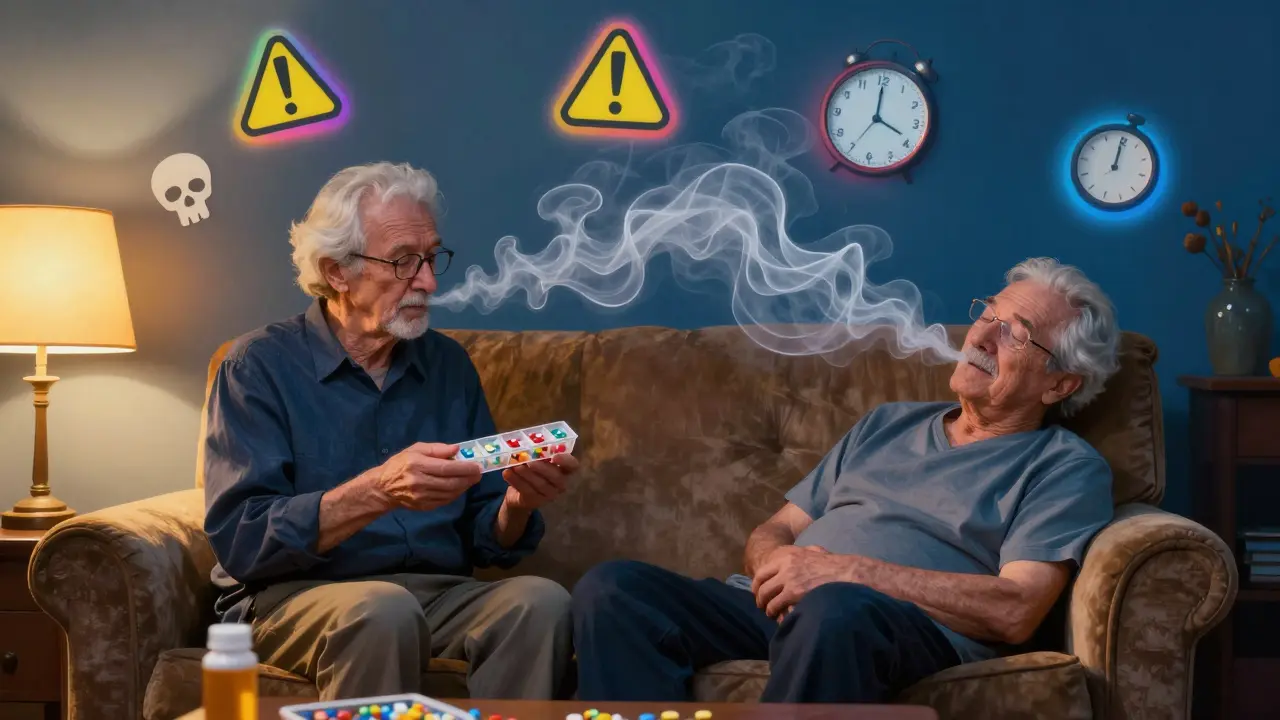
Older adults are hit hardest. One in three seniors over 65 are prescribed at least one sedating medication. The American Geriatrics Society warns that 53 combinations should be avoided in this group. Why? Because aging slows how your body processes drugs. Your liver and kidneys don’t clear them as fast. That means even normal doses can build up and overwhelm your system.
Women are also more likely to be prescribed these drugs. Studies show 41% of older women take potentially dangerous sedatives, compared to 27% of men. And while many assume this is because of anxiety or insomnia, the truth is often less clear. Sometimes it’s a cascade-one doctor prescribes a painkiller, another prescribes a muscle relaxant, and a third prescribes a sleep aid. No one connects the dots.
People who get prescriptions from multiple doctors are especially at risk. Data shows 42% of those who overdosed on combined sedatives had visited three or more providers in just six months. That’s not luck. That’s a system failure.
What’s Being Done-and What’s Not
The FDA added black box warnings to all opioid and benzodiazepine labels in 2022. That’s a step forward. But warnings on a pill bottle don’t stop someone from taking two pills with a beer. Electronic health records still miss 83% of dangerous combinations. A 2020 study found only 17% of EHR systems properly flagged these risks. That means most doctors don’t even see the alert.
Medicare now requires pharmacies to screen for opioid-benzodiazepine combinations. That’s good. But it doesn’t help people who pay out of pocket or use cash prescriptions. And with generic opioids costing $15 a month while non-sedating alternatives run $500, many have no real choice.
There’s progress, though. A new AI tool called DETERMINE, launched in 2022, can predict individual overdose risk with 87% accuracy. It looks at age, weight, kidney function, genetics, and current meds. But it’s not in every clinic. Not yet.
How to Protect Yourself
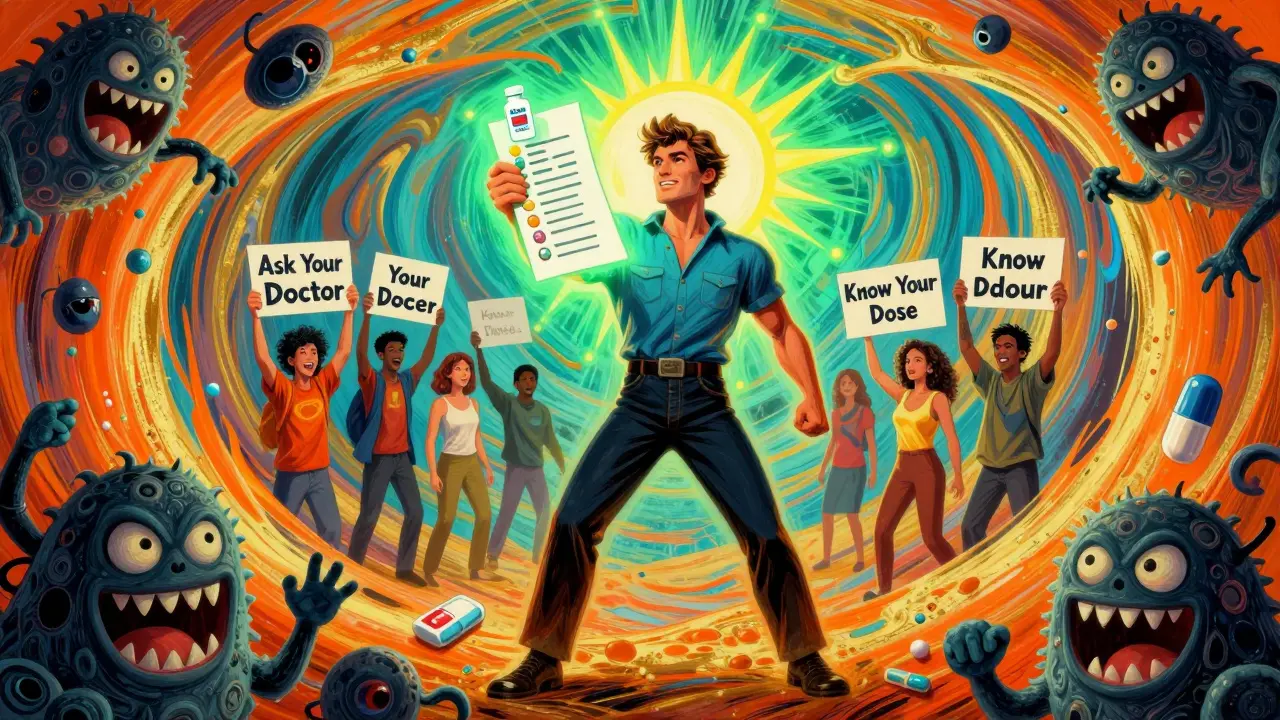
You can’t control what your doctor prescribes-but you can control what you do next. Here’s how:
- Make a full list-write down every pill, patch, liquid, supplement, and herbal remedy you take. Include alcohol and recreational drugs. Bring it to every appointment.
- Ask the question: “Could any of these make me sleepy or slow my breathing?” Don’t assume they know.
- Never mix with alcohol. Even one drink. It’s not worth it.
- Know your dose. If you’re on opioids, ask for your morphine milligram equivalent (MME). Staying under 50 MME per day lowers overdose risk.
- Get a review. If you’re over 65 and take three or more sedatives, ask for a medication review within 30 days.
- Have naloxone. If you or someone you care for takes opioids, keep naloxone (Narcan) on hand. It doesn’t fix everything-but it can save a life while you wait for help.
The Bottom Line
Combining sedating medications isn’t just risky. It’s a silent killer. Most people don’t realize they’re in danger until it’s too late. The numbers don’t lie: 128,000 deaths a year in the U.S. from prescription drug interactions. That’s more than car crashes. More than gun violence. And it’s preventable.
You don’t need to stop all your meds. But you do need to know what you’re taking-and how they work together. Talk to your doctor. Ask questions. Keep a list. Watch for warning signs. And if something feels off-trust it. Your breathing is the most important thing you have. Don’t let a pill make it harder to keep.
Can combining sleep aids and painkillers really be fatal?
Yes. Combining sleep aids like Ambien with opioids like oxycodone can cause your breathing to slow to dangerous levels-or stop entirely. Studies show this combination increases overdose risk by more than 250%. Even at prescribed doses, the effects are unpredictable. Never take these together without direct medical supervision.
Is it safe to drink alcohol while taking benzodiazepines?
No. Alcohol and benzodiazepines both depress the central nervous system. Together, they can cause severe drowsiness, loss of coordination, memory blackouts, and respiratory failure. Just two drinks with a single dose of Xanax can reduce reaction time by 70%. There is no safe level of alcohol when you’re on these drugs.
Why do some doctors still prescribe these combinations?
Many doctors don’t realize how dangerous the combination is-or they’re treating separate symptoms without seeing the full picture. A patient might get pain meds for arthritis, an anti-anxiety drug for stress, and a sleep aid for insomnia-all from different specialists. Without a full medication review, these prescriptions pile up. Electronic systems often don’t alert providers, and time constraints mean conversations about drug interactions get skipped.
What should I do if I’ve been taking multiple sedatives for years?
Don’t stop suddenly. That can be dangerous. Instead, schedule a medication review with your primary care provider. Bring your full list of medications, including supplements and alcohol use. Ask if you can safely reduce or replace any of them. Non-sedating alternatives exist for anxiety, insomnia, and chronic pain. It may take time, but it’s possible to find safer options.
Can I use naloxone if someone overdoses on a combination of sedatives?
Naloxone only reverses opioid overdoses. If someone overdosed on a mix of opioids and benzodiazepines, naloxone can help with the opioid part-but not the sedative part. Still, it’s worth using. It might buy enough time to get emergency help. Always call 911, even if you give naloxone. Emergency responders need to treat the full combination.
Are there non-sedating alternatives for anxiety or insomnia?
Yes. For anxiety, SSRIs like sertraline or cognitive behavioral therapy (CBT) are often more effective long-term than benzodiazepines. For insomnia, sleep hygiene, CBT-I (cognitive behavioral therapy for insomnia), and melatonin (in low doses) are safer than Ambien or Lunesta. These alternatives take more time and effort-but they don’t carry the risk of respiratory failure.
Harriot Rockey
February 4, 2026 AT 02:53Just read this and immediately texted my mom to check her meds. She’s 72 and takes Xanax, tramadol, and melatonin… and yes, she has a glass of wine every night. 😳 I’m scheduling a med review for her this week. Thank you for writing this. We need more of these posts.
Alec Stewart Stewart
February 5, 2026 AT 18:13My uncle died from this. No one knew he was mixing his pain pills with his sleep meds. He just ‘fell asleep’ one night. It’s not just drugs-it’s the silence around them. We gotta talk about it.
Geri Rogers
February 6, 2026 AT 11:44OMG I’ve been screaming about this for YEARS. Doctors treat symptoms like they’re separate puzzles, not one broken body. And don’t even get me started on how pharmacies don’t flag combinations unless it’s opioids + benzos. What about Ambien + muscle relaxants? Or Benadryl + antidepressants? 🤯 People are dying because no one’s connecting the dots. Stop prescribing like it’s 2005.
Samuel Bradway
February 7, 2026 AT 12:59I’m a nurse. I’ve seen this too many times. One patient had 11 sedating meds. Said he just wanted to sleep. Didn’t realize he was slowly shutting down. The saddest part? He didn’t even know half of them were sedatives. We need better education-not just for patients, but for providers too.
Katherine Urbahn
February 8, 2026 AT 11:15It is, without question, an egregious failure of the medical-industrial complex that such preventable fatalities occur with such alarming frequency. The FDA’s black box warnings are wholly inadequate when systemic inertia, fragmented care, and profit-driven prescribing persist. One must question the ethical integrity of a system that prioritizes revenue over respiratory function. This is not merely negligence-it is complicity.
Joseph Cooksey
February 8, 2026 AT 16:36Let me tell you something, folks-this whole thing is a perfect storm of lazy medicine, corporate greed, and people too tired to read the damn pamphlet. You got some doc handing out opioids like candy because his EHR didn’t pop up a warning (because it’s stuck in 2008), then another doc prescribes Xanax because the patient’s ‘stressed,’ and a third one throws in Ambien because the patient ‘can’t sleep.’ Meanwhile, the patient’s just trying to get through the day, and now they’re a walking time bomb. And don’t even get me started on how alcohol’s still considered ‘social’ when it’s basically liquid sedative. We’re not talking about a bad hangover here-we’re talking about someone’s lungs giving up while they dream about vacation. And nobody’s held accountable. Not the pharma reps. Not the docs. Not even the pharmacies. It’s a goddamn tragedy dressed up as ‘standard care.’
Justin Fauth
February 9, 2026 AT 16:25Why is America letting this happen? We’re the richest country on earth and we can’t even keep people from killing themselves with prescriptions? This isn’t a health crisis-it’s a national disgrace. I’ve got a cousin on 4 different sedatives. He’s 48. He should be coaching his kid’s soccer team, not wondering if he’ll wake up tomorrow. Fix this. Now.
Meenal Khurana
February 10, 2026 AT 13:18Thank you for sharing. Important.
Joy Johnston
February 11, 2026 AT 21:16As a clinical pharmacist with over 18 years of experience in geriatric medication management, I cannot emphasize enough the critical importance of polypharmacy reviews, particularly in populations over the age of 65. The pharmacokinetic and pharmacodynamic alterations associated with aging significantly increase the risk of central nervous system depression when multiple GABAergic agents are co-administered. I routinely utilize tools such as Beers Criteria and STOPP/START guidelines to mitigate these risks. I strongly encourage all patients to request a comprehensive medication reconciliation with their primary care provider or pharmacist-preferably in person, with a printed list in hand.
Coy Huffman
February 12, 2026 AT 03:06so like… if i take my zoloft and a little melatonin and sometimes benadryl for allergies… am i basically one bad night away from never waking up? 😅 i mean i know it’s dumb to joke but like… i’ve been doing this for 5 years and i’m still here. right? 🤔
Keith Harris
February 12, 2026 AT 08:43Oh great, another fearmongering post. People have been mixing meds since the 1950s. You think this is new? You think doctors are stupid? The real problem is people who don’t have the sense to stop drinking or take their meds responsibly. Blame the system? Nah. Blame the people who think they’re invincible. And don’t even get me started on naloxone-handing it out like candy just encourages more risky behavior. Let ‘em learn the hard way.
Mandy Vodak-Marotta
February 13, 2026 AT 06:14Okay, I’m gonna say something real. My grandma was on like 7 sedatives. I didn’t even know half of them were sedatives until I read this. She’d fall asleep in the middle of dinner. We thought it was just ‘getting old.’ But then one night she didn’t wake up for 14 hours. We thought she was just napping. Turned out she had a near-overdose. The ER nurse said she was ‘lucky.’ LUCKY? She was minutes away from brain damage. I started keeping a spreadsheet of her meds. I printed it. I laminated it. I carry it in my purse now. I don’t care if it’s weird. I’d rather be annoying than bury someone because no one asked the right questions.
Nathan King
February 14, 2026 AT 16:40The empirical data presented herein is both compelling and statistically significant. However, the rhetorical framing of the piece, while emotionally resonant, risks oversimplifying a complex pharmacological and socioeconomic issue. The assertion that 128,000 annual deaths are attributable solely to polypharmacy ignores confounding variables such as comorbid psychiatric conditions, socioeconomic deprivation, and inadequate access to non-pharmacological interventions. While the precautionary measures proposed are prudent, they are insufficient without systemic reform in primary care delivery and pharmaceutical regulation.
Susheel Sharma
February 16, 2026 AT 02:50Interesting how this post ignores the fact that most of these ‘dangerous’ combinations are prescribed by psychiatrists who have zero training in pharmacokinetics. Also, why is alcohol singled out? It’s not like it’s illegal or anything. And who even uses ‘melatonin’ anymore? That’s just a vitamin. This feels like fear porn for people who don’t understand pharmacology. 🤷♂️