
Why Your Family Needs an Overdose Emergency Plan
Every year, more than 100,000 people in the U.S. die from drug overdoses. Most of those deaths involve opioids - especially synthetic ones like fentanyl - and many happen at home. The truth is, if someone in your household takes prescription pain medication, you’re not immune. You might think, “That won’t happen to us,” but overdose doesn’t always look like a street drug crisis. It can happen after a missed dose, a mix-up with pills, or even a single extra tablet when tolerance drops. The window between someone stopping breathing and brain damage is just 4 to 6 minutes. That’s less time than it takes to call 911, wait for help, and for them to arrive.
But here’s the good news: if you have naloxone - the medication that reverses opioid overdoses - and you know how to use it, you can save a life. Studies show naloxone works in 93% of cases when given quickly. The problem isn’t the drug. It’s the plan. Most families don’t have one. Only 12.3% of U.S. households with prescription medications have a clear, practiced response plan. That’s not because people are careless. It’s because no one ever showed them how to start.
Step 1: Know Who’s at Risk
Not every family needs the same plan. Start by asking: Who in your home takes opioids? That includes medications like oxycodone, hydrocodone, morphine, or fentanyl patches. It also includes any benzodiazepines like Xanax or Valium, especially if they’re taken with opioids. These combinations are deadly. The CDC found that 51.6 million U.S. adults got opioid prescriptions in 2022. If someone in your house is on one, you’re in the high-risk group.
Don’t forget about people who take medication inconsistently. Maybe your teen has a prescription for ADHD meds and sometimes shares them. Maybe your parent takes painkillers only when the pain is bad - and then doubles up. That’s when tolerance drops and overdose risk spikes. Even people who’ve been stable for years can overdose after a hospital stay, surgery, or illness. Their body forgets how to handle the drug. That’s when the plan matters most.
Step 2: Get Naloxone - And Keep It Accessible
Naloxone isn’t a mystery drug. It’s available at every major pharmacy in Australia and the U.S. without a prescription in 46 states. In Sydney, you can walk into any Chemist Warehouse, Priceline, or pharmacy and ask for Narcan nasal spray. The cost? Often $25 or less with insurance. Some places give it away for free - like public health clinics or community programs. The 2024 Inflation Reduction Act made naloxone free for Medicare Part D users, and many private insurers now follow suit.
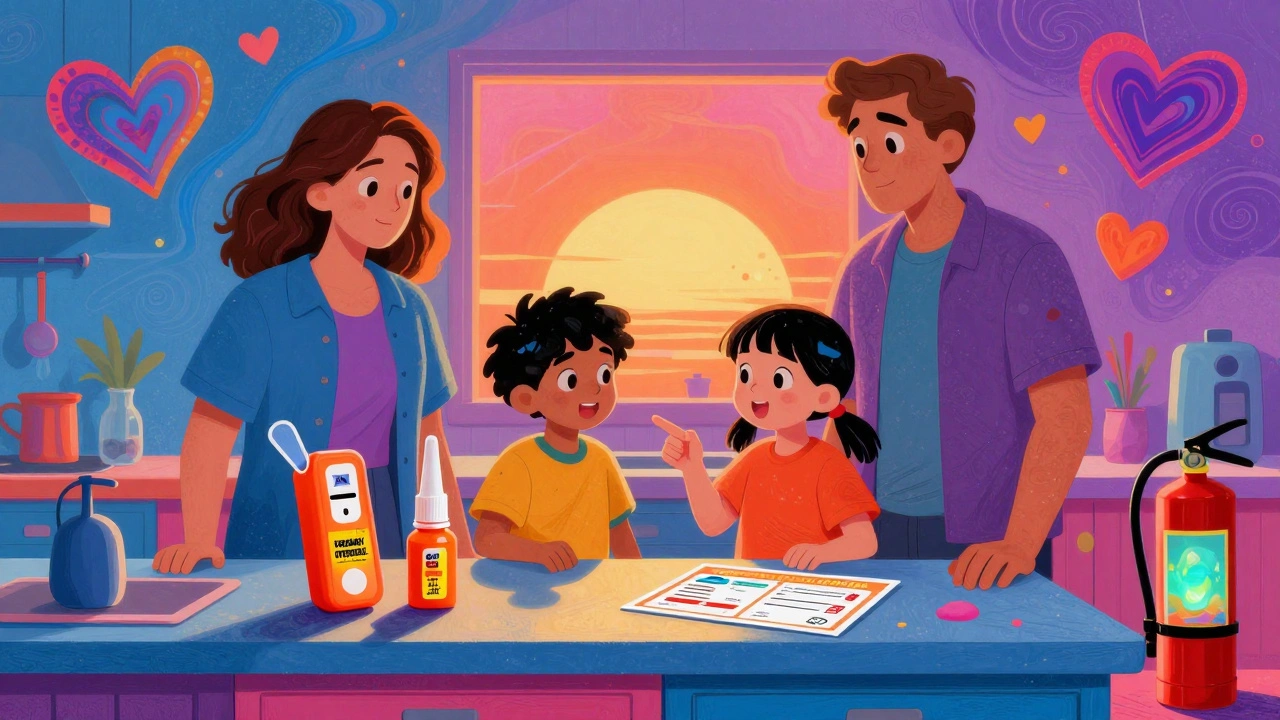
But here’s what most people get wrong: they keep naloxone locked in a cabinet, buried in a drawer, or tucked away in a medicine cabinet with other pills. That’s dangerous. In an emergency, you won’t think clearly. You’ll panic. So store it where anyone can find it - in the kitchen drawer next to the fire extinguisher, on the bathroom counter, in the glovebox of the car. Use a bright sticker or label: “EMERGENCY OVERDOSE KIT - DO NOT MOVE.”
Keep at least two doses. Fentanyl is so strong that one dose of naloxone often isn’t enough. Some people need three. That’s why Washington State health officials recommend 2-3 kits per household. Check the expiration date every 18 months. Naloxone doesn’t go bad overnight, but it loses potency. Replace it before it expires. Don’t wait for it to be used.
Step 3: Learn the Signs of Overdose
An overdose doesn’t always look like someone passed out on the floor. Sometimes, they’re just breathing too slowly. Or their lips are blue. Or they don’t respond when you shake their shoulder. The three key signs are:
- Unresponsive: Try shaking them firmly and shouting their name. If they don’t wake up, it’s not sleep - it’s overdose.
- Slow or stopped breathing: Count their breaths for 15 seconds. If they take fewer than 4 breaths in that time, they’re in trouble. Normal is 12-20 per minute.
- Pinpoint pupils: Shine a light in their eye. If the black part of the eye is tiny - like a pinhead - that’s a classic sign of opioid overdose.
Don’t wait for all three. If you see one, act. Fentanyl can knock someone out in under 3 minutes. Every second counts.
Step 4: Practice the Response - Don’t Just Read It
Reading a guide isn’t enough. You need to practice. Here’s the A.N.C.H.O.R. protocol used by emergency responders and taught by the New York Project COPE program:
- Assess: Check if they’re responsive and breathing. If not, call 911 immediately - but don’t wait. Start the next steps right away.
- Naloxone: Remove the nasal spray from its package. Tilt their head back slightly. Insert the nozzle into one nostril. Press the plunger all the way in. That’s one dose. If they don’t wake up in 3 minutes, give a second dose in the other nostril.
- Call 911: If you haven’t already, call now. Say: “I think someone is overdosing on opioids. I’ve given naloxone.”
- Have more ready: Keep the second dose in your hand. If they wake up but then go limp again, give another dose.
- Observe: Stay with them. Even if they wake up, they can relapse into overdose. Naloxone wears off in 30-90 minutes. Opioids stay in the system longer. They need monitoring for at least 2 hours.
- Review: After it’s over, talk as a family. What worked? What didn’t? Update your plan.
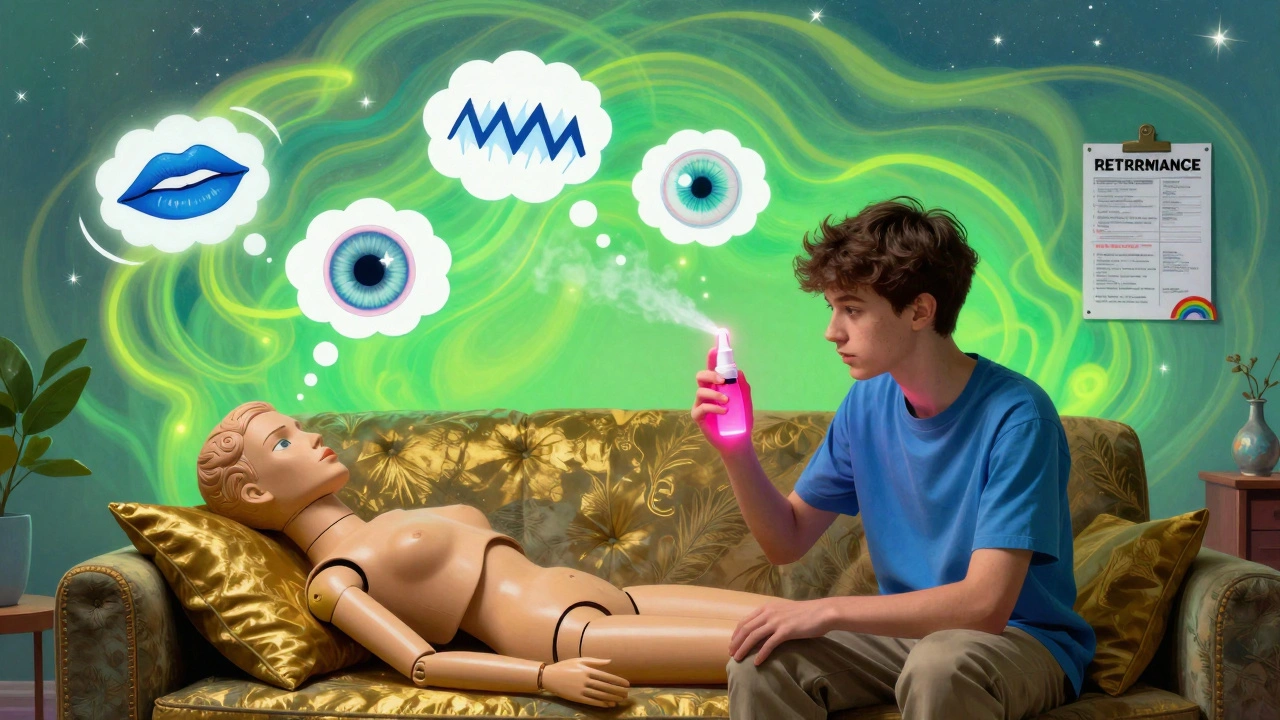
Practice this with everyone in the house - kids, teens, grandparents. Use a mannequin or even a pillow to simulate giving the spray. The American Red Cross offers a free 15-minute online course. Do it together. Make it routine.
Step 5: Make a Written Plan - And Keep It Visible
Write down the plan. Not on a sticky note. On a laminated card. Include:
- Names and dosages of all opioids or sedatives in the home
- Names and numbers of prescribing doctors
- Location of naloxone kits
- Emergency contacts: 911, poison control, family members
- Step-by-step instructions - simple, no jargon
Put the card on the fridge, next to the fire extinguisher, in the wallet of the person who takes the medication. Give copies to babysitters, caregivers, or anyone who spends time in your home. In Ohio’s 2022 trial, families with laminated cards reduced response time by 47 seconds. That’s the difference between life and death.
What This Plan Won’t Do - And What It Will
This plan won’t fix addiction. It won’t stop someone from using drugs. It won’t replace therapy or treatment. But it will give you a fighting chance. Studies show that 89% of people who survive an overdose with naloxone go on to seek help. Saving a life isn’t the end - it’s the opening.
And here’s the hard truth: if you don’t have this plan, you’re gambling. You’re betting that you’ll recognize the signs, that you’ll remember how to use the spray, that you’ll call 911 fast enough. You can’t afford to gamble with this.
Common Mistakes Families Make
People mean well. But they mess up. Here’s what goes wrong:
- Expired naloxone: 31% of saved lives in Reddit’s overdose stories involved expired kits. Check dates.
- Wrong administration: 24% of users gave the spray in the wrong nostril, or didn’t press hard enough. Practice.
- Waiting too long: 63% of preventable deaths involved delays in calling 911. Don’t wait to be sure.
- Assuming it’s just sleeping: 19% of families thought their loved one was just passed out. Overdose doesn’t look like sleep.
- Keeping it locked away: If it’s not easy to grab, it won’t be used.
Where to Get Help - And Free Kits
You don’t have to pay full price. In Australia, many local councils and community health centers offer free naloxone kits. In the U.S., CVS and Walgreens gave out over 287,000 free kits in 2023. Tribal organizations, public health departments, and even some churches run distribution programs. Search “free naloxone near me” - you’ll find options. You can also ask your doctor. The American Medical Association now recommends that every doctor who prescribes opioids also give naloxone. If they don’t, ask why.
Final Thought: Be the Person Who Saves a Life
You don’t need to be a doctor. You don’t need to be brave. You just need to be ready. Naloxone is like a fire extinguisher. You hope you never need it. But if you do, you want it within arm’s reach - and you want to know how to use it. This isn’t about fear. It’s about care. It’s about knowing that the person you love might not make it - unless you act. And you can act. Because you’ve got a plan.
Jamie Clark
December 13, 2025 AT 04:25This isn't about prevention-it's about control. They want you to keep naloxone on the counter like it's a toaster? Meanwhile, the same corporations that profit off opioid prescriptions are the ones pushing this 'community safety' narrative. They know if you're busy saving lives, you won't ask why your neighbor's painkiller script cost $800 last month. This plan? It's a Band-Aid on a hemorrhage. And they're selling it like it's a cure.
Keasha Trawick
December 14, 2025 AT 00:29OMG I JUST REALIZED I’VE BEEN STORING NALOXONE IN THE BATHROOM CABINET LIKE A NORMAL PERSON 😭 I’M A TERRIBLE HUMAN. But seriously-this post? It’s the kind of content that should be mandatory in every high school health class. Imagine if we taught teens how to use Narcan like they teach them to use a defibrillator. No more ‘oh no, they’re just passed out’ moments. Just pure, unfiltered, I-did-not-just-lose-my-sibling energy. Also-laminated cards?? YES. I’m printing mine on neon pink paper and taping it to my fridge next to the gluten-free snacks. 🙌 #NaloxoneIsTheNewFireExtinguisher
Ronan Lansbury
December 15, 2025 AT 11:39How quaint. A middle-class American family’s panic-driven response to a systemic collapse. You think keeping a vial of naloxone on the counter will solve the opioid crisis? The real issue is pharmaceutical lobbying, the erosion of mental healthcare infrastructure, and the commodification of human suffering. This is performative safety-a distraction for those who still believe in individual responsibility over structural reform. And please, don’t mistake my detachment for indifference. I merely recognize that this plan is a psychological placebo for the privileged.
Jennifer Taylor
December 15, 2025 AT 15:55WAIT-so you’re telling me my mom didn’t just ‘fall asleep’ after her hip surgery?? I thought she was just tired!!! 😭 I just found her Narcan in the back of the linen closet behind the extra toilet paper. I’ve been using it since 2021 and never checked the expiration date. I’m gonna cry. I’m gonna scream. I’m gonna laminate this entire post and frame it next to my wedding photo. My sister takes Xanax and oxycodone together. I’m buying THREE kits. I’m making a PowerPoint. I’m calling my cousins. I’m training the dog to bark when someone stops breathing. I’M NOT LOSING ANYONE ELSE. 😭💔 #NarcanIsMyNewBestFriend
Shelby Ume
December 16, 2025 AT 07:08Thank you for writing this with such clarity and care. I’ve worked in public health for over a decade, and I can tell you-this is one of the most accurate, actionable, and compassionate summaries I’ve ever seen. The A.N.C.H.O.R. protocol is brilliant. The emphasis on practice? Essential. The reminder that naloxone isn’t a cure but a bridge? Perfect. Please share this with every primary care clinic, every school nurse, every church group. This isn’t just advice-it’s a public health imperative. And yes, laminated cards. Always laminated.
Jade Hovet
December 16, 2025 AT 23:21okay so i just got my free naloxone from the pharmacy today!! 🎉💖 i put it in my purse next to my lip gloss and my emergency gum (for when i panic eat) and i told my roommate ‘if you ever see me turning blue, just spray me like i’m a cactus’ 🌵💉😂 i did the red cross course while eating cereal. it took 12 mins. i’m proud. also-i made a playlist called ‘Narcan & Chill’ for when we practice. includes ‘Eye of the Tiger’ and ‘Hallelujah.’ we’re gonna be heroes. 💪❤️
nithin Kuntumadugu
December 18, 2025 AT 08:09lol this is so basic. you think some spray in a drawer is gonna stop the fentanyl tsunami? the real problem? the feds are mixing it into cocaine and marijuana on purpose to control the population. also, why is this only for ‘opioids’? what about meth? what about alcohol? they’re hiding the truth. and why are they selling this for free? because they want you to feel safe so you don’t ask why your neighbor’s kid OD’d on ‘lucky charms’? 🤔 #DeepStateNarcan
John Fred
December 19, 2025 AT 04:33Just did the Red Cross course-15 minutes, zero jargon, and I actually remembered it. Huge props to the author. One thing they didn’t mention: if you’re giving naloxone to someone who’s not opioid-dependent, it’s harmless. Zero risk. So if you’re unsure? Spray it. No regrets. Also-keep it in your car. You never know when you’ll need it on the side of the road. I’ve got two in my glovebox now. One for me. One for the guy who just got out of rehab and rides the bus with me. We’re all in this.
Harriet Wollaston
December 20, 2025 AT 02:42This made me cry. Not because I’m scared-but because I finally feel like I can do something. My brother’s been sober for 3 years, but I still keep the spray in his room. He doesn’t know. I don’t want him to feel like I’m watching him. But I need to know I can hold him if he falls. This plan isn’t about fear. It’s about love that shows up. Thank you for giving me the words to say: ‘I’m not giving up on you.’
Lauren Scrima
December 21, 2025 AT 03:43So… you’re telling me I need to laminate a piece of paper… and put it on the fridge… next to the fire extinguisher… which I’ve never checked… and also… I have to practice with a pillow? 😒 Like, I get it. But isn’t this just… a lot? I mean, what if I just… don’t? 🤷♀️