
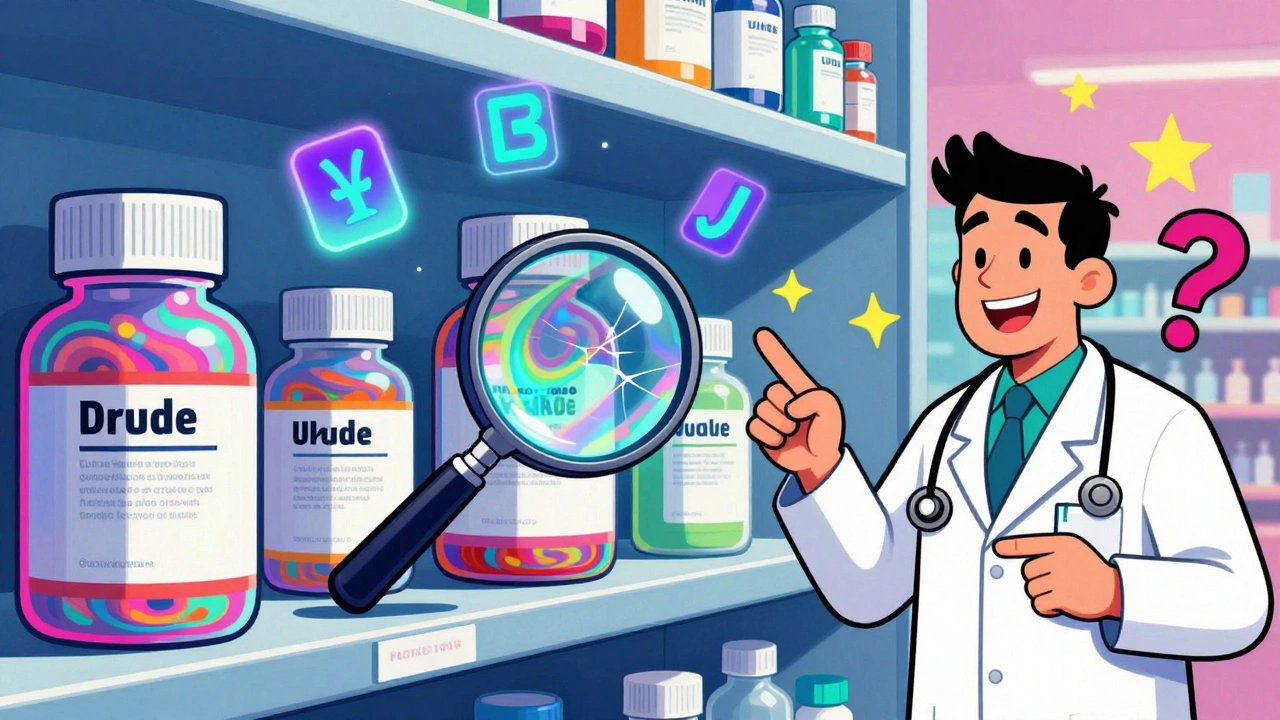
Every year, millions of people take generic medicines because they’re affordable and effective. But what if the pill in your bottle isn’t what it claims to be? Counterfeit generic drugs are a growing threat - not just in faraway countries, but right in your local pharmacy. The World Health Organization estimates that up to 10% of medicines worldwide are fake, and in some regions, that number jumps to 30%. These aren’t just bad copies. They can be empty, toxic, or contain the wrong dose - and they can kill.
Why Generic Medicines Are at Higher Risk
Generic drugs make up 90% of prescriptions in the U.S., but only 22% of total drug spending. That means manufacturers have less money to spend on security. Branded drugs like Lipitor or Nexium have thick budgets for holograms, color-shifting inks, and serial numbers. Generic makers? Often they’re cutting costs to stay competitive. The result? Inconsistent labeling, missing security features, or poorly printed barcodes. A 2022 survey by the National Community Pharmacists Association found that 68% of pharmacists had more trouble verifying generics than branded drugs. Why? Because generics don’t always follow the same packaging rules.The Three Layers of Verification
There’s no single magic trick to spot a fake. Real protection comes from stacking three layers of checks: what you can see, what you need a tool for, and what the system tracks.Layer 1: Overt Features - What You Can See
These are the obvious signs on the box or blister pack. Look for color-shift ink - the kind that changes from green to blue when you tilt the package. Pfizer uses this on Viagra. Check for holograms. Real ones have tiny, sharp text you can’t copy with a home printer. Compare the font on the expiration date. One pharmacist on Reddit spotted a fake Nexium because the ‘1’ in the date looked slightly off. That’s not paranoia - it’s how counterfeiters slip up. Even small things like the thickness of the plastic blister or the alignment of printed text can be clues.
Layer 2: Covert Features - What You Need a Tool For
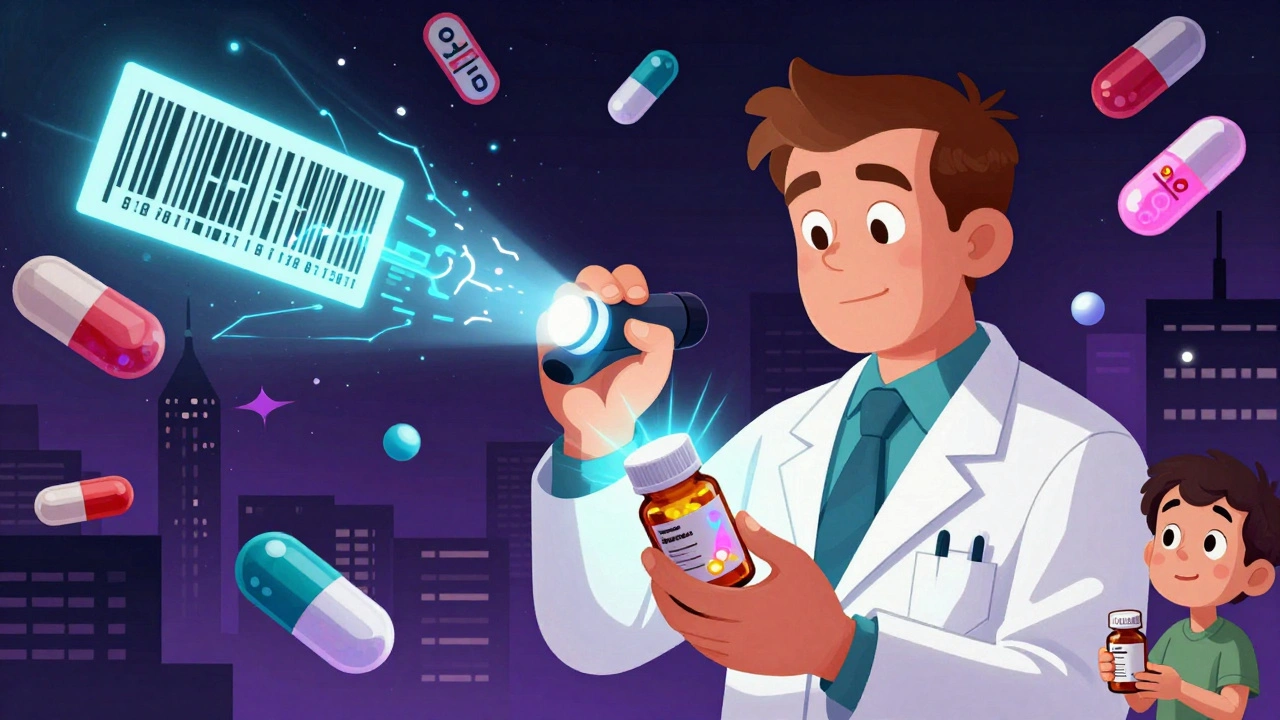
These features aren’t visible to the naked eye. Under a UV light (the kind you can buy for $20 online), authentic drugs often glow. Johnson & Johnson uses UV-sensitive ink on Tylenol bottles. Some packages have RFID tags or chemical markers like Lumilink® - invisible unless you scan them with a handheld reader. These tools cost $200-$500, and many community pharmacies now keep one on hand. The key? You need a reference. If you’ve seen the real package before, you’ll know what the UV glow should look like. If not, you’re guessing.
Layer 3: Track-and-Trace - What the System Knows
This is the backbone of modern drug safety. Since 2023, the U.S. Drug Supply Chain Security Act requires every prescription medicine to have a unique serial number in a 2D barcode. That number links to a database that tracks where the drug came from. The European Union’s system, EMVS, handles over 2.5 billion verifications a year with 99.998% uptime. But here’s the catch: not all generics are serialized properly. A 2023 report found that 35-45% of generic drugs still lack consistent serialization. If your pharmacy’s scanner can’t read the barcode, or if it says ‘not found,’ that’s a red flag.
The Tools That Save Lives
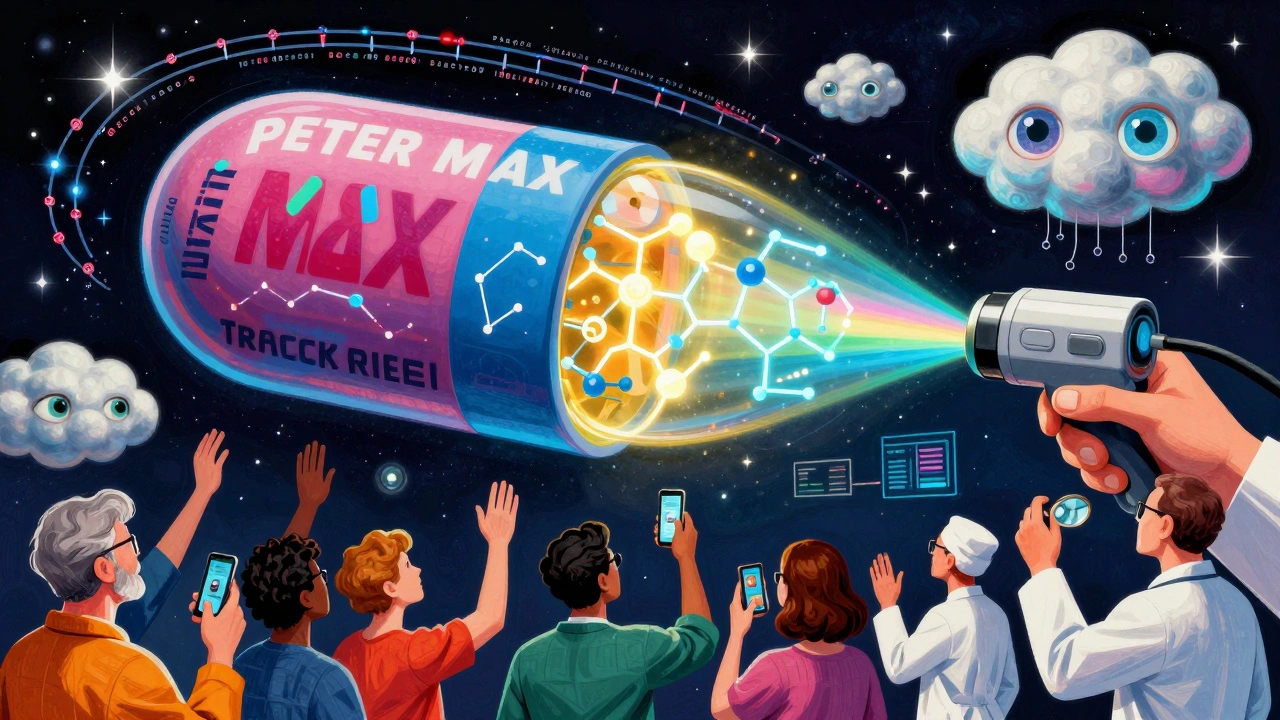
Visual checks are good, but they miss the real danger: pills that look perfect but contain no active ingredient - or worse, the wrong one. That’s where spectroscopy comes in.Handheld devices like the Thermo Fisher TruScan® RM and B&W Tek NanoRam® use light to analyze the chemical makeup of a pill. They don’t open the bottle. They just shine a beam on the tablet. In 10-30 seconds, they tell you if the composition matches the real drug. A 2020 study showed these tools could detect fake Plavix® generics with 97% accuracy by spotting tiny differences in coating and moisture. One pharmacist in a Drug Topics survey said her NanoRam® caught a fake metformin that looked identical to the real thing - and saved a patient from liver damage.
But these devices cost $15,000-$50,000. That’s not realistic for most small pharmacies. So what’s the middle ground? UV lights and magnifiers. The FDA’s 2022 toolkit says even basic tools - a $50 UV lamp and a 10x magnifier - can catch 70% of obvious fakes. Training takes just one or two hours. For community pharmacies, that’s the most practical first step.
Why Your Pharmacy Might Be Struggling
Even the best systems have gaps. Pharmacists report three big problems:- Inconsistent labeling. One batch of generic metformin might have a hologram. The next batch doesn’t. No one told them why.
- No reference samples. If you’ve never seen the real package, how do you know what’s fake? Many manufacturers don’t send comparison samples to pharmacies.
- Bad connectivity. Mobile verification apps like MediMark work great - until the pharmacy’s Wi-Fi drops. In Nigeria, field workers reported apps failed 35% of the time due to poor signal.
That’s why some states are setting up regional verification centers. These hubs store real samples, run spectroscopy tests, and help smaller pharmacies check suspicious lots. Pfizer and other big makers also offer free authentication portals - you upload a photo of the packaging, and they respond within 24 hours. It’s not instant, but it’s reliable.
The Bigger Picture: Global Gaps and Future Fixes
The EU made it mandatory for all prescription drugs to have safety features by 2019. The U.S. is catching up. But in Southeast Asia and parts of Africa, less than half of manufacturers comply. That’s where most counterfeit drugs originate - and where they spread.Experts warn that counterfeiters are getting smarter. INTERPOL’s 2023 Operation Pangea found that 90-95% of fake packaging now replicates security features with near-perfect accuracy. You can’t just rely on what you see anymore.
The future? AI-powered verification. By 2028, Gartner predicts 70% of drug checks will combine multiple methods - visual, spectral, and blockchain - and use AI to spot patterns humans miss. The FDA is already testing blockchain for generics. Early results show 99.2% accuracy in tracking pills through four distribution layers.
But technology alone won’t fix this. Global cooperation is essential. A fake pill made in India can end up in a pharmacy in Ohio. Without shared standards, verification systems are just islands in a sea of risk.
What You Can Do
You don’t need a lab to protect yourself. Here’s what works:- Check the packaging. Look for holograms, color shifts, and clear printing. Compare it to a previous bottle if you can.
- Ask your pharmacist. Don’t be shy. Ask if they verified the batch. Most do - but not all.
- Use manufacturer portals. If you’re suspicious, take a photo of the box and send it to the maker’s authentication site. Pfizer, Novartis, and others offer this free.
- Report it. If something feels off, tell your pharmacist. Then report it to the FDA’s MedWatch program. One report can trigger a nationwide recall.
Remember: a cheap drug isn’t worth your life. The system isn’t perfect, but it’s better than it was. And every time you check, you’re helping to make it stronger.
How can I tell if my generic medicine is fake just by looking at it?
Look for small inconsistencies: mismatched font sizes, blurry text, uneven holograms, or color-shifting ink that doesn’t change properly when tilted. Compare the expiration date, lot number, and logo placement with a previous bottle. Even tiny differences - like a slightly thicker blister pack or misaligned barcode - can signal a counterfeit. If you’ve never seen the real package, ask your pharmacist for a sample to compare.
Are UV lights effective for checking generic drugs?
Yes, if used correctly. Many authentic generics use UV-reactive ink that glows under 365nm light. But not all do - and some fakes copy this feature. UV lights work best when you have a known good sample to compare against. A $20 UV pen can catch obvious fakes, but it won’t detect pills with the wrong active ingredient. Use it as a first step, not the final answer.
Why do barcode scanners sometimes fail on generic medicines?
Because not all generic manufacturers follow the same serialization rules. Some use inconsistent barcode formats, print them too faintly, or skip them entirely. The U.S. DSCSA requires serialization by 2023, but enforcement varies. A 2023 report found 35-45% of generics still lack reliable tracking codes. If your pharmacy’s scanner says ‘not found,’ it’s not necessarily a fake - but it’s a red flag that needs follow-up.
Can handheld spectroscopy devices detect fake generics?
Absolutely. Devices like the NanoRam® and TruScan® RM analyze the chemical signature of a pill without opening it. They detect differences in active ingredients, fillers, or coatings that look identical to the naked eye. Studies show they’re 92-97% accurate in spotting counterfeits. One pharmacist used one to catch fake metformin that looked 100% real - and prevented a patient from suffering liver damage. These tools are expensive, but they’re the gold standard for confirmation.
What should I do if I think I got a counterfeit drug?
Stop taking it. Keep the packaging and pills. Contact your pharmacist immediately - they can report it to the manufacturer and the FDA. You can also file a report directly through the FDA’s MedWatch program. Don’t throw it away. Real evidence helps track counterfeit supply chains. If others have the same batch, a recall can be triggered. Your report could save lives.
Next Steps for Patients and Pharmacists
If you’re a patient: always ask questions. Don’t assume generics are automatically safe. Check the packaging. Compare it to past refills. Use manufacturer verification portals. If something feels off, trust your gut.If you’re a pharmacist: invest in basic tools - UV lights, magnifiers, and reference samples. Train your staff. Use manufacturer authentication services. Push for consistent serialization from suppliers. Join a regional verification center if one exists in your state. The goal isn’t perfection - it’s reducing risk at every step.
The fight against fake drugs isn’t over. But with better tools, smarter regulations, and more awareness, we’re winning. Every verified pill is one less person at risk.
Regan Mears
December 10, 2025 AT 15:50I’ve had a few generic pills that felt… off. Not in taste, but in how they looked. One bottle had a slightly thicker blister pack-like the plastic was cheaper. I compared it to an old one I kept, and the font on the expiration date was just a tiny bit off. I called my pharmacist, and they confirmed it was a batch issue. They swapped it out immediately. Don’t ignore those tiny details-they’re your first line of defense.
Ben Greening
December 11, 2025 AT 16:24The systemic underinvestment in generic drug security is a direct consequence of market-driven pricing pressures. While branded pharmaceuticals maintain robust anti-counterfeiting infrastructure, generics operate under razor-thin margins, resulting in inconsistent application of verification technologies. This structural disparity undermines public trust in the supply chain.
Eddie Bennett
December 12, 2025 AT 03:43I get it-cheap meds save money. But I’ve seen too many people skip the checks because ‘it’s just a generic.’ My cousin took a fake metformin and ended up in the ER with liver enzymes through the roof. She didn’t even know the bottle looked weird until I showed her the difference in the hologram. Don’t be that person. Take five seconds. Compare. Ask. It’s not paranoia-it’s survival.
Michaux Hyatt
December 13, 2025 AT 06:13Hey, if you’re on a tight budget, don’t panic-there are easy wins. Grab a $20 UV light from Amazon. Shine it on your pill bottle. If nothing glows, or if it glows weirdly (like a blurry blob instead of sharp text), that’s a red flag. Also, check the lot number online-most big pharma companies have free lookup tools. And hey, if your pharmacist looks at you funny when you ask to see a reference sample? That’s a sign too. You’re not being weird-you’re being smart.
Rebecca Dong
December 13, 2025 AT 12:22Let’s be real-this whole ‘fake medicine’ thing is a scam to sell you more expensive branded drugs. The FDA? They’re in bed with Big Pharma. You think they really care if your generic has a hologram? Nah. They just want you scared enough to pay $300 for a pill that costs 2 cents to make. And those ‘UV lights’? Totally useless. I’ve seen fakes that glow brighter than the real ones. This whole post is fearmongering. Wake up, sheeple.
Nikki Smellie
December 13, 2025 AT 19:43Dear Author, I must express my profound concern regarding the potential infiltration of bio-hacking nano-entities embedded within generic pharmaceutical packaging. The UV-reactive ink? It’s not for verification-it’s a tracking beacon. The barcode? It’s linked to a global surveillance network via the WHO’s secret AI-driven biometric registry. I’ve personally witnessed my neighbor’s metformin bottle emit a low-frequency hum after scanning. I’ve filed 14 FOIA requests. They’re coming for us all. Please, if you’re reading this, do not ingest anything with a 2D barcode unless you’ve verified its quantum signature with a certified crystal healer. 🙏
Neelam Kumari
December 14, 2025 AT 03:31Wow. So Americans pay $200 for a bottle of insulin and then whine about holograms? In India, we get generics for $2 and still live. You think your ‘UV light’ will stop a fake? Try living without insurance and see how many ‘verified’ pills you can afford. This whole thing is a rich-country luxury problem. Meanwhile, real people are dying from lack of access-not fake labels.
Queenie Chan
December 14, 2025 AT 21:50I love how this post reads like a thriller novel written by a pharmacist who moonlights as a spy. Color-shifting ink? Holograms that only the human eye can decode? Spectroscopy devices that cost more than my car? It’s like the pharmaceutical industry turned into a James Bond villain’s lab. But honestly? The most terrifying part isn’t the fake pills-it’s that the system expects *you* to be the final quality control. No wonder people just swallow and hope. We’ve outsourced safety to the consumer. That’s not innovation. That’s negligence dressed up in a lab coat.
Monica Evan
December 15, 2025 AT 21:16My grandma takes 7 meds. I started checking her bottles after she got sick last year. Turned out one was a fake-blurred text, wrong color on the cap. I called the pharmacy, they apologized, sent a rep with a new batch. Took 10 minutes. You don’t need a $50k machine. Just a phone, a magnifying glass, and the guts to ask. And if you’re scared to talk to your pharmacist? They’re just people. They want you safe too. Don’t be shy. Your life matters more than pride.
Jim Irish
December 15, 2025 AT 22:55Verification is a shared responsibility. Patients, pharmacists, manufacturers-all must act. The tools exist. The frameworks are in place. What’s missing is consistent enforcement and public awareness. A single report can trigger a recall. Don’t wait for someone else to act.
Mia Kingsley
December 16, 2025 AT 21:01Okay but what if the fake pills are made by the SAME company that makes the real ones? I read somewhere that some manufacturers just batch-switch and label it differently to cut costs. Like they make the real thing for one country and the fake version for the US. And the FDA doesn’t care because they’re paying taxes. Also I think my metformin tastes like metal now. I’m not crazy. I checked Reddit. Everyone says the same thing. Someone needs to blow the whistle.
Katherine Liu-Bevan
December 18, 2025 AT 10:36The most effective verification tool isn’t a device-it’s institutional accountability. When manufacturers are held legally and financially responsible for serialization compliance, the market corrects itself. The FDA’s current approach is reactive, not preventive. We need mandatory, audited traceability for every generic, regardless of cost. Technology is only as good as the policy that enforces it. And right now, that policy is lagging behind the threat.