
Why Some Medications Must Stay Cold
Not all medicines are created equal when it comes to storage. While your ibuprofen or blood pressure pill can sit on the bathroom counter without issue, others-like insulin, certain vaccines, and biologic drugs-need to stay cold. If they don’t, they can lose effectiveness, sometimes dramatically. In some cases, this isn’t just inconvenient-it’s dangerous.
Think about insulin. It’s a protein. Heat or freezing breaks down its structure, just like cooking an egg changes its texture. Once that happens, it won’t work the way it should. A 2023 study found that insulin exposed to temperatures above 37°C for just 48 hours can lose up to 40% of its potency. That means your blood sugar could spike unexpectedly, leading to hospital visits or worse.
The standard temperature range for refrigerated medications is 2°C to 8°C (36°F to 46°F). This isn’t arbitrary. It’s the sweet spot where the medicine stays stable without freezing. Going below 0°C can ruin biologics permanently. Going above 8°C speeds up chemical breakdown. Even a few hours in a hot car or on a sunny windowsill can do damage.
Which Medications Need the Fridge?
You can’t guess. You have to check the label or ask your pharmacist. But here are the most common ones you’ll encounter:
- Insulin (Lantus, Humalog, NovoRapid, etc.): Must be refrigerated until opened. After that, most can stay at room temperature (up to 30°C) for 28-30 days. Never freeze it.
- Vaccines (Flu, COVID-19, MMR, shingles): Require strict 2°C-8°C storage. Some lose potency in hours if left out. The CDC says 15-25% of vaccines in home fridges experience temperature excursions.
- Biologics (Remicade, Enbrel, Humira, Kineret): These are complex protein drugs used for autoimmune diseases. Most can be stored at room temperature for a limited time-usually up to 6 months-but only if unopened. Once opened, many need refrigeration.
- Some antibiotics (like certain liquid suspensions): Often need refrigeration after mixing. Check the bottle.
- Injectables and infusions: Many chemotherapy drugs, growth hormones, and specialty injections fall into this category.
Here’s a key point: Just because a medication was refrigerated at the pharmacy doesn’t mean it stays that way forever. Always read the manufacturer’s instructions. Some newer insulins can handle higher temperatures longer than older versions. Novo Nordisk’s 2023 update says certain formulations are stable at 37°C for up to 7 days-still not ideal, but better than before.
Why Your Kitchen Fridge Isn’t Good Enough
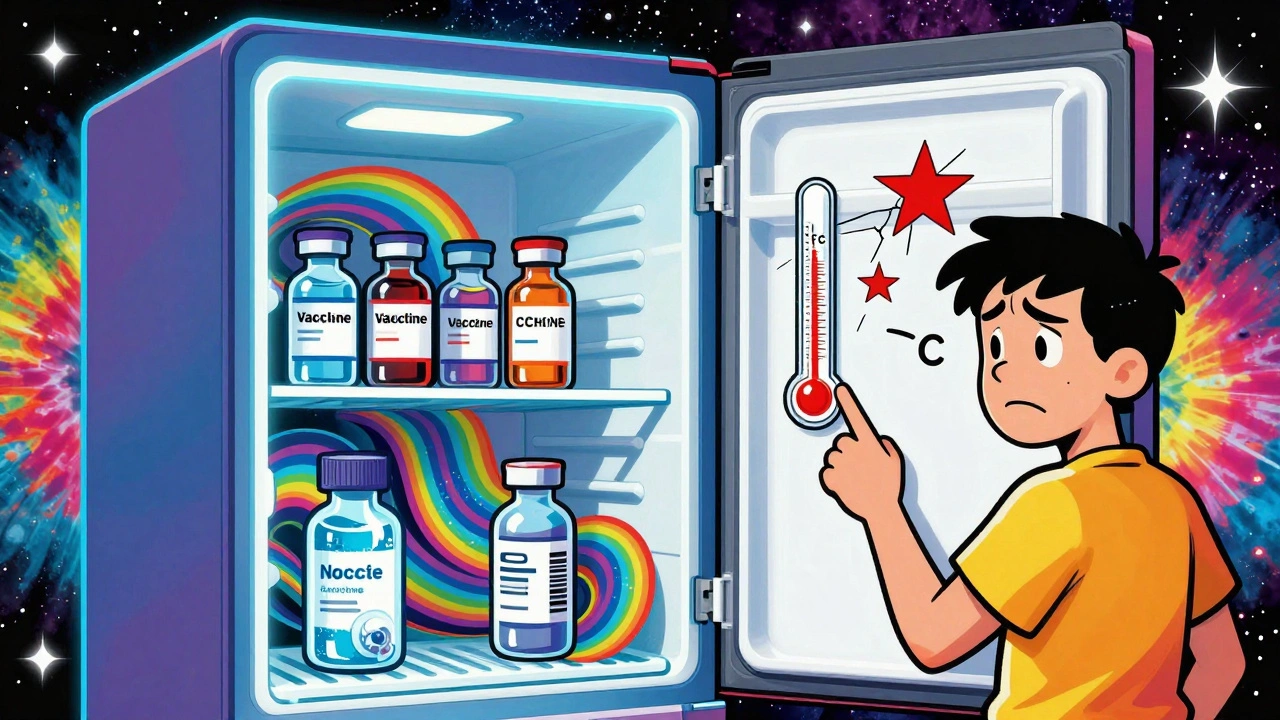
Your kitchen fridge might seem fine-but it’s not designed for medicine. The back wall can be too cold (risk of freezing). The door shelves? Too warm. A 2022 study in the Journal of the American Pharmacists Association found that in typical household fridges:
- Back shelves average 3.4°C-good.
- Door shelves average 11.3°C-way too warm.
- Temperature swings of 5-8°C happen daily from opening and closing.
That’s why 62% of people who store medications at home report unreliable conditions. If your insulin is on the door, it’s probably sitting at 10°C or higher for hours. That’s enough to degrade it over time.
And freezing? It happens more than you think. If your fridge’s thermostat is set too low-or if the compressor runs too long-you can accidentally freeze your meds. Once frozen, insulin and other biologics are ruined. Thawing won’t fix it. The molecules are permanently damaged.
How to Store Medications Correctly at Home
There are three practical ways to get this right:
- Use the middle shelf. That’s the most stable spot in your fridge. Avoid the door, the crisper drawer, and the back wall. Put your meds in a sealed container or ziplock bag to prevent moisture and odors.
- Buy a thermometer. A simple digital thermometer with a min/max readout costs under $30. Place it next to your meds. Check it every morning. If it’s above 8°C or below 2°C, adjust your fridge or move the meds.
- Consider a dedicated medication fridge. These are small, quiet, and designed to hold temperatures within ±1°C. Brands like Whynter, Helmer, and B Medical Systems make them. They cost $150-$500 for basic models. Not cheap-but cheaper than a hospital bill from a failed treatment.
One patient in Sydney, who switched from using her kitchen fridge to a $200 dedicated unit, saw her HbA1c drop from 8.2% to 6.9% within six months. Her blood sugar readings became consistent. She credits the stable temperature.
What to Do During Power Outages or Travel
Power goes out? You’ve got a few options:
- Keep the fridge closed. A full fridge stays cold for about 4 hours. A half-full one, about 2.
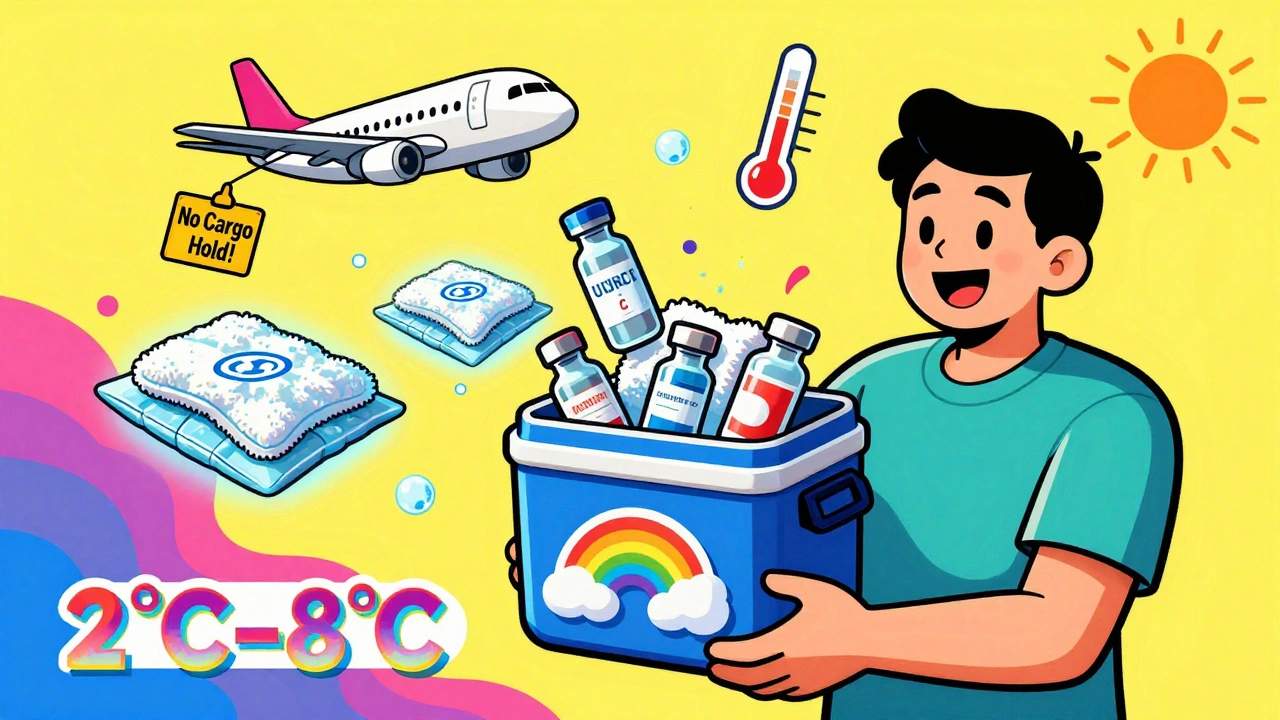
- Use insulated travel bags with phase-change cooling packs. Products like TempAid MediCools keep meds between 2°C and 8°C for up to 48 hours.
- If you’re traveling, pack meds in a cooler with ice packs-but never let them touch ice directly. Wrap them in a towel or use a spacer. Direct contact can freeze them.
For air travel: Never check your meds. Carry them in your hand luggage. Airport X-rays won’t harm them. But heat in the cargo hold? That’s a real risk. Bring a small insulated bag with a cold pack and keep it with you.
What Happens When Medications Go Bad?
You won’t always know. Unlike expired food, bad medicine doesn’t smell or look rotten-usually. But here are signs:
- Insulin looks cloudy, clumpy, or has particles.
- Liquid medications change color or separate.
- You notice sudden, unexplained changes in your condition-like high blood sugar, worsening symptoms, or no relief from a drug that used to work.
The FDA has documented cases where improperly stored insulin led to diabetic ketoacidosis. In one case, a patient’s insulin had been left in a car at 35°C for two days. She didn’t realize it was damaged. Her blood sugar soared. She ended up in the ER.
And it’s not just insulin. A 2021 study found that biologics stored above 25°C for more than 24 hours lost up to 50% of their potency. That means you’re not getting the full dose. Your treatment fails. Your body suffers.
What Experts Say
Pharmacists and doctors are clear: This isn’t a suggestion. It’s a safety rule.
Dr. Robert99, a medication safety officer at Baystate Health, says: “Both excessive heat and cold can have significant impact on how well medications-both prescription and over-the-counter-do their job. While that might not be a big deal for a daily vitamin, the impact of a less-than-effective heart medication or asthma inhaler has the potential to be dangerous or even fatal.”
The American Society of Health-System Pharmacists (ASHP) calls temperature excursions one of the top three preventable causes of treatment failure for biologic drugs.
Some experts note that manufacturers sometimes err on the side of caution. For example, insulin labels say 28 days at room temperature, but some studies suggest it may last longer. Still, the FDA says any deviation from labeled storage is an unapproved use. You’re taking a risk if you ignore it.
What You Can Do Today
Don’t wait for a crisis. Here’s your quick action plan:
- Look at all your refrigerated meds. Write down their names and storage rules.
- Find where they’re stored now. Is it the door? Move them to the middle shelf.
- Buy a $25 digital thermometer. Place it next to your meds. Check it daily.
- If you take insulin or a biologic daily, consider a dedicated medication fridge. It’s an investment in your health.
- Ask your pharmacist: “Does this need refrigeration? What happens if it gets too warm?” Don’t assume they’ll tell you unless you ask.
Medications that need refrigeration aren’t just inconvenient-they’re critical. Getting this right isn’t about being perfect. It’s about avoiding avoidable harm. One small change-moving your insulin off the fridge door-could be the difference between control and crisis.
Frequently Asked Questions
Can I store insulin in the freezer if I want to extend its shelf life?
No. Freezing insulin permanently damages its structure. Even if it thaws and looks normal, it won’t work properly. Always keep insulin between 2°C and 8°C when unopened, and never freeze it under any circumstances.
How do I know if my insulin has gone bad?
Check the appearance. Clear insulin should remain clear. If it looks cloudy, clumpy, or has particles floating in it, discard it. Also, if your blood sugar suddenly becomes harder to control without a clear reason, temperature damage could be the cause.
Is it okay to leave my medication in the car during winter?
No. In cold weather, the car can drop below freezing, especially overnight. Even a few hours at 0°C or lower can ruin insulin, vaccines, and biologics. Always bring medications inside with you.
Can I use a regular cooler with ice for travel?
Yes, but only if you prevent direct contact with ice. Wrap your meds in a towel or use a plastic container as a barrier. Direct ice contact can freeze them. For longer trips, use a validated insulated travel bag with phase-change cooling packs.
Do I need a special fridge if I only take one refrigerated medication?
Not necessarily. If you’re careful-storing it on the middle shelf and checking the temperature daily-you can use your kitchen fridge. But if you take multiple refrigerated meds, or if your health depends on perfect dosing (like with insulin), a dedicated unit is worth the investment for safety and peace of mind.
Jessica Ainscough
December 3, 2025 AT 05:38May .
December 3, 2025 AT 11:36Sara Larson
December 4, 2025 AT 18:23Josh Bilskemper
December 6, 2025 AT 04:00Storz Vonderheide
December 6, 2025 AT 08:17Casey Lyn Keller
December 8, 2025 AT 07:47dan koz
December 9, 2025 AT 11:23Sandridge Nelia
December 10, 2025 AT 15:17Susan Haboustak
December 11, 2025 AT 22:19Pooja Surnar
December 12, 2025 AT 12:52dylan dowsett
December 14, 2025 AT 01:59Colin Mitchell
December 14, 2025 AT 03:53