
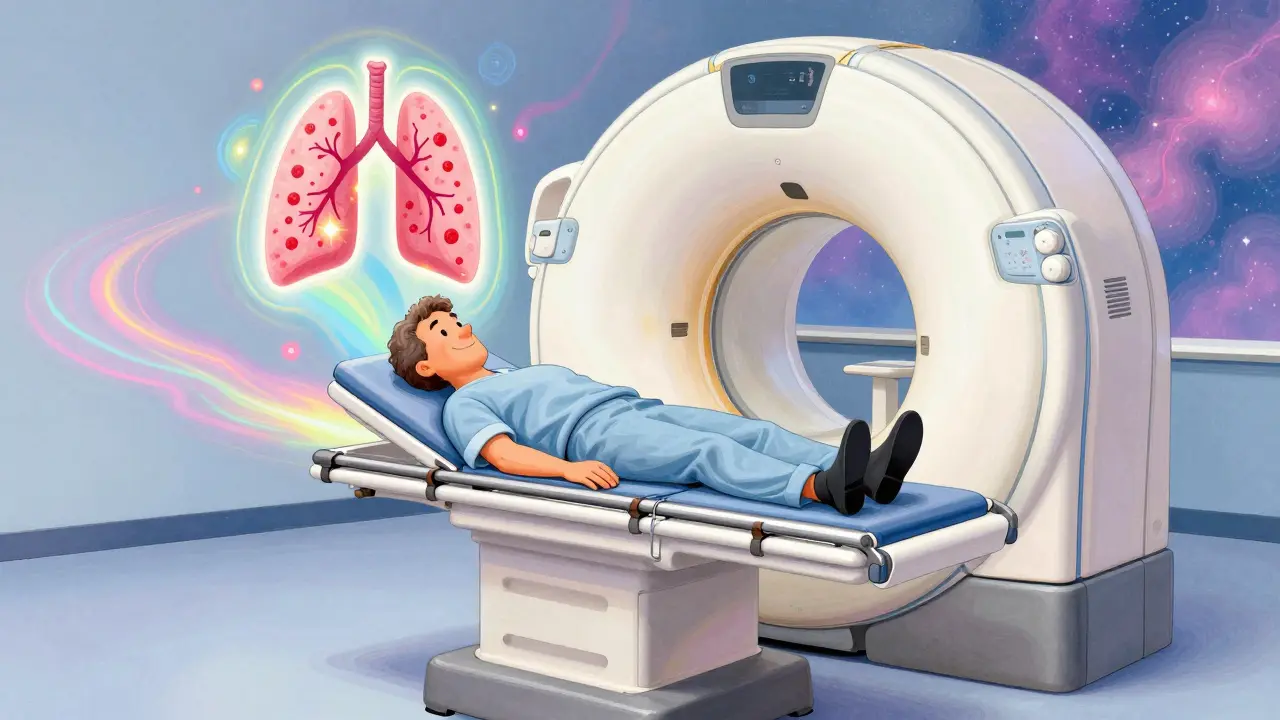
Every year, over 130,000 people in the U.S. die from lung cancer. Most of them weren’t screened. But for those who qualify, a simple, low-radiation scan can catch cancer early-when it’s still curable. This isn’t science fiction. It’s low-dose CT screening, and it’s saved thousands of lives.
Who Should Get Screened?
If you’re between 50 and 80 years old and have smoked at least 20 pack-years, you’re likely eligible. That means smoking one pack a day for 20 years, or two packs a day for 10 years. It doesn’t matter if you quit. If you stopped smoking within the last 15 years, you still qualify under current U.S. guidelines. Some experts say you should be screened even if you quit longer ago-especially if you have other risk factors like family history or exposure to asbestos or radon.The U.S. Preventive Services Task Force (USPSTF) updated its rules in 2021 to include more people. Before, you needed 30 pack-years and had to be at least 55. Now, it’s 20 pack-years and age 50. That change alone opens screening to millions more. Medicare, Medicaid in expansion states, and most private insurers cover it-no out-of-pocket cost if you meet the criteria.
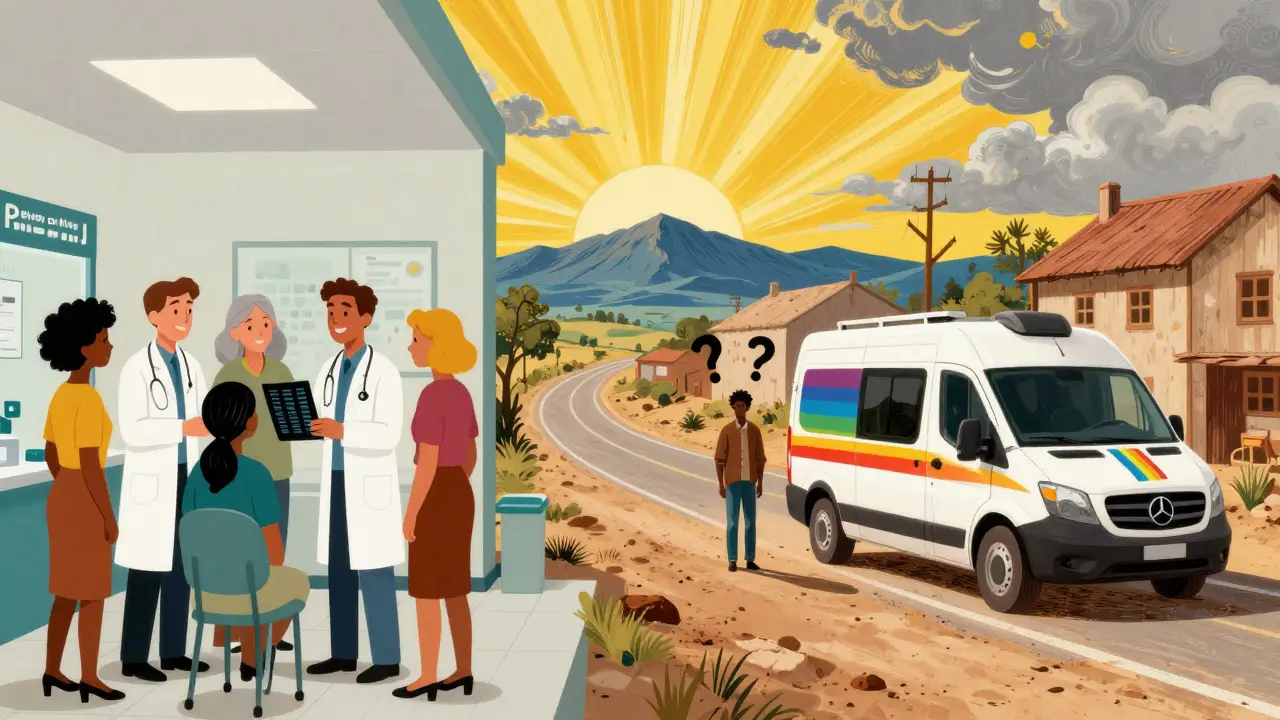
But not everyone who qualifies gets screened. Only about 23% of eligible Americans have had one. Why? Many don’t know they’re eligible. Others worry about false alarms. Some live too far from a clinic. Rural patients travel an average of 32 miles just to get scanned. That’s a big barrier.
What Happens During the Scan?
There’s no fasting. No needles. No prep. You just lie on a table while the machine takes a quick scan of your chest. It takes less than 10 seconds. The radiation dose? About 1.2 millisieverts (mSv)-less than a third of a standard chest CT and roughly equal to the natural background radiation you get in four months. Modern machines use advanced software to cut radiation even further, down to 0.8 mSv in some places.The scan captures hundreds of detailed images of your lungs. Radiologists look for tiny nodules-small spots that could be early cancer. The key threshold? Anything 4 millimeters or larger gets flagged. Most of these aren’t cancer. In fact, 96% of positive scans turn out to be harmless. But catching that 4% early makes all the difference.
What Do the Results Mean?
You’ll usually get results within a week. If everything looks normal, you’ll be told to come back in a year. That’s it. Annual screening is the standard because lung cancer grows fast. Waiting longer risks missing the window.If a nodule is found, you won’t panic right away. Most are monitored with a follow-up scan in 3 to 6 months. If it grows, you’ll get a PET scan or biopsy. If it stays the same or shrinks, you’re likely fine. The Pan-Canadian study showed that only 1.2% of 4-6 mm nodules turned into cancer over two years. That’s why doctors don’t rush to surgery.
But false positives cause real stress. A 2023 survey found 42% of people felt anxious during the wait for follow-up tests. One woman from Ohio, Mary Johnson, got a 6mm nodule. It was Stage 1 adenocarcinoma. Surgery cured her. Another man, James Wilson from Texas, spent three months and $450 on follow-ups-only to find out it was scar tissue. He says the fear was worse than the cancer.
Why This Works: The Numbers Don’t Lie
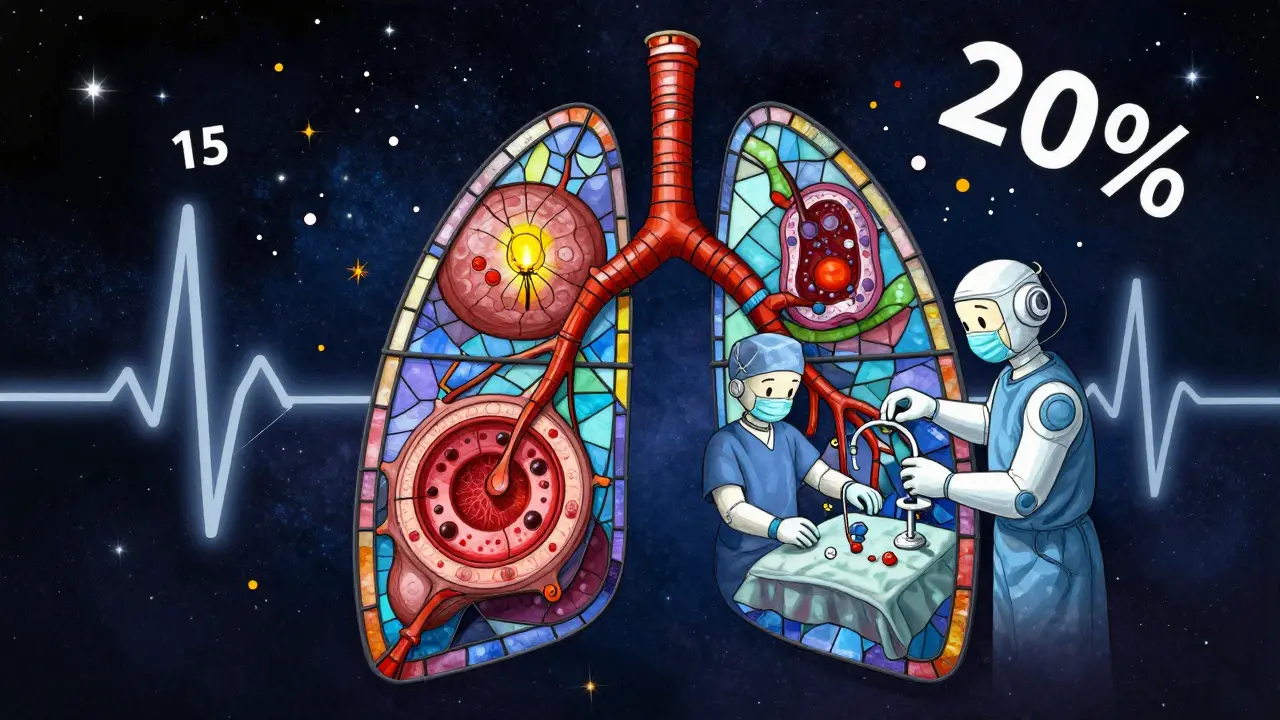
The landmark National Lung Screening Trial (NLST), which tracked over 53,000 people, showed something groundbreaking: annual low-dose CT scans cut lung cancer deaths by 20% compared to chest X-rays. That’s not a small win. That’s life or death.Here’s what else the study found:
- 35% of lung cancers found by LDCT were Stage I-curable with surgery alone.
- Only 14% of cancers found by chest X-ray were Stage I.
- For every 810 people screened over 6.5 years, one lung cancer death was prevented.
- For every 1,000 people screened, 15 lung cancer deaths were avoided, but only 1 death might be caused by radiation exposure.
That’s a net gain of 14 lives per 1,000 people. And the benefit keeps growing. The newer NELSON trial from Europe showed a 24% reduction in lung cancer deaths with biennial scans using 3D volume measurements-suggesting we might be able to space out screenings safely.
What About Radiation Risk?
People often ask: “Isn’t radiation dangerous?” The answer is yes-but not at this level. The dose from one LDCT is less than what you get from a cross-country flight. Over a lifetime of annual scans, the risk of radiation-induced cancer is extremely low. The NLST estimated 1 extra death from radiation for every 1,000 people screened. That’s far outweighed by the 15 lung cancer deaths prevented.Modern scanners use iterative reconstruction and AI tools to cut dose without losing image quality. The American College of Radiology requires all accredited centers to keep doses under 1.5 mSv. Many now hit 1.0 mSv or lower.
What Happens After a Positive Result?
If your scan shows something suspicious, you won’t be left alone. Accredited programs must have a team: pulmonologists, radiologists, thoracic surgeons, and oncologists. They’ll guide you through next steps. Most follow-ups are just more scans. Only about 3% of positive screens lead to surgery.When surgery is needed, it’s usually done with VATS-video-assisted thoracoscopic surgery. It’s minimally invasive. Patients go home in 3 days, not 5. Recovery is faster. Complication rates are under 1%. That’s a huge improvement from 10 years ago.
Who’s Getting Left Behind?
The biggest problem isn’t the scan. It’s access. Black Americans have higher lung cancer rates but get screened at 28% lower rates than white Americans. Rural patients are half as likely to be screened as urban ones. Medicaid expansion states have 37% higher screening rates. Policy matters.There are also 41% of U.S. counties without a single accredited screening center. That’s not a technical issue. It’s a system failure. AI tools are helping-some can cut radiologist reading time by 30% without missing a single cancer. But they’re not everywhere.
What’s Next?
The future of lung screening is smarter, not just faster. Researchers are testing risk models that combine smoking history, age, family history, and even blood biomarkers. One model, LYFS-CT, can predict who will benefit most from screening. It could reduce unnecessary scans by 27%.The FDA is also moving toward approving AI tools that flag nodules automatically. One tool, LungPoint®, already boosts accuracy to 97% for nodules over 6 mm. These won’t replace doctors-they’ll help them see more clearly.
And the guidelines? They’re still changing. Medicare is reviewing whether to remove the 15-year quit limit. If they do, millions more people will qualify. The American Cancer Society already does. So do the National Comprehensive Cancer Network and the American Thoracic Society.
What Should You Do?
If you’re 50 or older and have smoked 20 pack-years or more-talk to your doctor. Ask: “Am I eligible for low-dose CT screening?” Don’t wait for them to bring it up. Most primary care providers still don’t offer it routinely.Don’t let fear of false positives stop you. The anxiety is real, but the payoff is bigger. If you’ve quit smoking, that’s a huge win. Screening isn’t about blaming you for past habits. It’s about protecting your future.
If you live in a rural area, check if there’s a mobile screening unit nearby. Some programs travel to community centers. If cost is a concern, Medicare and most insurers cover it with zero copay. You have nothing to lose-and potentially everything to gain.
Who qualifies for low-dose CT lung screening?
You qualify if you’re between 50 and 80 years old, have a smoking history of at least 20 pack-years (like one pack a day for 20 years), and currently smoke or quit within the last 15 years. Some guidelines, like the NCCN, also include people who quit longer ago if they have other risk factors like family history or asbestos exposure.
Is low-dose CT screening safe?
Yes. The radiation dose is very low-about 1.2 millisieverts, similar to four months of natural background radiation. The risk of radiation-induced cancer is estimated at 1 death per 1,000 people screened over many years. This is far outweighed by the 15 lung cancer deaths prevented per 1,000 people screened.
What if the scan finds something?
Most findings aren’t cancer. If a nodule is 4 mm or larger, you’ll likely get a follow-up scan in 3-6 months. Only 1.2% of small nodules turn cancerous over two years. If it grows, you may need a PET scan or biopsy. Surgery is rare and usually minimally invasive.
Does insurance cover low-dose CT screening?
Yes. Medicare, Medicaid (in expansion states), and most private insurers cover annual low-dose CT screening with no out-of-pocket cost if you meet eligibility criteria. A counseling visit is required before the scan for Medicare reimbursement.
How often should I get screened?
Annually. Lung cancer can grow quickly, so yearly scans are standard. Stopping screening after one or two scans reduces the benefit. Studies show 93% adherence to annual screening leads to the best outcomes.
Can I get screened if I never smoked?
Currently, guidelines focus on smokers and former smokers. But research is underway to identify non-smokers at high risk-like those with family history, radon exposure, or genetic factors. Some clinics offer risk assessments for non-smokers, but screening isn’t yet standard for them.
What if I’m over 80?
The USPSTF and CMS set 80 as the upper age limit, but some guidelines (like NCCN) go up to 85. After 80, the benefit decreases because other health issues may affect life expectancy. Your doctor can help decide if screening still makes sense based on your overall health.
Ann Romine
January 3, 2026 AT 11:05I never thought I’d qualify-quit smoking 12 years ago after 25 pack-years. My PCP never mentioned screening until I brought it up. Got my first LDCT last month. Zero prep, zero pain. Just a quick lie-down. Results were clean. Feels like I just dodged a bullet I didn’t even know was aimed at me.
Still weird to think that something so simple could save your life.
Todd Nickel
January 5, 2026 AT 07:38The data is compelling, but the psychological burden of false positives is underdiscussed. A 2023 JAMA study showed that 42% of patients experienced clinically significant anxiety during the 3–6 month surveillance window, even when the nodule was ultimately benign. This isn’t just ‘worrying’-it’s a measurable impact on quality of life. We need better pre-screening counseling protocols, not just more scans. The system rewards early detection but doesn’t adequately support the emotional toll of the process. I’ve seen patients delay follow-ups because they couldn’t sleep for weeks after a ‘suspicious finding.’ That’s a systemic failure, not a personal one.
Bryan Anderson
January 7, 2026 AT 06:20Thanks for laying this out so clearly. I’m a primary care nurse in rural Nebraska, and I see this gap every day. Patients want to be screened, but the nearest accredited center is 60 miles away. We’ve started partnering with a mobile screening van that comes once a month. It’s not perfect, but it’s something. The biggest hurdle isn’t knowledge-it’s access. If we can get the scan to them, they’ll show up. The real question is: why isn’t this funded like mammograms?
Matthew Hekmatniaz
January 8, 2026 AT 06:52It’s interesting how screening guidelines evolve with evidence, yet stigma around smoking persists. I’ve had patients say, ‘I don’t deserve this because I smoked.’ That’s not how medicine works. Screening isn’t a reward for good behavior-it’s harm reduction. We don’t deny statins to people who ate burgers for 30 years. We don’t refuse colonoscopies because someone didn’t eat enough fiber. Why is lung screening any different? It’s about saving lives, not assigning blame.
Liam George
January 10, 2026 AT 00:55Let’s be real-this is all a smoke screen. The government and Big Pharma push LDCT because it’s profitable. They don’t care if you live or die-they care if you keep coming back for more scans, more biopsies, more ‘follow-ups.’ Radiation adds up. They say it’s ‘low’-but what’s low when you’re getting one every year for 20 years? And what about all the unnecessary surgeries? The NLST was funded by the NIH, which gets money from pharmaceutical grants. Coincidence? I think not. They want you scared, dependent, and paying for endless tests. Real prevention is quitting. Everything else is profit-driven distraction.
sharad vyas
January 10, 2026 AT 16:27In India, we don’t have this system. People smoke, get cough, go to clinic, get antibiotics. If it doesn’t go away, they go to big city hospital. By then, it’s too late. I think this screening idea is very good. But in places without money or doctors, maybe we need simpler ways-like teaching people to recognize early symptoms. Not everyone can get a CT scan. But everyone can learn to listen to their body.
Dusty Weeks
January 11, 2026 AT 11:15bro i got a nodule last year 😭 it was 5mm. spent 3 months in anxiety mode. got the follow-up. scar tissue. spent $400 and lost 10 lbs. i’m not doing it again. 😑 #lungsuck #falsealarm #radiationisbad
Sally Denham-Vaughan
January 12, 2026 AT 09:16My mom got screened last year at 72. Found a 3mm nodule. Follow-up in 6 months. Still nothing. She’s now a total advocate-told her whole book club, her bridge group, even her hairdresser. I used to roll my eyes at her, but now I get it. It’s not about fear. It’s about control. Knowing you’re doing something tangible to protect yourself? That’s power. If you qualify, just do it. The scan is the easy part. The waiting is the hell.
Bill Medley
January 13, 2026 AT 02:02Screening eligibility should be expanded to include non-smokers with familial lung cancer history. Emerging data supports this. Current guidelines are outdated.
Richard Thomas
January 14, 2026 AT 01:42The real tragedy isn’t the missed diagnoses-it’s the missed conversations. Most people don’t know what a pack-year is. I’ve asked patients: ‘How many cigarettes a day, for how many years?’ And they say, ‘I smoked a pack a week for ten years.’ They think that’s not enough. But 20 pack-years isn’t about being a heavy smoker-it’s about cumulative exposure. We need public health campaigns that translate medical jargon into lived experience. Not ‘20 pack-years.’ Say: ‘If you smoked one pack a day for 20 years, or half a pack a day for 40 years-you qualify.’ Simple. Clear. Human.
Paul Ong
January 15, 2026 AT 14:06Just got my first scan last week. No big deal. Felt like a chest x-ray but faster. Got a call a week later saying everything looked good. No drama. No stress. Just a quiet win. If you’re eligible stop overthinking it. Go get it. Your future self will thank you. And if you’re still smoking? Quit. The scan isn’t a license to keep smoking. It’s a wake-up call.
Andy Heinlein
January 17, 2026 AT 11:05my uncle had this done and they found stage 1 cancer. he had surgery in june and is back to golfing by august. he said the whole thing was way less scary than he thought. i told him he should be the one telling people not to ignore this. he said he will. i’m getting mine next month. thanks for the nudge 🙏
Donna Peplinskie
January 19, 2026 AT 05:26I’m a radiologist in Portland, and I want to say: the AI tools we’re using now are game-changers. They flag nodules we might miss, especially in dense tissue. But they’re not perfect. We still need human eyes. Still need the conversation. Still need to explain to someone why a 4mm nodule isn’t a death sentence. The tech helps, but the care? That’s all us. And if we don’t have the resources to support patients through the anxiety? Then we’re just doing scans, not healing.