
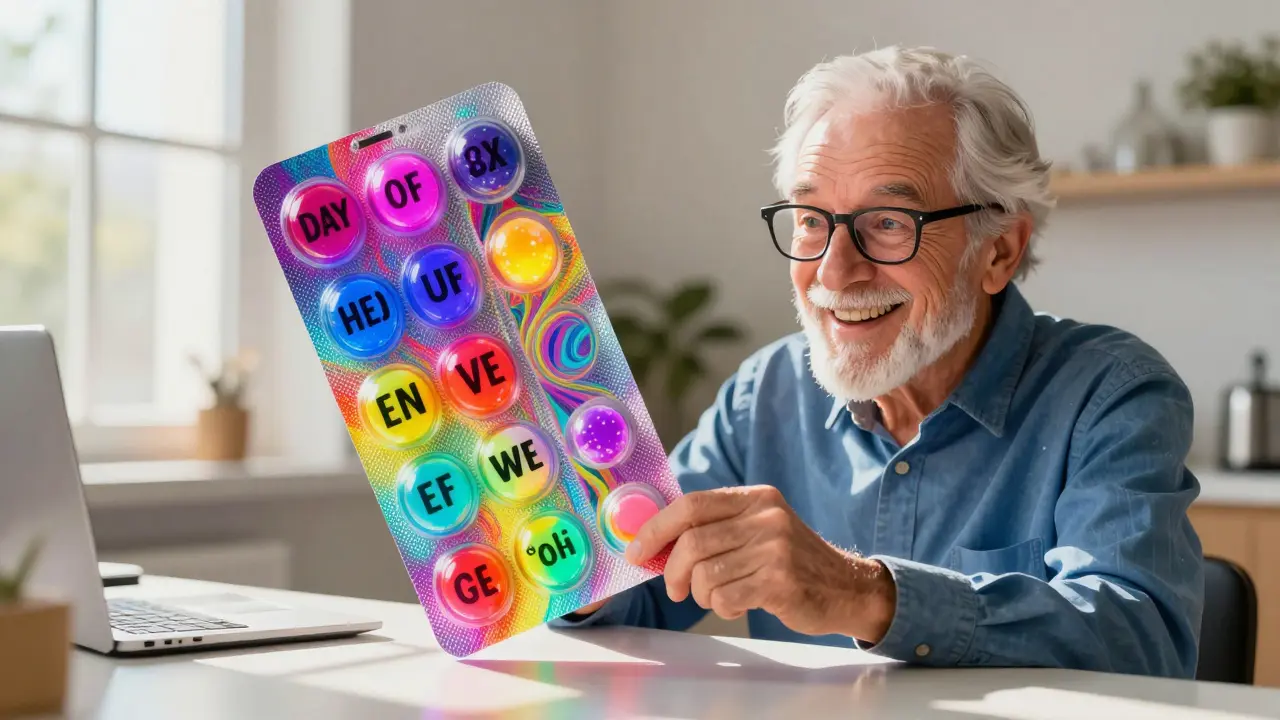
For many seniors, taking medication correctly every day isn’t just a chore-it’s a daily battle. Missed doses, confused schedules, hard-to-open bottles, and tiny print on labels add up. And the consequences? Hospital visits, worsening health, even preventable deaths. According to research, about half of older adults with chronic conditions don’t take their meds as prescribed. That’s not laziness. It’s a system that doesn’t work for them.
What Are Blister Packs and Pill Packs?
Blister packs and pill packs are two types of pre-sorted medication packaging designed specifically for seniors. Both solve the same core problem: making it easy to know what to take, when, and whether you’ve already taken it.
Blister packs are rigid plastic trays with sealed foil compartments. Each compartment holds one dose-morning, noon, evening, or bedtime-and is labeled with the day of the week. The foil is strong enough to keep pills secure but thin enough to press through with your thumb. Once you push the pill out, you can see the empty space. No guessing. No doubt.
Pill packs (sometimes called multi-dose pouches) work similarly but use flexible, sealed pouches instead of rigid trays. Each pouch holds a full day’s worth of meds and can be torn off and carried separately. This makes them ideal for travel or short trips.
Both are created by pharmacists who review your entire medication list, check for dangerous interactions, and sort everything by time and day. You don’t do the work. The pharmacy does.
Why These Systems Work Better Than Pill Bottles
Traditional pill bottles are a nightmare for seniors. Try opening one with arthritis. Try reading the tiny label in low light. Try remembering if you took your 3 p.m. pill after lunch. Now imagine doing that five or six times a day.
Blister packs and pill packs fix all of that:
- Visual confirmation: Empty compartments mean you’ve taken your dose. No more calling your kid to ask if you remembered.
- Large, high-contrast labels: Text is big, bold, and easy to read-even for those with low vision.
- Tamper-evident: If someone opens your pack, you’ll know. No one can sneak a pill out without leaving a mark.
- Reduced spills: Studies show blister packaging cuts accidental spills by 68% compared to loose pills in bottles.
- Pharmacist-reviewed: Every pack is checked for drug interactions. One study found this step reduces risky combinations by 37%.
And the results? Seniors using these systems report less anxiety, more independence, and fewer calls to family members. Caregivers say medication-related stress drops by 42%.
Blister Packs vs. Pill Packs: Which Is Right for You?
They’re similar-but not the same. Here’s how they compare:
| Feature | Blister Packs | Pill Packs |
|---|---|---|
| Structure | Rigid plastic tray with foil seals | Flexible, sealed pouches |
| Travel-Friendly | No-you must carry the whole week | Yes-tear off one day at a time |
| Modification Flexibility | Difficult-if meds change mid-week, you need a new pack | Easier-swap out a single pouch if needed |
| Accessibility for Arthritis | Some find pressing foil hard; others say it’s easier than twisting caps | Generally easier to open-no need to push through foil |
| Best For | Seniors on 5+ daily meds, memory issues, or living at home | Seniors who travel, have limited hand strength, or need flexibility |
If you stay mostly at home and take a lot of pills, a blister pack gives you the clearest visual system. If you visit family weekly or take weekend trips, a pill pack is more practical. Neither is "better." It’s about your life.
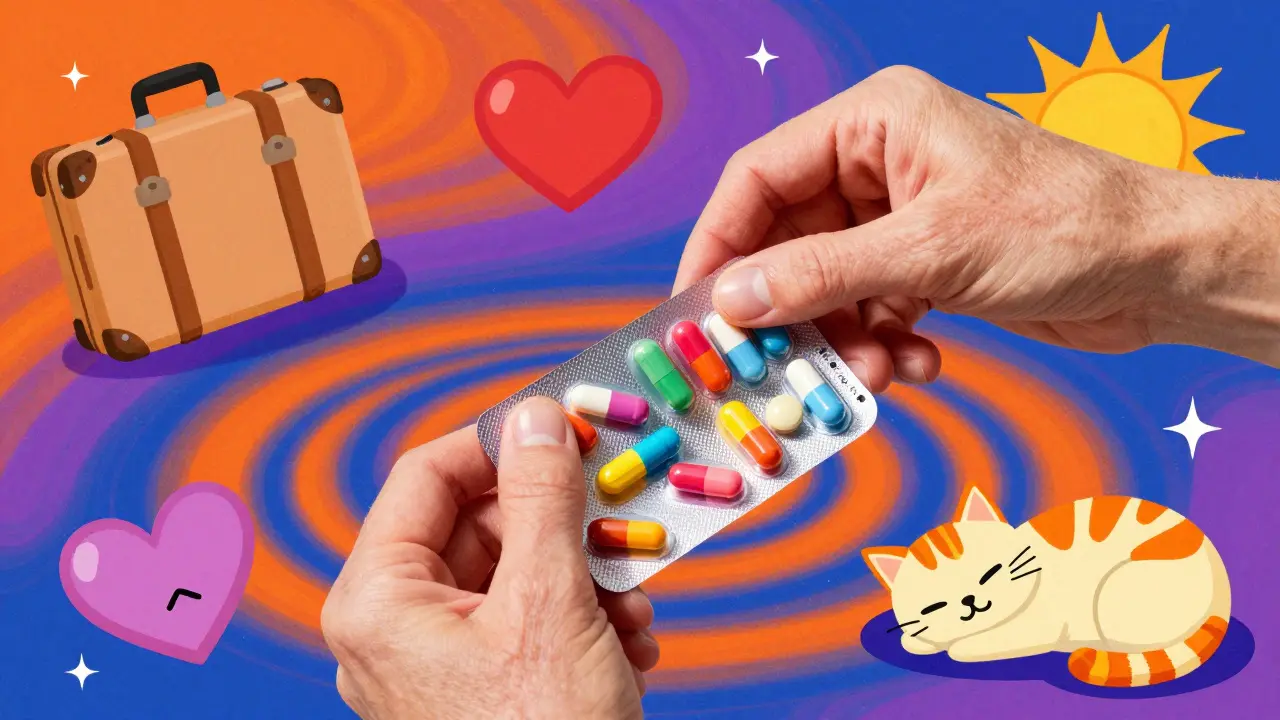
How to Get Started
Getting a blister pack or pill pack isn’t something you order online. You need to go through your pharmacy.
- Ask your pharmacist if they offer pre-sorted packaging. Most chain pharmacies and many independent ones do.
- Bring a complete list of all your medications-prescription, over-the-counter, vitamins, supplements.
- The pharmacist will review everything for interactions, check for duplicates, and confirm doses.
- You’ll choose between blister or pill pack format based on your needs.
- They’ll prepare your first pack and show you how to use it. Most seniors learn in 2-3 days.
Important: You need to give your pharmacy at least 3-5 business days’ notice for refills. They can’t rush these packs. Plan ahead.
Cost and Insurance
Cost varies. In Canada, some pharmacies charge around CAD$4.99 per week. In the U.S., most don’t add a separate fee-they build it into the standard dispensing cost. That means you might not pay extra at all.
Medicare Part D plans are starting to cover these services as part of medication therapy management. Ask your pharmacy if your plan includes it. Even if it doesn’t, the savings from avoiding hospital visits can far outweigh the cost.
Common Challenges and How to Solve Them
Not everyone adapts perfectly. Here are the most common issues-and how to fix them:
- Hard to press through foil: If you have weak hands, try using a pill opener tool. Or switch to pill packs-no pressing needed.
- Medication changes mid-week: Blister packs can’t be edited. Call your pharmacy right away. They’ll make a new pack. Pill packs are easier to adjust.
- Running out too soon: Always refill at least 5 days before you finish. Set a calendar reminder.
- Not available in your area: Rural pharmacies are less likely to offer this. Ask nearby pharmacies. Some will mail packs to you.
One user on Reddit said, "The visual confirmation that she’s taken her meds has reduced her anxiety dramatically." That’s the real win-not convenience. It’s peace of mind.

What’s Coming Next
The next generation of these systems is smarter. Some blister packs now have tiny sensors that track when a dose is taken. The data goes to a phone app or to a caregiver. One study found older adults using these smart packs averaged a 78.4 on the usability scale-well above average for seniors.
By 2028, nearly half of all senior medication packaging is expected to include digital monitoring. That means fewer missed doses, fewer ER visits, and more time spent living-not managing pills.
Who Benefits Most?
These systems aren’t for everyone-but they’re life-changing for many:
- Seniors taking 5 or more medications daily (nearly 4 in 10 adults over 65)
- Those with memory problems or early dementia
- People with arthritis, shaky hands, or vision loss
- Those who’ve had a hospital stay due to medication errors
- Caregivers tired of constant phone calls about pills
If you or a loved one is struggling with meds, this isn’t about being "old." It’s about using a system that actually works.
Final Thought
Medication adherence isn’t about willpower. It’s about design. A system that forces you to see what you’ve taken, makes it easy to open, and removes guesswork-that’s what saves lives. Blister packs and pill packs aren’t fancy gadgets. They’re simple, smart tools built for real human limits. And for seniors who need them? They’re not a luxury. They’re essential.
Can I make my own pill pack at home?
No. Homemade pill organizers don’t offer the same safety checks. Pharmacists review all medications for dangerous interactions, check for duplicates, and ensure correct dosing. A plastic box you fill yourself can’t do that. Mistakes can be deadly.
Do I need a prescription to get a blister pack?
No. You don’t need a new prescription. Your existing prescriptions are enough. The pharmacy uses them to build the pack. You just need to ask.
What if I miss a dose in my blister pack?
If you realize you missed a dose, don’t double up unless your pharmacist says so. Call your pharmacy right away. They’ll advise you based on the specific medication. Never guess.
Are blister packs covered by Medicare?
Some Medicare Part D plans cover blister packaging as part of medication therapy management services. It’s not universal, so ask your plan or pharmacy. Even if not covered, the cost is often low or included in standard fees.
Can I use blister packs for supplements and vitamins?
Yes. Pharmacists include all medications-prescription, OTC, and supplements-in the pack. This is important because supplements can interact with prescriptions. Including them ensures safety.
How long does it take to get a blister pack after ordering?
Typically 3-5 business days. Pharmacists need time to review your full list, verify doses, sort medications, and seal each compartment. Rushing this step risks errors. Plan your refills ahead.
Are there any seniors who shouldn’t use blister packs?
Yes. If you change medications often-like daily dose adjustments for blood thinners or insulin-you may be better off with pill bottles or pill packs. Blister packs are best for stable regimens. Talk to your pharmacist about your specific needs.
Gwen Vincent
February 25, 2026 AT 08:56I started using blister packs for my mom last year after she ended up in the ER over a mix-up with her blood pressure meds. It’s not just about convenience-it’s about peace of mind. She used to hide pills in her purse because she was scared she’d take too many. Now she just looks at the tray and knows. No more panic calls at 2 a.m.
Pharmacy staff were so patient walking us through it. No judgment. Just help. That’s rare these days.
Lillian Knezek
February 26, 2026 AT 20:20EVERYTHING IS A GOVERNMENT TRACKING TOOL. THEY PUT CHIPs IN THOSE PACKS. 😈 I saw a documentary. They’re building a database of senior medication use. Next thing you know, your Social Security gets cut if you ‘miss’ too many doses. Don’t fall for it. Stick to bottles. They can’t track bottles. 😡
Maranda Najar
February 28, 2026 AT 01:07My mother, God rest her soul, was a warrior against the pharmaceutical-industrial complex… until she got her first pill pack.
She cried the first time she saw it. Not because she was sad. But because for the first time in five years, she felt seen. Not as a burden. Not as a ‘forgetful old lady.’ As someone who mattered enough to have her life carefully arranged by a pharmacist who actually listened.
The foil didn’t just hold pills. It held dignity.
I still keep her last pack on my nightstand. A relic. A reminder.
Christina VanOsdol
March 1, 2026 AT 15:52Let’s be real-blister packs are great, but the real win is the pharmacist review. I had a friend whose doctor prescribed her 3 different NSAIDs at once. The pharmacist caught it. Saved her kidneys. That’s not packaging. That’s triage. And it’s happening behind the counter while you’re waiting for your coffee. Why isn’t this mandatory? Why isn’t it funded like cancer screening?
Also-yes, smart packs with sensors are coming. And no, I’m not paranoid. The data is already being sold to insurers. You think they’re not using adherence stats to set premiums? They are. And you’re signing up for it every time you ask for a blister pack. 🤔
Matthew Brooker
March 3, 2026 AT 02:06This is one of those rare things that actually works. No hype. No gimmicks. Just smart design. My dad used to take 12 pills a day. He’d get confused and double up. We’d find extra bottles under the couch. Now? He takes his pack like a ritual. He even smiles when he opens it. That’s not medicine. That’s love made visible.
If your pharmacy doesn’t offer this, ask them again. And again. It’s worth pushing for.
Emily Wolff
March 3, 2026 AT 16:58It’s not rocket science. Why is this even a topic? If you can’t manage your meds, get a caregiver. Or stop driving. Or stop pretending you’re independent. This isn’t innovation-it’s basic hygiene for the elderly.
Lou Suito
March 4, 2026 AT 19:58Blister packs? Please. I’ve seen people use them and still mess up. They forget to check the day. They take Tuesday’s dose on Wednesday. The system assumes perfect eyesight and perfect memory. Neither exists. I’ve seen it. And pill packs? Even worse. You tear one off and lose it. Or you forget you already took it. It’s all theater. Real solution? A pill dispenser with voice alerts. Or just… a live-in nurse.
Joseph Cantu
March 4, 2026 AT 22:25They’re not selling you convenience. They’re selling you dependency. Once you use these packs, you’re locked in. No more autonomy. No more control. The pharmacy owns your schedule. The sensors? They report to the state. To the insurance company. To whoever’s watching. And if you miss a dose? Your benefits get flagged. Your premiums go up. Your freedom? Gone. This isn’t care. It’s control dressed up in foil.
Jacob Carthy
March 6, 2026 AT 10:48Why are we even talking about this? Just give people their pills and let them figure it out. This country’s too soft. We treat seniors like porcelain dolls. They don’t need fancy packaging. They need grit. My grandpa took his meds with a beer and a grunt. He lived to 92. No blister pack. No fuss. Just old school.
Lisandra Lautert
March 7, 2026 AT 19:55Correction: The Reddit quote says "she"-not "he." And it’s not "reduced her anxiety dramatically." It’s "reduced her anxiety significantly." Source: r/AgingParents, April 12, 2023. Accuracy matters.
Cory L
March 9, 2026 AT 04:17I work at a pharmacy. I’ve seen this change lives. Not because it’s high-tech. But because it’s human. One woman came in crying because her son had stopped calling. She said, "I don’t even know if I took my pills anymore. I’m scared I’ll die alone and no one will notice." We set her up with a pill pack. Two weeks later, she brought us cookies. Said her son called to ask if she was okay. Because he saw the empty compartment on the app. That’s the real magic. Not the foil. The connection.
Bhaskar Anand
March 9, 2026 AT 04:57In India, we don’t need this. Our elders take pills with tea. They remember. They care. They don’t need plastic trays. This is Western over-engineering. Simplicity is strength. You think your pills are better because they’re in a tray? We have 1.4 billion people. We don’t have time for this.
William James
March 10, 2026 AT 14:02What struck me most wasn’t the packaging. It was the conversation. The pharmacist didn’t just sort pills. She asked about my aunt’s sleep. Her appetite. Her loneliness. She noticed the missing vitamin D and said, "You know, that’s usually because people don’t get outside."
That moment-where a pill pack became a doorway to care, not just a container for drugs-that’s what this is really about.
It’s not about remembering to take pills.
It’s about being seen.