
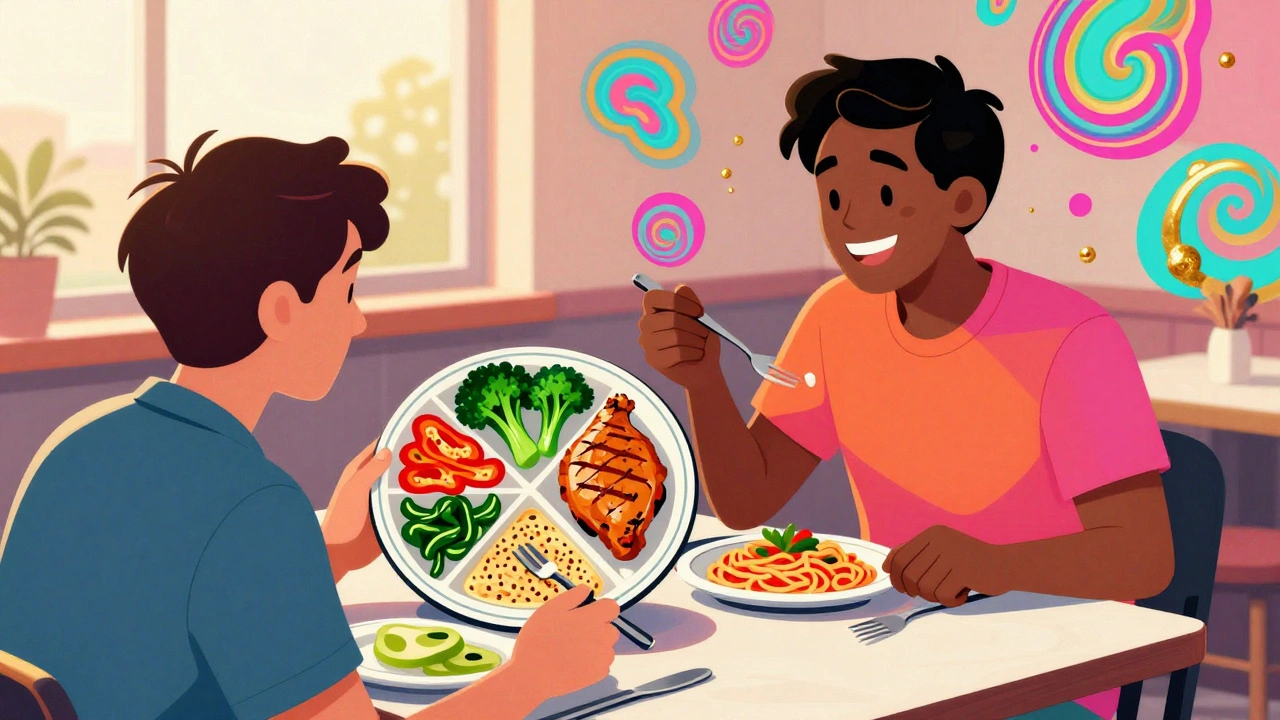
Going out to eat doesn’t have to mean giving up control over your blood sugar. With diabetes, dining at restaurants can feel like walking through a minefield-hidden sugars, oversized portions, and misleading labels are everywhere. But it doesn’t have to be that way. The key isn’t avoiding restaurants altogether. It’s knowing how to make smart choices without sacrificing the joy of eating with friends or family.
Use the Plate Method-No Math Needed
The easiest way to balance your meal is the Diabetes Plate Method. It’s simple, visual, and backed by the American Diabetes Association. Grab a standard nine-inch plate. Fill half with non-starchy vegetables: broccoli, spinach, peppers, zucchini, or a side salad. These are low in carbs and high in fiber, which helps slow down sugar spikes. Then, split the other half: one quarter for lean protein-grilled chicken, fish, tofu, or lean beef-and the last quarter for carbs.That quarter section? That’s where you put your rice, pasta, potatoes, or bread. But here’s the catch: restaurant portions are huge. A typical plate of pasta at a restaurant might be two cups. That’s 80 grams of carbs-way over what most people with diabetes should have in one meal. Stick to half that amount. Ask for a half portion. Or better yet, share your main dish with someone else. You get to enjoy the food without the blood sugar crash later.
Watch Out for Hidden Carbs
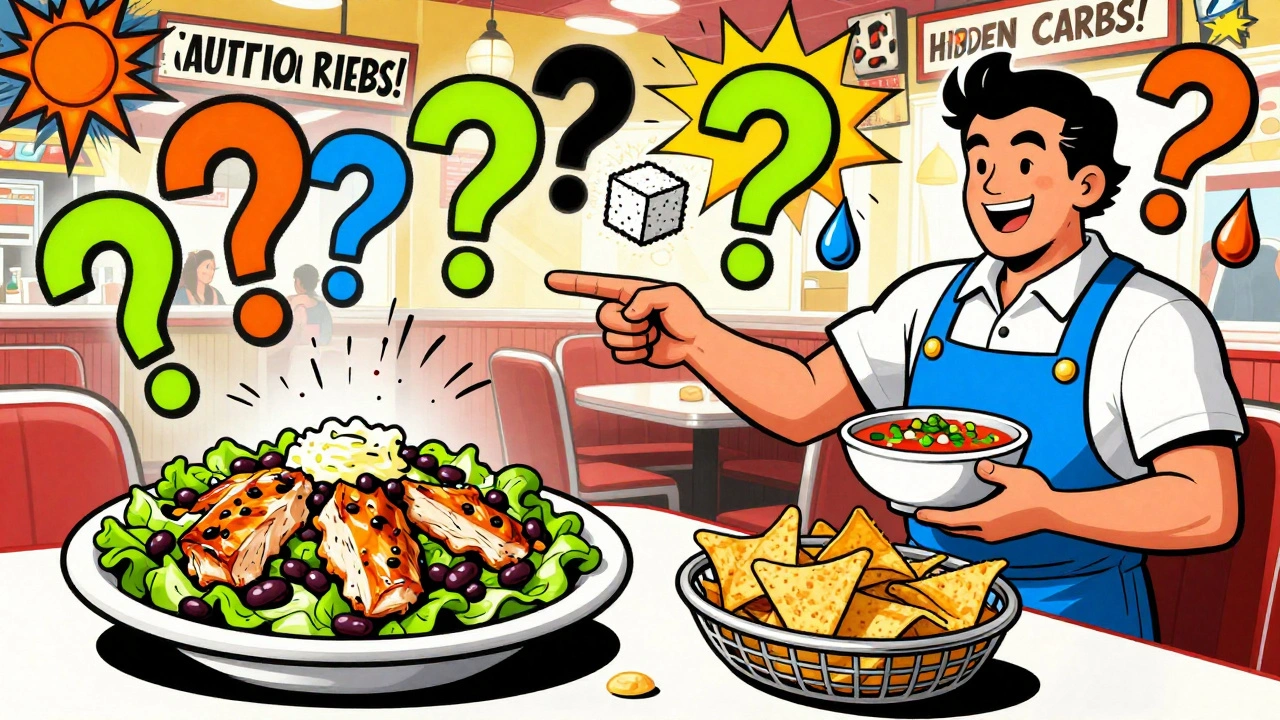
You’d be surprised how many carbs sneak in where you don’t expect them. A grilled chicken salad sounds healthy-until you realize the dressing is loaded with sugar. A tablespoon of creamy ranch can add 3 grams of carbs. Two tablespoons? That’s 6 grams. And that’s just the dressing. Many sauces, glazes, and gravies are thickened with flour or sweetened with honey, corn syrup, or sugar. Teriyaki sauce? One serving can have 15 grams of carbs. BBQ sauce? Often 10-12 grams per tablespoon.Always ask for sauces and dressings on the side. That way, you control how much you use. Skip the bread basket. Even if it’s just one roll, that’s 20-30 grams of carbs before you even start your meal. And don’t fall for the “healthy” trap. A chicken parmesan might sound protein-rich, but the breading and marinara sauce can push it to 65 grams of carbs. Same with “light” Asian dishes-sweet and sour chicken, orange beef, or General Tso’s chicken? They’re sugar bombs. Stick to steamed options with clear sauces.
Know Your Red Flag Words
Certain words on a menu are warning signs. If you see “crispy,” “breaded,” “creamed,” “au gratin,” “battered,” or “stuffed,” think twice. These usually mean extra carbs from breading, sauces, or fillings. A crispy chicken sandwich isn’t just fried-it’s coated in flour and breadcrumbs, adding 20-30 grams of carbs before the bun. A “creamed spinach” side? That’s loaded with cream, butter, and sometimes flour. Ask for steamed or sautéed instead.Same goes for “fried rice” or “risotto.” These are loaded with rice and often cooked in oil or butter. Opt for plain steamed rice, and ask for just a half portion. Or better yet, swap it for extra vegetables. Most restaurants will do this without a fuss. You’re not being difficult-you’re taking care of your health.
Plan Ahead-Before You Even Walk In
One of the biggest mistakes people make is walking into a restaurant hungry and ordering the first thing that looks good. That’s when you end up with a massive plate of pasta and a side of fries. Instead, check the menu online before you go. Most chains now list nutrition info, including carbs. Even if they don’t, look at the ingredients. Is it grilled? Is it served with rice or potatoes? That tells you a lot.Apps like the American Diabetes Association’s “Restaurant Ready” can help. It has verified carb counts for over 15,000 menu items across 500+ chains. You can search by restaurant, meal, or even dietary need. Use it. It’s free. And it works. People who plan ahead are 58% more likely to stick to their carb goals, according to a 2022 study from Parkview Health.
Portion Control Is Your Best Friend
Restaurants serve portions that are two to three times larger than what’s recommended for someone with diabetes. A standard steak might be 12 ounces. You don’t need that much protein. Stick to 3-4 ounces-about the size of a deck of cards. Order an appetizer-sized entree if they offer one. Or ask to have half your meal boxed up before you even start eating. That way, you’ve already saved the rest for later.Sharing meals isn’t just smart-it’s social. Ask your dining partner if they’d like to split an entrée. You both get to enjoy the food, and you both save money. No one thinks you’re odd for doing it. In fact, most people appreciate the idea. And if you’re at a buffet? Avoid it. Buffets are the worst for blood sugar control. Unlimited access means unlimited carbs. A 2021 study from the University of Illinois found that people with diabetes had blood sugar spikes 65 mg/dL higher after buffet meals than after ordered meals.
What to Order-Real Examples
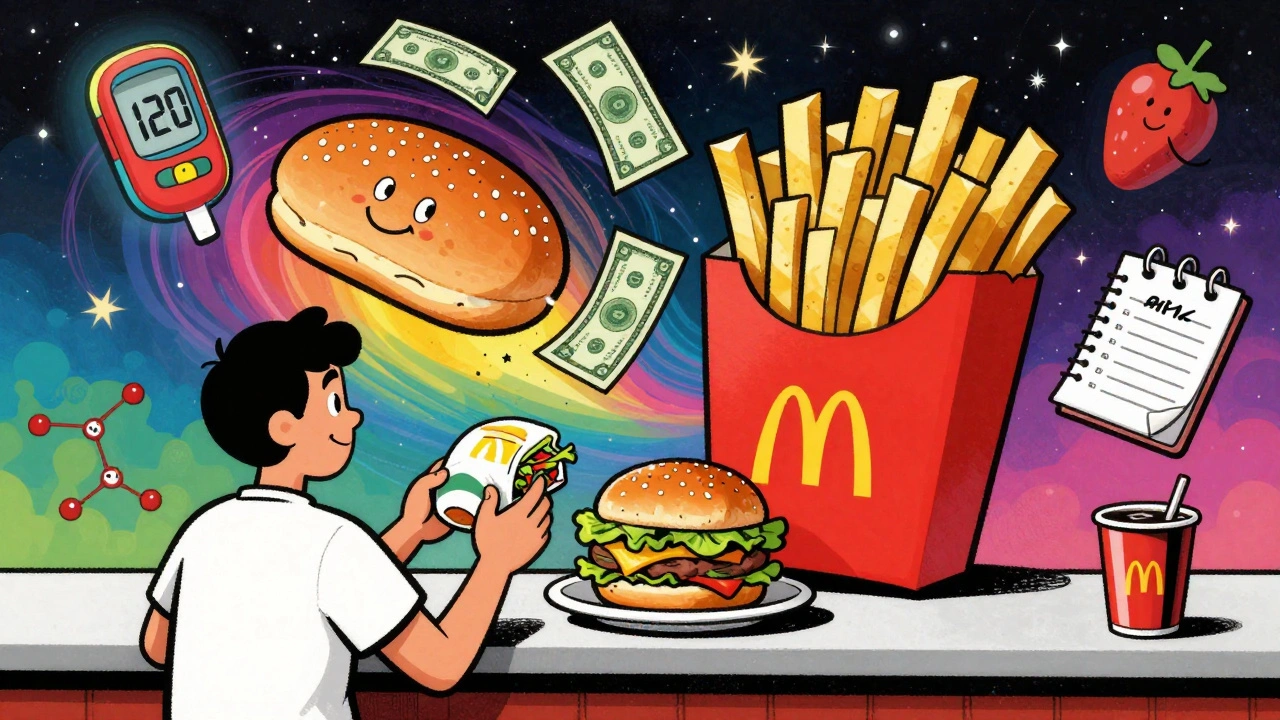
Let’s say you’re at an Italian place. Skip the fettuccine alfredo. Instead, order grilled shrimp with a side of steamed broccoli and a small portion of whole grain pasta (half a cup). Ask for marinara on the side. That’s roughly 30 grams of carbs-manageable. At a Mexican restaurant, choose a salad with grilled chicken, black beans (half a cup), and salsa. Skip the tortilla chips and sour cream. At a Japanese restaurant, go for sashimi or grilled fish with miso soup and steamed vegetables. Skip the tempura and rice-heavy rolls.Even fast food can work. At a burger joint, skip the bun. Order a lettuce-wrapped burger with a side salad. You’ll cut 30-40 grams of carbs instantly. At a chicken chain, choose grilled chicken strips (not crispy), skip the biscuits, and get apple slices instead of fries. A grilled chicken salad with vinaigrette on the side? That’s under 20 grams of carbs. You can still eat well-even at places like McDonald’s or Chick-fil-A.
Bring Your Tools-Just in Case
Always carry your glucose meter and fast-acting glucose tablets (like glucose gel or 4 glucose tablets) when you eat out. Why? Because restaurant service can be slow. If you’re on insulin, waiting 45 minutes for your food can drop your blood sugar dangerously low. You don’t want to be stuck in a restaurant with no snacks and a shaky hand.Also, keep a small notebook or use your phone to log what you ate and your blood sugar before and after. Over time, you’ll start to recognize patterns. That chicken stir-fry at the Thai place? It always spikes you. Next time, skip the sauce. That burger with the sweet potato fries? Too much. Swap for a side salad. Your body will thank you.
It’s Not Perfect-And That’s Okay
You’re not going to get every meal right. Some days, you’ll eat more carbs than planned. That’s fine. What matters is what you do next. Check your blood sugar. Adjust your insulin if needed. Don’t beat yourself up. The goal isn’t perfection. It’s consistency. Studies show that people who stick to smart carb choices and portion control over six months see their HbA1c drop by 0.8% to 1.2%. That’s a big deal. It means less risk of nerve damage, eye problems, and heart disease.And remember-you’re not alone. A 2023 survey from Reddit’s r/diabetes showed that 74% of people with diabetes find eating out the hardest part of managing their condition. You’re not weird for asking for no bread or extra veggies. You’re not rude for splitting a meal. You’re taking control. And that’s what diabetes management is all about.
Can I still eat pasta when dining out with diabetes?
Yes, but keep it small. Stick to half a cup of pasta-about the size of a tennis ball. Choose whole grain if available, and pair it with plenty of vegetables and lean protein. Skip creamy sauces and ask for tomato-based sauce on the side. A full serving of pasta at a restaurant can be 80+ grams of carbs. Half a serving brings it down to 35-40 grams, which fits within most meal plans.
Are salads always a safe choice?
Not always. A salad can be full of hidden carbs. Croutons, dried fruit, candied nuts, and creamy dressings can add 20-40 grams of carbs fast. Stick to plain greens with grilled chicken or fish. Ask for oil and vinegar or a light vinaigrette on the side. Skip the cheese, bacon bits, and sweet dressings. A simple salad with dressing on the side can be under 15 grams of carbs.
Should I avoid fast food entirely?
No, but be selective. Skip the burgers with buns, fried chicken, and fries. Instead, choose grilled chicken sandwiches without the bun, side salads with vinaigrette, or yogurt cups (check sugar content). McDonald’s grilled chicken salad has about 18 grams of carbs with dressing on the side. Chick-fil-A’s grilled chicken nuggets (4 pieces) have 10 grams of carbs. It’s possible-you just need to know what to look for.
How do I handle social pressure to eat more?
Be polite but firm. Say, “I’m watching my portions for my diabetes,” or “I’m trying to eat lighter tonight.” Most people understand. If they don’t, it’s not your job to explain. You don’t owe anyone a detailed health report. You can also order first, so you’re not influenced by what others pick. And if someone offers you dessert, say, “I’m good, thanks-I already had something sweet today.” It’s okay to say no.
What if the restaurant doesn’t have low-carb options?
Most places will accommodate you-even if it’s not on the menu. Ask for grilled meat or fish with steamed vegetables instead of rice or potatoes. Request no sauce or gravy. Ask for a side salad instead of fries. Even at a steakhouse, you can usually get a plain protein with veggies. Don’t be afraid to ask. Restaurants are used to dietary requests. The worst they can say is no-and most will say yes.
Do I need to count carbs every single time I eat out?
You don’t need to count every gram, but you do need to estimate. The plate method gives you a good framework. If you’re on insulin, knowing your carb amount helps with dosing. If you’re on metformin or GLP-1 agonists, portion control matters more than exact counts. Use apps, check labels, and learn common carb amounts. After a few tries, you’ll get a feel for it. It’s not about precision-it’s about awareness.
Lucinda Bresnehan
December 1, 2025 AT 14:10I used to dread eating out with my diabetes until I started using the plate method. Half plate veggies, quarter protein, quarter carbs? It’s so simple. I even got my mom to do it when we go to brunch now. She thinks I’m weird, but she’s lost 10 pounds and her A1c dropped. No magic, just math you can see.
Also, asking for sauces on the side? Game changer. I used to eat ranch like water. Now I dip my fork in it once and call it a day. My blood sugar doesn’t spike, and I still feel like I’m eating something tasty.
Shannon Gabrielle
December 1, 2025 AT 20:41Wow. Another ‘eat less carbs’ lecture from someone who clearly never had to live on minimum wage while trying to afford insulin. You want me to skip the bread basket? Cool. What about the $12 salad with three microgreens and a single cherry tomato? That’s not food, that’s a mood. And don’t get me started on ‘steamed vegetables’-you think that’s what people eat when they’re hungry? Try eating steam and calling it dinner for six months. Then come back and tell me how ‘simple’ this is.
Nnaemeka Kingsley
December 2, 2025 AT 12:37Man, this is real talk. I’m from Nigeria and we love our pounded yam and egusi soup. But when I came to the US, I started having crazy spikes. Now I just ask for half portion of rice and extra vegetables. Staff don’t even blink anymore. One time, the waiter brought me extra spinach like it was normal. I was like, ‘this guy gets it.’
And yeah, skip the fried stuff. Even my aunty back home says, ‘you don’t need to eat everything just because it’s there.’ Simple wisdom.
Kshitij Shah
December 2, 2025 AT 15:50Let’s be real-restaurants are designed to make you eat more. They know your brain says ‘more’ when you see a giant plate. I used to order the ‘family size’ pasta just to feel like I got my money’s worth. Now I order the appetizer portion, share it, and save the rest. It’s not about deprivation-it’s about not being a sucker for marketing.
Also, ‘light’ Asian food? More like ‘light on protein, heavy on sugar.’ I’ve had orange chicken that tasted like candy with a side of rice. No thanks. I’ll take plain grilled fish and a side of steamed bok choy any day. And yes, I’ve been called ‘that weird guy who doesn’t eat rice’-I wear it like a badge.
Sean McCarthy
December 3, 2025 AT 18:54It's not enough to just 'ask for sauces on the side.' You need to know the exact carbohydrate content of every sauce, every side, every condiment. Otherwise, you're just guessing. And guessing is dangerous. There are over 300 different types of BBQ sauce alone. You can't memorize them all. You need to use a carb-counting app, track every gram, and log your post-meal glucose levels. Anything less is irresponsible. You're not managing diabetes-you're gambling with your health.
Walker Alvey
December 4, 2025 AT 03:31People think they’re being ‘responsible’ by splitting meals and asking for veggies instead of fries. But that’s just performance. You’re not healing yourself-you’re performing health for social approval. Real freedom isn’t choosing a lettuce wrap. It’s accepting that your body is broken and no amount of portion control will fix biology. The real solution? Stop pretending you can out-eat genetics.
Adrian Barnes
December 5, 2025 AT 16:16It is both scientifically and ethically indefensible to suggest that individuals with metabolic disorders can ‘manage’ their condition through dietary modification alone. The systemic failure of modern food environments to provide nutrient-dense, low-glycemic options is a public health catastrophe. Your plate method is a Band-Aid on a severed artery. The real issue is the commodification of food by agribusinesses that profit from insulin dependence. Until we dismantle the industrial food complex, your ‘smart choices’ are merely acts of complicity.
Declan Flynn Fitness
December 6, 2025 AT 22:36This is actually really solid advice. I’ve been doing the plate thing for a year now and my A1c went from 8.2 to 6.4. No drama, no keto, no supplements. Just veggies, protein, and half the rice.
Also, if you’re at a buffet? Just walk away. I used to think I was being ‘fair’ by trying everything. Now I just grab a salad and a grilled chicken breast and call it a day. People think I’m weird, but I’m the one with the stable glucose levels. 😎
And yes-I still eat pasta. Just half a cup. And I savor every bite.
Michelle Smyth
December 7, 2025 AT 04:10How quaint. The plate method is a bourgeois solution to a structural problem. You’re treating symptoms while ignoring the epistemological violence of neoliberal food systems that commodify health as a personal responsibility. Your ‘half portion’ is a neoliberal fantasy-individual agency in the face of systemic collapse. And don’t get me started on ‘apps’-they’re just digital panopticons for metabolic surveillance. You’re not managing diabetes. You’re being managed.