

For people with type 2 diabetes, the biggest threat isn’t high blood sugar-it’s a heart attack. About 65% of deaths in people with diabetes are linked to heart disease. That’s not a side effect. It’s the rule. The two conditions don’t just happen together; they feed each other. High blood sugar damages blood vessels. Extra weight strains the heart. Inflammation from insulin resistance clogs arteries. Left unchecked, this combo turns a manageable condition into a life-threatening one.
Why Medications Like Semaglutide Are Changing the Game
For years, metformin was the go-to drug for diabetes. It helped control blood sugar, but its impact on the heart was modest. That changed with the rise of GLP-1 receptor agonists-medications like semaglutide (Wegovy, Ozempic) and tirzepatide (Mounjaro, Zepbound). These aren’t just weight-loss drugs. They’re heart protectors.
In the STEP 1 trial, people using semaglutide lost nearly 15% of their body weight on average. Tirzepatide pushed that even higher-up to 22.5% in the SURMOUNT-1 study. But the real win? These drugs don’t just shrink fat. They lower blood pressure, reduce inflammation, and improve how the heart pumps blood. The LEADER trial showed liraglutide, another GLP-1 RA, cut major heart events by 13% compared to placebo.
In 2023, the FDA gave semaglutide a new approval: it can be used to reduce heart attack, stroke, and cardiovascular death in adults with heart disease and overweight or obesity. This wasn’t just another label update. It was a turning point. For the first time, a weight-loss drug had a direct, proven cardiovascular benefit approved by regulators.
What Lifestyle Changes Actually Move the Needle
Medications help, but they’re not magic. The real power comes when they team up with real, daily habits. The American Diabetes Association doesn’t push one perfect diet. Instead, it backs proven patterns: Mediterranean, DASH, or plant-based eating. That means more vegetables, beans, nuts, whole grains, and fish-and less processed food, sugary drinks, and saturated fats.
Exercise isn’t about running marathons. It’s about consistency. The goal? At least 30 minutes a day, five days a week. You don’t have to do it all at once. Three 10-minute walks count. The Look AHEAD Trial proved that losing just 7% of your body weight improves blood pressure, cholesterol, and insulin sensitivity. That’s not a huge number-it’s about 15 pounds for someone weighing 215.
But it’s not just food and movement. Sleep matters. Stress management matters. Even social connection does. The CDC points out that people who stick to seven healthy habits-eating well, moving regularly, sleeping enough, not smoking, drinking moderately, managing stress, and staying connected-have far lower heart disease risk. Each habit adds up. Skipping one doesn’t ruin it. Missing three? That’s where risk spikes.
The Synergy No One Talked About
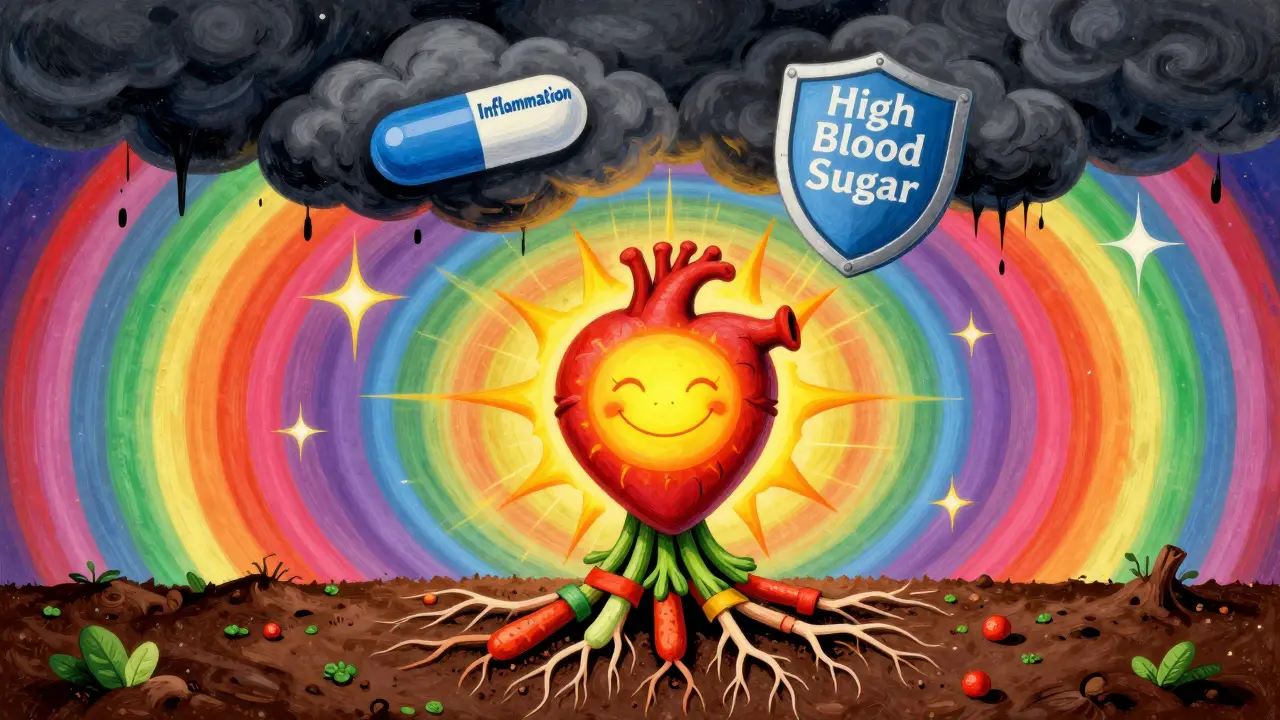
Here’s what the data shows that most doctors still don’t emphasize enough: combining medication with lifestyle changes doesn’t just add benefits-it multiplies them.
A study of veterans with type 2 diabetes found that those taking a GLP-1 RA had a 20% lower risk of a major heart event than those not on the drug. But those who also followed eight heart-healthy habits-like eating well, exercising, and not smoking-cut their risk by 63%. That’s not a 20% + 43% gain. It’s a compound effect. The medication makes it easier to lose weight and control blood sugar. The lifestyle changes make the medication work better. Together, they create a feedback loop of health.
Exercise alone can cut heart disease death rates by 27% in cardiac rehab patients, according to studies cited by the CDC. That’s as powerful as many heart medications. But here’s the catch: most people can’t stick to exercise long-term without support. That’s where GLP-1 RAs help. They reduce hunger, stabilize blood sugar, and give people the energy and motivation to actually move.
Why the Old Rules Are Outdated
For decades, the advice was simple: lose weight through diet and exercise first. If that failed, then try medication. That approach assumed people had the time, resources, and mental bandwidth to overhaul their lives before getting medical help. It ignored the biology of obesity.
Obesity isn’t a lack of willpower. It’s a chronic disease. The brain fights weight loss. Hormones scream for more food. Metabolism slows down. Trying to lose 10% of your body weight without help? Most people can’t do it. Studies show lifestyle alone typically leads to a 3-5% weight loss-barely enough to make a dent.
That’s why the American College of Cardiology updated its guidance in June 2025. They now say: Don’t make patients fail at lifestyle before giving them effective medication. If you have diabetes and heart disease risk, you don’t need to wait six months to start a GLP-1 RA. You can start now.
But here’s the key: the FDA still requires that semaglutide be used “in addition to a reduced calorie diet and increased physical activity.” The medicine isn’t a replacement. It’s a tool. And tools work best in skilled hands.

What You Can Do Right Now
You don’t need to overhaul everything tomorrow. Start with one thing.
- If you’re not eating vegetables daily, add one serving to lunch or dinner.
- If you sit most of the day, take a 10-minute walk after meals.
- If you’re on metformin and still struggling with weight or energy, ask your doctor about GLP-1 RAs.
- If you’re on a GLP-1 RA, don’t skip meals or stop moving. The drug helps-but it doesn’t do the work for you.
Track your progress. Not just weight. Blood pressure. Energy levels. How many steps you take. How often you sleep through the night. These are the real markers of heart health.
Insurance still blocks access for many. About 40% of people who qualify for these drugs can’t get them covered. If you’re denied, ask for a letter of medical necessity from your doctor. Cite the FDA approval for cardiovascular risk reduction. Cite the ACC guidelines. This isn’t cosmetic. It’s life-saving.
The Bigger Picture
More than 1 billion people worldwide live with obesity. In the U.S., 70% of adults carry excess weight. That’s not just a statistic-it’s a public health emergency. And it’s driving up heart disease rates faster than ever.
The tools we have now-medications like semaglutide and tirzepatide-are the most effective we’ve ever had. But they’re not the whole solution. The real breakthrough isn’t a pill. It’s the shift in thinking: medicine and lifestyle aren’t separate paths. They’re two sides of the same coin.
By 2030, experts predict GLP-1 RAs will become standard care for people with diabetes and heart disease risk. But only if people use them right. Not as a quick fix. Not as an excuse to eat poorly. But as a bridge to a healthier, more sustainable life.
The goal isn’t to be perfect. It’s to be consistent. One healthy meal. One walk. One day at a time. With the right support, your heart doesn’t have to pay the price for your diabetes.
Can I stop my diabetes meds if I start a GLP-1 RA?
No. GLP-1 RAs like semaglutide and tirzepatide are often added to existing diabetes medications, not used as replacements. They work differently-GLP-1 RAs help your body make insulin when needed and reduce appetite, but they don’t replace all the functions of other drugs. Always talk to your doctor before changing your regimen.
Do GLP-1 RAs work if I don’t lose weight?
Yes. While weight loss is a major benefit, GLP-1 RAs improve heart health even without major weight loss. They reduce inflammation, lower blood pressure, and improve blood vessel function. Clinical trials show cardiovascular benefits even in people who lose less than 5% of their body weight.
Is it too late to start lifestyle changes if I already have heart disease?
Never too late. Studies show that even people with existing heart disease who start exercising, eating better, and managing stress reduce their risk of another heart event by up to 27%. Lifestyle changes don’t undo damage-but they slow progression and improve quality of life significantly.
How long before I see results from lifestyle changes?
You’ll feel better in days-more energy, better sleep. Blood pressure and blood sugar can drop in 2-4 weeks. Weight loss takes longer, but even small changes add up. After 3 months of consistent habits, most people see measurable improvements in cholesterol and inflammation markers.
Are GLP-1 RAs safe for long-term use?
Yes. Clinical trials lasting up to 5 years show GLP-1 RAs are safe for long-term use. Side effects like nausea or digestive upset usually fade after a few weeks. Serious risks are rare. The FDA’s approval for cardiovascular risk reduction was based on long-term safety data from thousands of patients. Regular check-ups with your doctor are still important.
Niamh Trihy
January 30, 2026 AT 04:47I’ve been on semaglutide for 8 months now, and honestly? It didn’t just help me lose weight-it gave me my life back. My BP dropped from 148/92 to 122/78 without changing my meds. I started walking after dinner, just 15 minutes, and now I do 45. The hunger didn’t vanish overnight, but it stopped screaming. This isn’t magic. It’s biology finally being respected.
Sarah Blevins
January 31, 2026 AT 06:35The data presented here is methodologically sound, but the framing is overly optimistic. GLP-1 RAs demonstrate statistically significant risk reduction in controlled trials, yet real-world adherence rates hover below 40% after one year. Furthermore, the long-term economic burden of these drugs remains unaddressed in public health discourse. Correlation does not imply causation without accounting for confounding variables such as socioeconomic status and baseline health literacy.
Jason Xin
January 31, 2026 AT 11:02Yeah, sure. ‘Medication and lifestyle together’-that’s the big reveal? Like, wow. I’ve been telling my patients for years that if you want to actually feel better, you gotta stop pretending willpower is the answer. The fact that it took a billion-dollar pharma campaign to get doctors to stop blaming people for being fat? That’s the real tragedy.
And don’t get me started on how insurance still treats this like a luxury. I had a 62-year-old woman cry in my office because her plan denied her the drug after her second heart scare. ‘Try diet and exercise first.’ Like she had time to join a yoga retreat while her arteries turned to concrete.
Yanaton Whittaker
January 31, 2026 AT 11:50AMERICA IS BEING POISONED BY BIG PHARMA AND THE LEFTIST HEALTH INDUSTRY! 🇺🇸🔥
They want you dependent on these $$$ drugs so they can control you! Who paid for this study? WHO IS FUNDING THE FDA?!
Real men eat steak, lift weights, and don’t need pills to walk to the fridge! This is just woke medicine for weak people! NO MORE SUGAR TAXES, NO MORE GLP-1 DRUGS! WE ARE NOT LAB RATS!
Kathleen Riley
February 2, 2026 AT 10:23One is compelled to interrogate the epistemological foundations of the prevailing paradigm, wherein pharmaceutical intervention is posited as a synergistic complement to behavioral modification. Yet, this conflation of ontological domains-biological pharmacology and moralized self-regulation-risks obscuring the structural determinants of metabolic pathology: food deserts, wage stagnation, and the commodification of health as a consumer good. The individualistic framing of ‘habits’ ignores the sociopolitical architecture that renders ‘healthy choices’ inaccessible to the majority.
Beth Cooper
February 3, 2026 AT 23:32Okay but have you heard about the ‘weight loss drug’ conspiracy? The CDC and FDA are in cahoots with the sugar industry to make people dependent on these drugs so they can sell more insulin and blood pressure meds. It’s all a money scheme. I read on a blog that semaglutide was originally developed as a rat poison. Also, your gut bacteria are being replaced by nanobots from the vaccine. Just saying.
And if you actually lost 15% of your weight? You’re probably just dehydrated. Drink more salt water. That’s what my uncle did in ‘09. He cured his diabetes with apple cider vinegar and a crystal.
Donna Fleetwood
February 5, 2026 AT 13:42You’re not alone. I started this journey feeling broken. I didn’t know if I’d ever walk up the stairs without gasping. But I took one step. Then another. Then I asked my doctor about semaglutide. It wasn’t a magic fix-it was a spark. Now I cook with olive oil. I dance in the kitchen. I sleep through the night. It’s not about being perfect. It’s about showing up for yourself, even on the days you feel like giving up. You’ve got this. Seriously. One meal. One walk. One breath at a time.
Melissa Cogswell
February 7, 2026 AT 00:23Just wanted to add something the article didn’t mention: GLP-1 RAs also reduce liver fat significantly. A 2024 MRI study showed a 30% drop in hepatic steatosis after 12 months on tirzepatide-even in patients who lost less than 5% body weight. That’s huge for non-alcoholic fatty liver disease, which is super common in type 2 diabetics. If you’ve got elevated liver enzymes, ask your doc about it. It’s not just about the heart.
Diana Dougan
February 8, 2026 AT 16:59So let me get this straight… you’re telling me I need to eat kale AND pay $1000/month for a drug that makes me puke? Cool. I’ll just keep eating pizza and dying. At least I’ll be happy while it happens. Also, ‘cardiovascular risk reduction’? Sounds like a fancy way to say ‘you’re gonna die anyway, so here’s a pill to make you feel less guilty.’
Also, typo: ‘liraglutide’ is spelled ‘liraglutide’ in the article. I know, I’m a nerd. But I’m the only one who noticed.
Bobbi Van Riet
February 9, 2026 AT 17:47I’m 52, had a stent put in last year, and was on metformin for 12 years. I was tired all the time, felt like I was dragging a sack of bricks. Started semaglutide last June. Lost 28 pounds. Not because I was starving myself-because I didn’t want to eat junk anymore. That’s the weird part. The craving just… faded. I started walking with my granddaughter. We go to the park, she runs, I walk. I don’t count steps. I just enjoy it. My BP’s normal. My A1C’s 5.8. And I haven’t felt this calm in decades. It’s not about willpower. It’s about giving your body a chance. And yeah, sometimes that chance comes in a pill. And that’s okay.
Holly Robin
February 11, 2026 AT 05:24THIS IS A TRAP. THEY WANT YOU TO THINK YOU NEED A DRUG TO BE HEALTHY. BUT WHAT ABOUT THE REAL CAUSE? THE GOVERNMENT PUTS TOXINS IN OUR WATER AND FOOD TO MAKE US SICK SO THEY CAN SELL US MEDS! GLP-1 RAS ARE JUST THE NEXT PHASE OF THE NEW WORLD ORDER! THEY’RE USING YOUR DIABETES TO CONTROL YOU! I’VE BEEN STUDYING THIS FOR 17 YEARS AND I KNOW THE TRUTH! YOU THINK YOU’RE GETTING BETTER? YOU’RE JUST BEING PROGRAMMED!
Also, my cousin’s neighbor’s dog got on Ozempic and started speaking in Latin. I’m not kidding. Google it. It’s real.