
When you take a pill for a headache or an antibiotic for an infection, your body usually handles it just fine. But for some people, even a small dose can trigger a reaction that feels like an all-out attack. These aren't just side effects-they're allergies and hypersensitivity reactions, where the immune system mistakenly sees a harmless drug as a threat. And the consequences can be serious: rashes, breathing trouble, organ damage, or even life-threatening anaphylaxis.
Penicillin: The Most Common Culprit
Penicillin and its relatives-like amoxicillin, ampicillin, and amoxicillin-clavulanate-are the most frequently reported drug allergies in the U.S. About 10% of people say they’re allergic to penicillin. But here’s the twist: over 90% of those people aren’t actually allergic. Many outgrew it years ago, or misremembered a stomach upset as an allergy. A 2021 Mayo Clinic study found that 80% of patients labeled as penicillin-allergic could safely take it after proper testing.Why does this matter? Because if you’re labeled allergic, doctors avoid penicillin and reach for broader-spectrum antibiotics like vancomycin or fluoroquinolones. These drugs are more expensive, less effective for some infections, and contribute to antibiotic resistance. A 2017 JAMA study showed patients with penicillin allergy labels stayed in the hospital half a day longer and paid over $1,000 more per admission.
Testing for penicillin allergy is straightforward. Skin testing with Pre-Pen and amoxicillin followed by a supervised oral challenge is 97-99% accurate. It takes 2-4 hours. If you were told you’re allergic as a kid and haven’t taken penicillin since, getting tested could open up safer, cheaper treatment options.
Other Antibiotics: Sulfa Drugs and Cephalosporins
Sulfa drugs like Bactrim (trimethoprim-sulfamethoxazole) cause allergic reactions in about 3% of the general population-but up to 60% of people with HIV. These reactions often show up as rashes, fever, or liver problems. Unlike penicillin, there’s no reliable skin test for sulfa allergies. Diagnosis relies on symptoms and timing.Cephalosporins (like cephalexin or ceftriaxone) are often thought to cross-react with penicillin. But modern studies show the real risk is only 1-3%, not the old 10% myth. Most people with penicillin allergy can take cephalosporins safely, especially later-generation ones. Still, doctors often avoid them out of caution-another example of how outdated assumptions harm patients.
NSAIDs: More Than Just Stomach Upset
Ibuprofen, naproxen, aspirin-these common painkillers cause allergic-like reactions in 1 out of every 100 people. But these aren’t classic IgE allergies. They’re more like pharmacological intolerances. The immune system isn’t producing antibodies. Instead, these drugs disrupt natural chemicals in the body, leading to inflammation.One specific pattern is aspirin-exacerbated respiratory disease (AERD). It affects 7% of adults with asthma and 14% with nasal polyps. People with AERD get wheezing, congestion, and even asthma attacks within hours of taking aspirin or other NSAIDs. They often can’t tolerate any of them. Avoiding these drugs is the only way to manage it.
For others, NSAID reactions show up as hives, swelling, or trouble breathing. If you’ve ever had a reaction after taking Advil or Aleve, don’t assume it’s just a coincidence. Talk to an allergist. You might be able to tolerate one NSAID while avoiding others.
Anticonvulsants: Skin Reactions and Genetic Risk
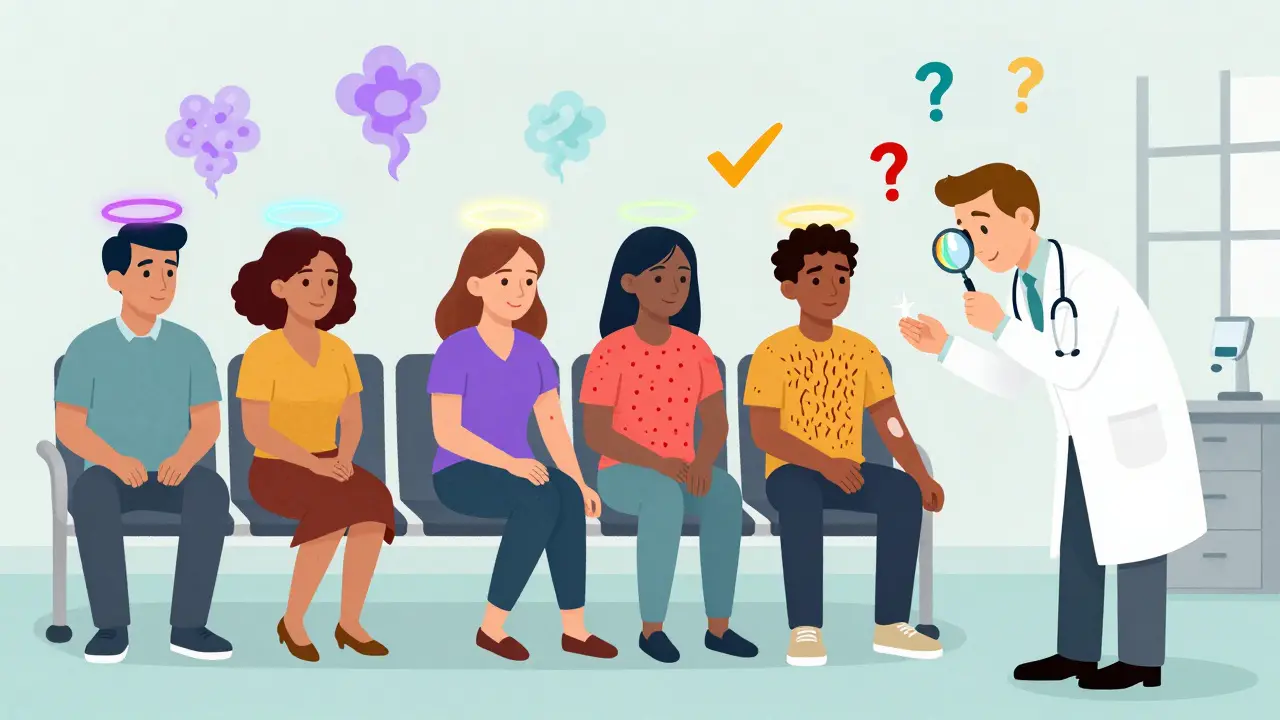
Drugs like carbamazepine (Tegretol), lamotrigine (Lamictal), and phenytoin (Dilantin) are essential for epilepsy and bipolar disorder. But they carry a hidden risk: severe skin reactions like Stevens-Johnson syndrome (SJS) and toxic epidermal necrolysis (TEN). These are rare-about 1-6 cases per million-but they kill 20-30% of people who get them.Genetics play a huge role. The HLA-B*1502 gene variant is strongly linked to carbamazepine-induced SJS in people of Southeast Asian descent. In Taiwan, where doctors test for this gene before prescribing carbamazepine, SJS cases dropped by 90%. The FDA now recommends screening for this gene in high-risk populations.
Lamotrigine causes rashes in 5-10% of users, with serious reactions occurring in 0.8 per 1,000 patient-years. Most rashes are mild and go away if you stop the drug. But if it spreads, blisters, or you develop fever or mouth sores, seek help immediately. These reactions can take days to appear, so they’re easy to miss.
Chemotherapy and Biologics: The New Frontier
Cancer drugs like paclitaxel (Taxol) and monoclonal antibodies like cetuximab (Erbitux) cause hypersensitivity in 5-30% of patients. These reactions often happen during infusion-flushing, low blood pressure, wheezing, or chest tightness. They’re not always IgE-mediated. Sometimes, they’re just the immune system overreacting to a foreign protein.Paclitaxel causes reactions in 20-41% of patients. But premedication with steroids and antihistamines reduces severe reactions by 80%. Many patients can safely continue treatment with the right prep.
Cetuximab, used for colon and head/neck cancers, caused severe anaphylaxis in 3% of patients in early trials. It turned out that a sugar molecule in the drug triggered IgE antibodies in people from southern U.S. states. This was a shocking discovery-turns out, some people had been exposed to the sugar through cat dander or food.
Contrast Dye: Invisible Risk in Imaging
When you get an MRI or CT scan with contrast dye, you’re getting a chemical that helps doctors see your organs. About 1-3% of people react to it. Most reactions are mild-nausea, itching, or a warm feeling. But 0.01-0.04% develop life-threatening reactions.Surprisingly, these aren’t true allergies. The body doesn’t produce IgE antibodies to iodine (a common myth). Instead, the dye directly triggers mast cells to release histamine. That’s why premedication with steroids and antihistamines works so well. One study showed it cut moderate-severe reactions from 12.7% to just 1%.
If you’ve had a reaction before, you’re at higher risk. But many people can still get contrast safely-with the right precautions. Talk to your radiologist. Don’t assume you’re out of luck.
Diagnosis: How Do You Know It’s an Allergy?
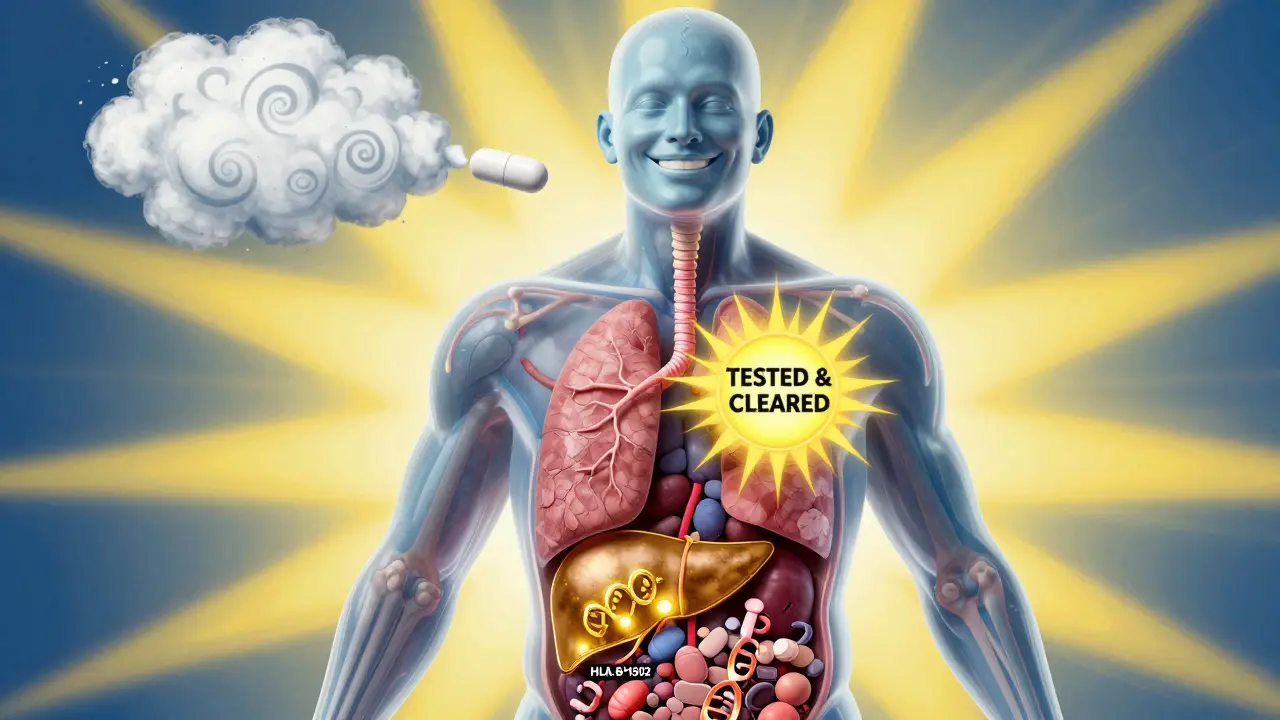
Most drug reactions aren’t allergies. In fact, over 90% of adverse drug events are non-immune. So how do you tell the difference?- Timing matters: True allergies usually happen within minutes to hours. Delayed reactions (1-14 days) are often T-cell mediated and show up as rashes or organ inflammation.
- Symptoms matter: Hives, swelling, wheezing, low blood pressure? That’s IgE. A rash that spreads slowly over days? Could be T-cell.
- Testing helps: Skin tests are reliable for penicillin. Blood tests (like IgE assays) are useful for some drugs. Oral challenges-giving you a tiny dose under supervision-are the gold standard for confirmation.
Many patients never get tested. A 2022 survey found 68% of people with drug allergy labels never saw an allergist. That’s a missed opportunity. You might be avoiding safe, effective drugs for no reason.
What to Do If You Think You’re Allergic
Don’t just assume. Don’t write it off. Here’s what to do:- Write down the details: What drug? When did you take it? What happened? How long did it last? Did you get medical care?
- Don’t stop needed meds without advice: If you need an antibiotic, don’t refuse it because of a label. Ask for testing.
- See an allergist: Especially if you’ve had a serious reaction. They can help you figure out what’s real and what’s not.
- Update your records: If testing clears you, make sure your doctor and pharmacy update your allergy list.
Many people outgrow allergies. A child allergic to penicillin at age 5 might be fine at 15. But without testing, you’ll never know.
The Bigger Picture: Cost, Safety, and Future
Mislabeling drug allergies isn’t just inconvenient-it’s dangerous. It leads to more antibiotic resistance, longer hospital stays, and higher costs. The U.S. spends $1.2 billion a year because of mislabeled penicillin allergies alone.But change is coming. Telehealth penicillin testing now cuts wait times from 60 days to 14. Genetic screening for carbamazepine and abacavir is becoming standard. The FDA is pushing for consistent testing guidelines. By 2030, allergists predict point-of-care genetic tests will be routine before prescribing high-risk drugs.
For you, the takeaway is simple: If you think you’re allergic to a medication, don’t live with the label. Get it checked. You might be surprised what you find out.
Carrie Schluckbier
February 17, 2026 AT 20:26Let me guess-Big Pharma is *totally* hiding the truth about drug allergies. They don’t want you to know that 90% of penicillin ‘allergies’ are fake because they’re profit-pushing antibiotics that cost $200 a dose. Meanwhile, the FDA and CDC are in cahoots with pharmaceutical lobbyists to keep you scared of penicillin so you keep buying vancomycin. It’s not a medical issue-it’s a cash grab. And don’t even get me started on how they’re using ‘genetic screening’ as a Trojan horse for biometric tracking. You think HLA-B*1502 testing is for your safety? Nah. It’s building a database. They’re mapping your DNA to sell targeted ads. I’ve seen the leaked emails. They’re calling it ‘Project AllergenTrack.’
Tony Shuman
February 18, 2026 AT 04:03Wow. Just wow. This whole article reads like a corporate pamphlet from Merck. Who wrote this? A pharma rep with a thesaurus? I’ve been on antibiotics since I was 12, and I’ve never once had a ‘reaction’-but according to this, I’m probably allergic to everything and don’t know it. Meanwhile, real people like me-veterans, factory workers, single parents-are getting prescribed 12 different drugs because doctors are too scared to use the one that actually works. This isn’t science. It’s fearmongering dressed up as ‘awareness.’
Linda Franchock
February 18, 2026 AT 21:16Okay, real talk: if you got a rash on amoxicillin when you were 7 and never tried it again, you’re probably not allergic. I used to be one of those people-‘I’m allergic to penicillin’ like it was a badge. Then I got tested. Turned out I was fine. Saved me $1,200 on my last hospital stay and got me a *real* antibiotic instead of some last-resort junk. Seriously, if you’ve got a label like that, go see an allergist. It’s 2 hours. You might thank yourself later. Also, stop calling NSAID reactions ‘allergies.’ They’re not. They’re just your body going ‘nah, I’m not doing this today.’
Dennis Santarinala
February 19, 2026 AT 03:42It’s wild how much we’ve overmedicalized normal reactions, isn’t it? I mean, who decided that a little rash after Advil meant your immune system was ‘attacking’? It’s more like your body went, ‘Hey, this is a weird molecule, I’m gonna make a scene.’ And yet, we treat it like a death sentence. I’ve had hives from ibuprofen once. Took me 3 days to heal. Didn’t stop me from using naproxen next time. Different drug. Different body. Different story. We need to stop treating every side effect like a biblical plague. Chill. Test. Try again. Not everything that tingles is a trap.
guy greenfeld
February 20, 2026 AT 01:34Consider this: if your immune system can mistake a life-saving drug for a deadly invader, what does that say about the nature of identity? Are we not, in fact, just biological systems constantly misinterpreting signals? The penicillin ‘allergy’ is a metaphor. We fear what we don’t understand. We label. We isolate. We avoid. We call it ‘safety.’ But what if the real danger isn’t the drug-but the dogma? The myth of the allergic self? The refusal to retest? To evolve? To question? We are not static. We are not fixed. And yet, we are imprisoned by a label from childhood. Who gave you that label? And why do you still believe it?
Prateek Nalwaya
February 21, 2026 AT 22:44As someone from India, I’ve seen this firsthand. My cousin got a rash on amoxicillin as a kid-never took it again. Then she got a UTI, and the doctor gave her ciprofloxacin. She ended up in the hospital with tendon rupture. Why? Because they avoided penicillin-based drugs out of fear. Meanwhile, in the U.S., they’re testing people and saving millions. We need more awareness here. Not just in rich countries. This isn’t just about money-it’s about access. A simple skin test could save lives in rural clinics where antibiotics are already scarce. Why aren’t we pushing this harder?
Kancharla Pavan
February 23, 2026 AT 04:41Let’s be brutally honest: this whole ‘penicillin allergy’ thing is a luxury problem for overmedicated Americans who have never known real hardship. In my village, people take whatever is cheap and available-even if it gives them diarrhea. They don’t get ‘allergy testing.’ They don’t get ‘oral challenges.’ They get what the pharmacy gives them. And they survive. Meanwhile, you’re in a clinic debating whether your 10-year-old rash was ‘real’ or not. Wake up. This isn’t science-it’s privilege. The real crisis isn’t mislabeled allergies. It’s that 2 billion people can’t even get basic antibiotics. Stop obsessing over your ‘I’m allergic to penicillin’ label and look at the world. The real tragedy is not that you’re mislabeled-it’s that others are unlabeled and dying.
PRITAM BIJAPUR
February 24, 2026 AT 03:01✨ I just got my penicillin skin test done last week ✨
And you know what? It was *so* simple. No pain. No drama. Just a tiny prick, a 20-minute wait, and then-BOOM-negative. 🎉 I cried. Not because I was scared. But because I realized I’d been living with a ghost for 18 years. 😭
My mom still says, ‘But you got sick once!’ I said, ‘Mom, I had a stomach bug. I didn’t break out in hives. I didn’t stop breathing.’
Now I can take amoxicillin for my sinus infection. And I’m saving $800 on my next hospital bill. 💰
If you think you’re allergic-please, please, please get tested. You might be free. 🌟
And yes, I used emojis. Deal with it. 😘
Haley DeWitt
February 25, 2026 AT 10:30YES YES YES. I’m so glad someone finally said this. I was labeled allergic to sulfa after a rash at 12. Took me 15 years to get tested. Turns out? Not allergic. Just had a viral rash. And now I can take Bactrim for my UTIs instead of this $300 monstrosity my doctor keeps prescribing. I’m literally saving $2,000 a year. Also, I didn’t know NSAID reactions weren’t true allergies? That’s a game-changer. I thought I had to avoid ALL painkillers. Now I can use naproxen again. Thank you, article. And thank you, allergist. You changed my life. 🙌
John Haberstroh
February 26, 2026 AT 00:24Remember when people thought penicillin was ‘magic’? Now we’re treating it like poison because someone got a rash in 1998. It’s funny how medicine circles back. We used to give people leeches. Now we give them $2,000 antibiotics because we’re scared of a 2-hour test. I’ve seen doctors refuse to prescribe penicillin even to patients with MRSA-because of a label that’s probably false. We’re not curing diseases anymore. We’re playing whack-a-mole with fear. And we’re losing.
Logan Hawker
February 27, 2026 AT 06:40Let’s be real-this article reads like a PR whitepaper drafted by a McKinsey consultant who took a weekend course in immunology. ‘Over 90% aren’t allergic’? Wow. Groundbreaking. Did you also consider that maybe, just maybe, the immune system isn’t a binary switch? Maybe some reactions are ‘low-grade’ or ‘delayed’ or ‘context-dependent’? No? Because then you’d have to admit the science isn’t clean. And clean science doesn’t sell. Also, ‘point-of-care genetic tests by 2030’? Please. We can’t even get flu shots into arms. Let’s not pretend we’re on the cusp of a biotech utopia. We’re just repackaging fear as innovation. Again.
James Lloyd
February 27, 2026 AT 09:38As a pharmacist with 18 years in community practice, I’ve seen this too many times. A patient comes in with a penicillin allergy label, refuses to take amoxicillin, and ends up on azithromycin-which they then take for a viral infection. Antibiotic misuse. Resistance. Wasted money. And it’s avoidable. The skin test is safe, fast, and covered by insurance. I’ve had patients cry because they realized they’d been avoiding their best option for decades. We need to normalize testing. Not as a ‘last resort’-but as standard care. If you’re labeled allergic, get tested. If you’re a clinician, push for it. This isn’t theory. It’s practice. And it saves lives.
Digital Raju Yadav
February 27, 2026 AT 11:29Who funded this? The U.S. pharmaceutical lobby? India has been using penicillin for 70 years without ‘testing.’ No one here gets ‘oral challenges.’ We use what works. If you’re allergic, you die. If you’re not, you live. Simple. This ‘allergy label’ nonsense is a Western luxury. In India, we don’t have time for 4-hour tests. We have patients with sepsis. We use penicillin. It works. Stop overcomplicating medicine. Stop Americanizing global health. We don’t need your tests. We need your antibiotics.