
The Danger of the "Kitchen Spoon" Gap
Why is a kitchen spoon so risky? It comes down to a lack of standardization. In a medical setting, a standard teaspoon is exactly 5 mL. However, if you go into your kitchen and measure five different "teaspoons," you'll find they all hold different amounts. Some might hold 3 mL, while others hold 7 mL. That's a variance of up to 40%. When you use a spoon from your cutlery set, you aren't just risking a small error; you're gambling with your child's safety. The CDC has highlighted this through their "Spoons are for Soup" campaign, warning that using a tablespoon instead of a teaspoon can accidentally deliver three times the intended dose. According to research published in Pediatrics, using these household utensils actually doubles the chance that a parent will give the wrong dose. This isn't just a theoretical risk-poison control centers handle over 10,000 calls every year specifically because of liquid medication errors in children.Comparing Your Dosing Options
Not all measuring tools are created equal. Depending on the dose your doctor prescribes, some tools are simply better than others. For example, if you need to give a dose of 3.5 mL, a standard dosing cup marked in 5 mL increments is useless. You'll end up guessing where the line is, which is how errors happen.| Tool | Precision Level | Best Use Case | Risk Factor |
|---|---|---|---|
| Household Spoon | Very Low | Eating soup | High (Extreme variance in size) |
| Dosing Cup | Medium | Doses in 5 mL increments | Moderate (Hard to measure small fractions) |
| Oral Syringe | Very High | Precise doses (e.g., 0.1 mL to 10 mL) | Low (Clear graduated markings) |
| Medicine Dropper | High | Very small infant doses | Low (If calibrated in mL) |
Why Oral Syringes are the Gold Standard
If you want the most accurate dose possible, reach for the Oral Syringe. These are the plastic tubes with a plunger that you've likely seen at the pharmacy. Unlike cups or spoons, syringes have graduated markings that allow you to measure down to 0.1 mL. Research from Frontiers in Public Health shows that oral syringes account for the lowest percentage of imprecise dosing. They are especially critical for medications that require a specific dose that isn't a multiple of five. If your child needs 2.2 mL of a medication, an oral syringe is the only way to hit that mark exactly. Moreover, syringes make it easier to administer medicine to a struggling toddler by allowing you to squirt the liquid gently between the tongue and the side of the cheek, rather than risking a choke by pouring it into the back of the throat.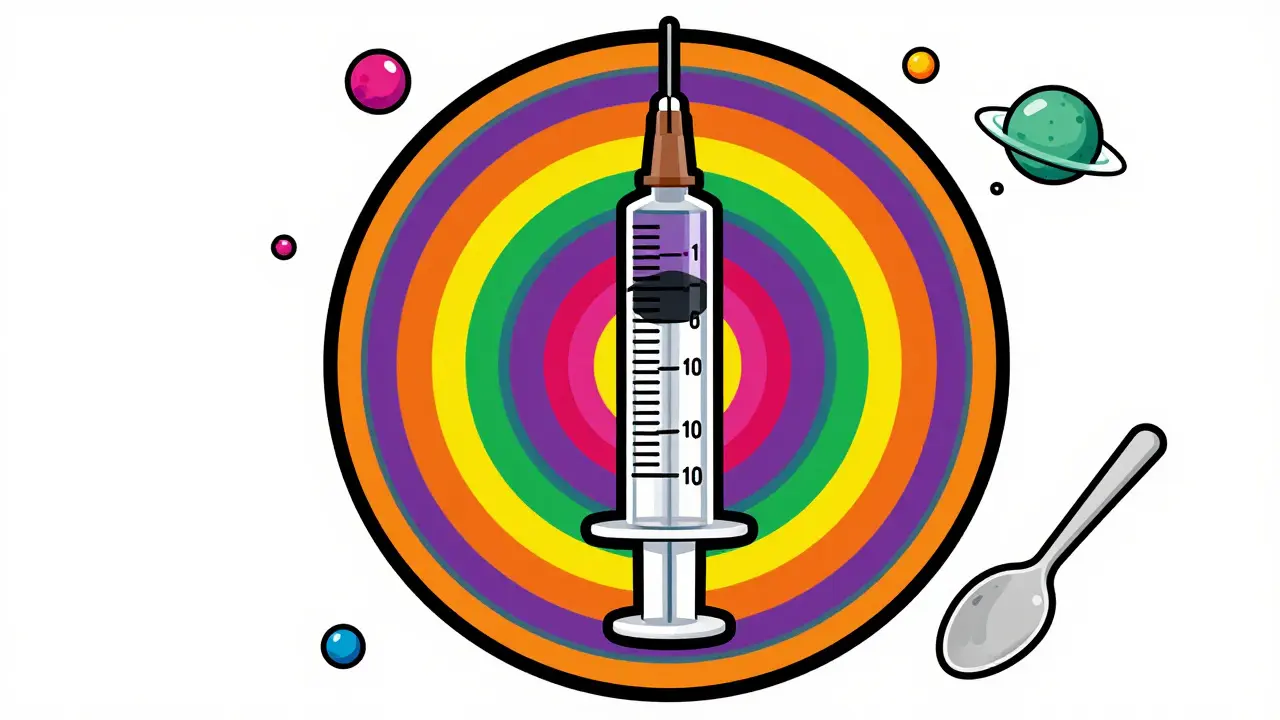
The Psychology of the Label: "tsp" vs "mL"
Have you ever noticed that some medicine bottles say "teaspoon" while others say "mL"? This small difference in wording has a huge impact on parent behavior. A study published in Academic Pediatrics found that when labels use the word "teaspoon" or the abbreviation "tsp," parents are significantly more likely to reach for a kitchen spoon. Specifically, about 33% of parents who saw "teaspoon" on a label considered using a household spoon. When the label only showed "mL," that number dropped to less than 10%. This is why the FDA and the American Academy of Pediatrics (AAP) are pushing for milliliter-only labeling. By removing the word "teaspoon" entirely, the medical community can steer parents away from the dangerous habit of using cutlery for medicine.Pro Tips for Safe Administration
Giving medicine to a wiggly child is stressful, but a few simple habits can prevent a disaster. First, always use the specific measuring device that comes with that particular medication. Don't use a syringe from a different bottle, as the concentrations may differ. Next, treat the measurement like a science experiment: measure at eye level. If you hold a dosing cup or syringe up in the air or look down at it on the counter, you might misread the line. Put the device on a flat surface or hold it directly in front of your eyes to ensure the liquid hits the mark exactly. If you find yourself without a proper tool, don't improvise. Your pharmacist is your best resource. Most pharmacies will provide an oral syringe with clear milliliter markings for free if you explain that you don't have one. It's a thirty-second request that could prevent a trip to the emergency room.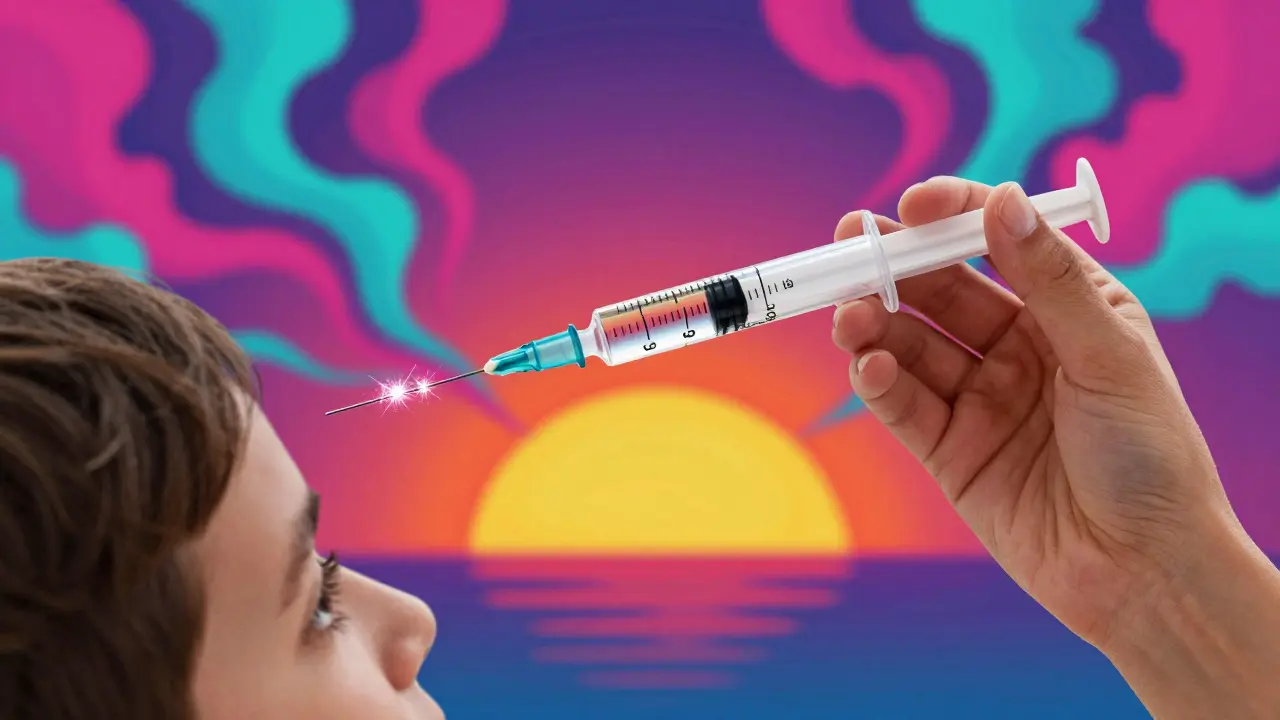
Common Mistakes to Avoid
Even with the right tools, there are pitfalls to watch out for. One of the most common errors is the "double dose," where a parent forgets they already gave the medication and administers it again. Keeping a simple log on your phone or a piece of paper-noting the exact time and dose-is the best way to prevent this. Another mistake is using the "wrong end" of a dropper or confusing a dosing cup with a standard measuring cup. Always double-check that the markings on your tool match the units (mL) prescribed by your doctor. If the label says "5 mL" and your tool is marked in "drops," stop and call your pediatrician. Drops are not a standardized measurement because the size of the drop depends on the thickness of the liquid and the size of the dropper hole.Can I use a medicine spoon if it's not from my kitchen drawer?
Yes, but only if it is a calibrated medical dosing spoon that came with the medication. These are designed to hold a specific volume. However, oral syringes are still recommended over dosing spoons because they are more accurate for small amounts and easier to use with children who refuse to drink from a spoon.
What happens if my child gets slightly too much medicine?
Depending on the medication, a slight overage might cause mild side effects, but for some drugs (like acetaminophen), even a small overdose can be toxic to a child's liver. If you suspect a dosing error, contact your pediatrician or the Poison Control Center immediately rather than waiting for symptoms to appear.
Why are mL better than teaspoons?
Milliliters are a precise metric measurement used worldwide. Teaspoons vary wildly in size between different sets of cutlery. Using mL ensures that the dose you give today is exactly the same as the dose you give tomorrow, regardless of which tool you have on hand, provided it is calibrated.
Where is the safest place to squirt liquid medicine in a child's mouth?
The safest method is to aim the oral syringe toward the inside of the cheek, squirting the medicine gently between the tongue and the side of the mouth. Avoid squirting medicine directly toward the back of the throat, as this can cause gagging or aspiration.
What should I do if the medication label uses both tsp and mL?
Always follow the milliliter (mL) measurement. Ignore the "tsp" or "teaspoon" reference and use a calibrated oral syringe or dosing cup to measure the exact mL amount. This eliminates any confusion about which spoon to use.