

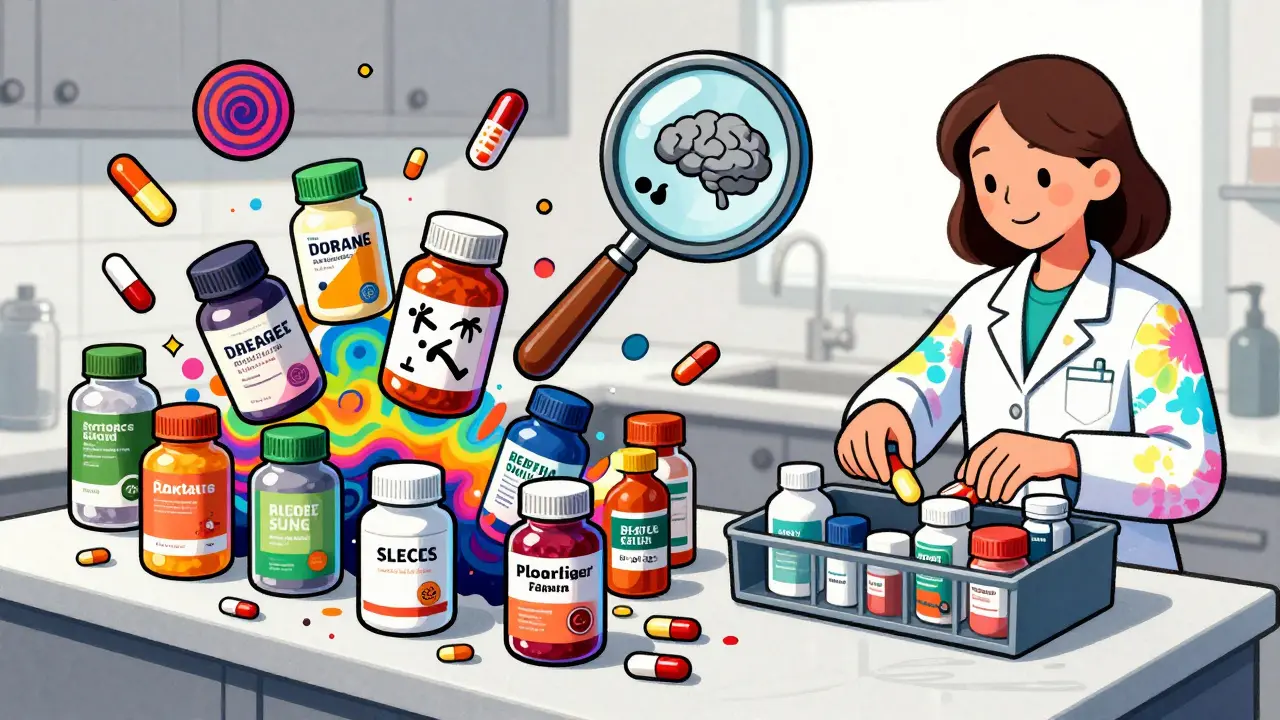
More than polypharmacy is just taking too many pills. It’s a silent crisis creeping into the lives of millions of older adults, especially those juggling heart disease, diabetes, arthritis, and depression-all with separate prescriptions from different doctors. By age 70, nearly 4 in 10 older people are on five or more medications daily. For those in nursing homes, that number jumps to over 80%. And it’s not just prescription drugs-over-the-counter painkillers, herbal supplements, and ‘as needed’ meds for sleep or anxiety pile on top. What starts as careful treatment often turns into a dangerous maze of side effects, falls, confusion, and hospital visits.
Why Polypharmacy Happens in Older Adults
It’s not because patients are careless. It’s because the system is built for single diseases, not multiple ones. A cardiologist prescribes a blood thinner. A rheumatologist adds an NSAID for joint pain. A psychiatrist prescribes a sleep aid. A primary care doctor adds a statin. Each prescription makes sense on its own. But together? They clash.
Older bodies don’t process drugs the same way. Kidneys slow down. Liver function drops. Fat replaces muscle, changing how drugs are absorbed and stored. This means even normal doses can build up to toxic levels. A drug that’s safe at 40 can be risky at 75. And the more meds someone takes, the higher the chance of dangerous interactions. Two drugs? 6% risk of interaction. Five? Jump to 50%. Seven or more? You’re virtually guaranteed one.
Studies show that for every extra medication, the risk of hospitalization rises. Falls increase. Memory gets foggy. People stop taking their pills because the routine is too confusing. One 78-year-old woman in Sydney was on 12 medications. She couldn’t remember which was for her blood pressure, which for sleep, which was an antibiotic she’d been told to take ‘just in case.’ Her daughter had to sort them into pill organizers-and still, she mixed up the timing.
The Hidden Dangers: Side Effects That Become New Problems
One of the most dangerous patterns is the prescribing cascade. A medication causes a side effect. Instead of stopping the original drug, a new one is added to treat the side effect. For example:
- A benzodiazepine for anxiety causes dizziness → a fall occurs → a doctor prescribes a bone density drug and a walking aid.
- An anticholinergic for overactive bladder causes constipation → a laxative is added → that leads to electrolyte imbalance → another med is prescribed to fix it.
- An NSAID for arthritis causes stomach irritation → a proton pump inhibitor is added → long-term use increases risk of kidney damage and pneumonia.
These cascades aren’t rare. They’re routine. A study of 2 billion patient visits found that those on 10 or more medications were, on average, two years older than those on fewer drugs-not because they were sicker, but because each new drug created a new problem needing another drug.
And it’s not just prescriptions. Over-the-counter meds like diphenhydramine (Benadryl) for sleep or allergies are loaded with anticholinergic properties. These drugs are linked to higher dementia risk in older adults, yet many still take them daily without knowing the danger. Herbal supplements like St. John’s Wort can interfere with blood thinners, antidepressants, and even chemotherapy drugs. And no one asks about them.
Deprescribing: It’s Not Stopping Meds-It’s Smart Stopping
Deprescribing isn’t about cutting drugs cold turkey. It’s a planned, step-by-step process to reduce or stop medications that are doing more harm than good. It’s not about being anti-medication. It’s about being pro-safety.
Doctors use tools like the Beers Criteria and STOPP/START guidelines to spot risky drugs. Beers lists medications that should generally be avoided in older adults-like long-acting benzodiazepines, certain anticholinergics, and NSAIDs in people with kidney issues. STOPP/START helps identify both inappropriate prescriptions and missed ones-like not giving a statin to someone with heart disease, or giving a drug that’s useless now that their condition has changed.
Real success stories exist. In one Australian pilot program, pharmacists reviewed the meds of 120 elderly patients in aged care homes. They stopped 273 unnecessary drugs over six months. The result? A 22% drop in falls, fewer emergency room visits, and better sleep and appetite. Patients reported feeling clearer-headed. Families noticed they were more alert at meals.
But it’s not easy. Many older adults believe their meds are keeping them alive-even if they’ve been on them for 15 years with no clear benefit. A statin taken after a heart attack five years ago? Maybe still needed. A sleep aid started after a spouse died? Probably not. But the patient doesn’t know the difference. And doctors rarely revisit old prescriptions unless prompted.
Who Should Lead the Deprescribing Conversation?
It’s not just the GP’s job. It’s a team effort.
- Pharmacists are the unsung heroes. They see the full list-prescriptions, OTCs, supplements. Many now offer medication reviews under Medicare in Australia, where they can flag interactions and suggest simplifications.
- Geriatricians specialize in aging and know which drugs are riskiest for older bodies.
- Patients and families need to speak up. Bring a list of every pill, patch, and herbal capsule to every appointment. Ask: ‘Is this still necessary?’ ‘What happens if I stop it?’ ‘Are there safer alternatives?’
One 81-year-old man in Brisbane had been on six antidepressants for years after his wife passed. He felt worse, not better. His pharmacist noticed the overlap and consulted his GP. They tapered off three drugs over three months. Within six weeks, his energy improved. His confusion lifted. He started gardening again.
But this doesn’t happen often enough. Most doctors spend 10-15 minutes per visit. Medication reviews take 30-60. Insurance doesn’t pay for time spent reviewing old scripts. So the status quo continues.
What You Can Do Right Now
If you or someone you care for is on five or more medications, here’s what to do:
- Make a complete list-include every pill, patch, vitamin, herb, and OTC drug. Don’t leave anything out.
- Bring it to your next appointment-ask: ‘Which of these are still necessary?’ ‘Are any of these causing side effects I’m not reporting?’
- Ask about deprescribing-say: ‘I’m worried about too many meds. Can we review them?’
- Don’t stop anything on your own-some drugs need to be tapered slowly to avoid withdrawal or rebound symptoms.
- Use a pill organizer-but don’t rely on it alone. Know why each pill is there.
One simple question can change everything: ‘If I didn’t take this drug, what would happen?’ If the answer is ‘Nothing much,’ it might be time to let it go.

The Bigger Picture: Why This Matters Now
By 2050, 1.5 billion people will be over 65. That’s one in six people on the planet. If we don’t fix how we prescribe to older adults, hospitals will be flooded with preventable drug reactions. Caregivers will be overwhelmed. Families will watch loved ones decline-not from disease, but from the treatment meant to help.
There’s hope. AI tools are being tested to flag risky combinations in electronic records. Pharmacist-led clinics are expanding. Medicare is slowly covering more medication reviews. But real change needs patient voices. It needs families to ask questions. It needs doctors to slow down and listen.
Polypharmacy isn’t inevitable. It’s a system failure. And deprescribing isn’t a last resort-it’s the smartest way to care for older adults who’ve spent decades taking care of everyone else.
What exactly counts as polypharmacy?
Polypharmacy is generally defined as taking five or more medications at the same time. This includes prescription drugs, over-the-counter medicines, vitamins, herbal supplements, and ‘as needed’ meds like painkillers or sleep aids. Some experts use stricter definitions-like 10 or more drugs for ‘hyper-polypharmacy’-but five or more is the standard threshold used in clinical guidelines and research.
Can polypharmacy cause dementia?
It doesn’t directly cause dementia, but it significantly increases the risk. Certain medications-especially those with strong anticholinergic effects like some sleep aids, bladder drugs, and older antidepressants-have been linked to memory problems and cognitive decline in older adults. Long-term use of these drugs can mimic or worsen early dementia symptoms. Stopping them, when safe, often leads to noticeable improvement in thinking and focus.
Is it safe to stop taking medications on my own?
No. Some medications, like blood pressure drugs, antidepressants, or steroids, can cause dangerous withdrawal effects if stopped suddenly. Stopping a drug too fast might trigger rebound high blood pressure, seizures, or severe anxiety. Always talk to your doctor or pharmacist before making any changes. They can help you taper off safely if it’s the right choice.
What are the Beers Criteria and STOPP/START guidelines?
The Beers Criteria is a list of medications that are generally considered unsafe or risky for older adults due to side effects or interactions. STOPP/START is a two-part tool: STOPP identifies potentially inappropriate prescriptions (like giving an NSAID to someone with kidney disease), and START identifies medications that are missing but should be given (like a statin for someone with heart disease). These are used by doctors and pharmacists to guide safer prescribing.
How can I tell if a medication is no longer needed?
Ask these questions: Was this drug prescribed for a condition that’s now resolved? Has the benefit faded over time? Are there side effects I’ve learned to live with? Has my health changed since I started it? For example, a cholesterol drug might have been critical after a heart attack, but if you’re now 85 with no symptoms and multiple other meds, the benefit may no longer outweigh the risk. Your pharmacist can help review this.
Do pharmacists really help with deprescribing?
Yes, and they’re often better equipped than doctors for this task. Pharmacists see your complete medication history-including OTCs and supplements-and are trained to spot interactions and redundancies. In Australia, Medicare funds medication reviews by pharmacists for older adults. Many can help you create a simplified plan and even contact your doctor to suggest changes.
What Comes Next
Don’t wait for a crisis to act. If you’re managing multiple meds for an older adult, schedule a medication review now. Bring the list. Ask the hard questions. Push for a plan-not just more prescriptions. The goal isn’t fewer pills. It’s better health, fewer falls, clearer thinking, and more time doing what matters: walking in the garden, eating with family, sleeping through the night.
Medication safety isn’t about following rules. It’s about knowing when to let go-and having the courage to ask for help.
Kathy McDaniel
January 26, 2026 AT 14:55John O'Brien
January 27, 2026 AT 02:09Anjula Jyala
January 28, 2026 AT 10:05Kirstin Santiago
January 29, 2026 AT 06:04Paul Taylor
January 30, 2026 AT 07:53Desaundrea Morton-Pusey
January 30, 2026 AT 15:46Murphy Game
January 31, 2026 AT 22:57Candice Hartley
February 1, 2026 AT 20:27astrid cook
February 3, 2026 AT 16:42Andrew Clausen
February 4, 2026 AT 15:00Kegan Powell
February 6, 2026 AT 06:03April Williams
February 8, 2026 AT 00:15Harry Henderson
February 8, 2026 AT 01:22suhail ahmed
February 9, 2026 AT 04:36Marian Gilan
February 10, 2026 AT 17:27