
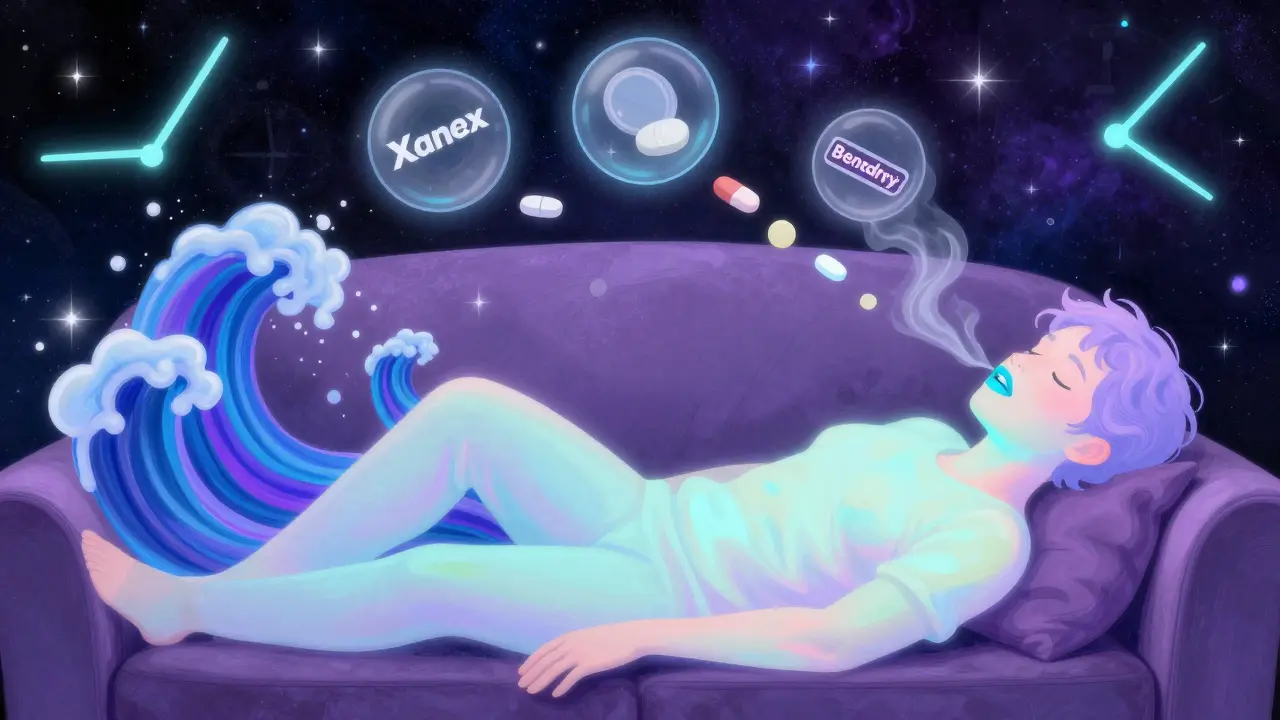
Someone you care about takes a pill to sleep. They seem fine. Then they don’t wake up. Their breathing is slow. Their lips turn blue. You panic. Is this just deep sleep-or a deadly overdose? Sedative overdose doesn’t always look like a movie scene. It creeps in quietly, often mistaken for exhaustion, drunkenness, or just being "out of it." But every minute counts. Recognizing the signs early can save a life.
What Counts as a Sedative Overdose?
Sedatives and sleep medications slow down your central nervous system. That’s why they work-they calm your brain enough to help you fall asleep. But when too much builds up in your body, that calming effect turns dangerous. Overdose happens when the brain can’t keep breathing, heart rate drops, and oxygen stops reaching vital organs. Common drugs in this category include:- Benzodiazepines: Xanax (alprazolam), Valium (diazepam), Ativan (lorazepam)
- Z-drugs (non-benzodiazepine sleep aids): Ambien (zolpidem), Lunesta (eszopiclone), Sonata (zaleplon)
- Barbiturates: Phenobarbital (rare today but still used)
- Over-the-counter sleep aids: Tylenol PM, Benadryl (diphenhydramine)
The Warning Signs: What to Look For
Overdose doesn’t happen all at once. It progresses. You might notice subtle changes first-then a sudden collapse. Here’s what to watch for, in order of appearance:- Extreme drowsiness: Not just sleepy. They can’t stay awake even when you shake them or shout their name.
- Slurred speech: Words sound thick, slow, or mumbled. This happens in 87% of benzodiazepine overdoses.
- Uncoordinated movements: Stumbling, falling, or dropping things. They look drunk-but haven’t had alcohol.
- Confusion or memory loss: They don’t know where they are. Can’t answer simple questions. May not remember what happened an hour ago.
- Slow breathing: Count breaths for 30 seconds. If it’s fewer than 6 breaths, it’s an emergency. Normal is 12-20.
- Blue lips or fingertips: This is cyanosis-your body isn’t getting enough oxygen.
- Cold, clammy skin: Body temperature drops. Skin feels wet and icy to the touch.
- Unresponsive: No reaction to pain (try a sternum rub-press hard on the center of the chest). If they don’t moan or move, they’re slipping into coma.
How It’s Different From Other Overdoses
People often confuse sedative overdose with opioid overdose. They’re both deadly, but they look different.In opioid overdoses, you’ll typically see:
- Pinpoint pupils (tiny black dots in the center of the eyes)
- Loud snoring or gurgling sounds (called the "death rattle")
- More rapid loss of consciousness
In sedative overdose:
- Pupils are usually normal or slightly dilated
- Breathing slows gradually, like a car running out of gas
- Heart rate and blood pressure often stay normal until the very end
But here’s the trap: most overdoses today aren’t pure. Someone takes Ambien and drinks wine. Or mixes Xanax with fentanyl. That changes everything. The signs blend. Pupils might be small. Breathing might stop fast. Don’t rely on textbook differences. If someone is unresponsive and breathing poorly-call 911. No matter what you think they took.
What About Over-the-Counter Sleep Aids?
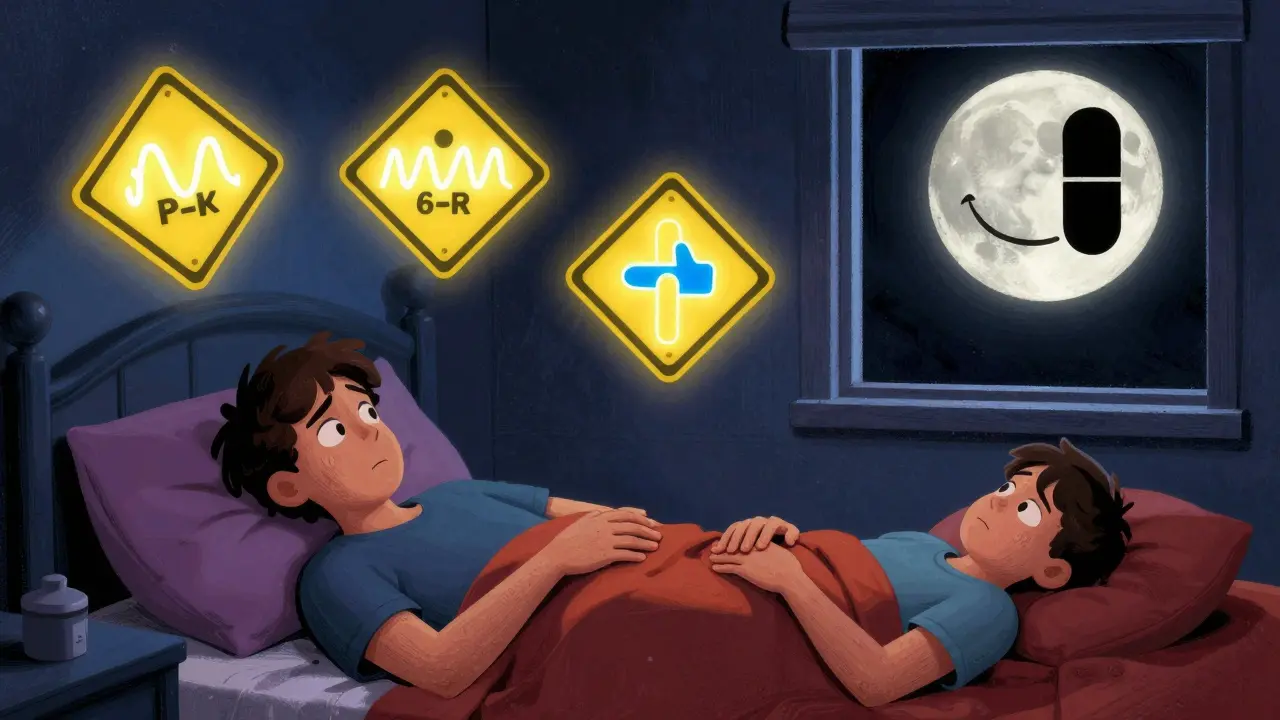
Diphenhydramine (Benadryl, Tylenol PM) is in many medicine cabinets. People think it’s safe because you can buy it without a prescription. It’s not.Overdosing on diphenhydramine looks different:
- Extreme drowsiness
- Very dry mouth and throat
- Difficulty urinating
- Fast heart rate (unlike prescription sedatives)
- Hallucinations, seizures, or delirium at high doses
One person took 10 Benadryl pills thinking it would help them sleep. They ended up in the ER with seizures. The dose that kills? As low as 1,000 mg-just 20 tablets. And it doesn’t take long. Symptoms can hit within an hour.
Melatonin? That’s different. Even at 240 mg (60 times the normal dose), it rarely causes breathing problems. Just headache, dizziness, nausea. It’s not a sedative in the same way. Don’t panic over melatonin-but do take prescription sleep meds seriously.
Why People Miss the Signs
A 2022 study of over 1,200 sedative overdose cases found that 68% of bystanders thought the person was just "really tired." They waited. They hoped they’d wake up on their own. The average delay before calling 911? 47 minutes.Reddit threads from people who’ve lived through this tell the same story:
- "I thought my roommate was just exhausted from work. He was snoring so loud I didn’t worry."
- "He was slurring his words-I assumed he’d been drinking. I didn’t realize he hadn’t touched alcohol all night."
- "She kept saying she was fine. I believed her. I didn’t check her breathing."
That’s the danger. Sedatives make people seem calm, peaceful-even peaceful in death. But the brain is shutting down. Every minute without oxygen kills brain cells. After 10 minutes without breathing, survival chances drop sharply.
What to Do Right Now
If you suspect an overdose, don’t wait. Don’t try to wake them with cold water or coffee. Don’t leave them alone. Follow this simple checklist:- Shout and shake: Call their name. Shake their shoulders. If they don’t respond, move to step two.
- Check breathing: Look at their chest. Count breaths for 30 seconds. Multiply by two. If it’s less than 12 per minute, act now.
- Look for blue lips or skin: Check fingertips, lips, under the nails.
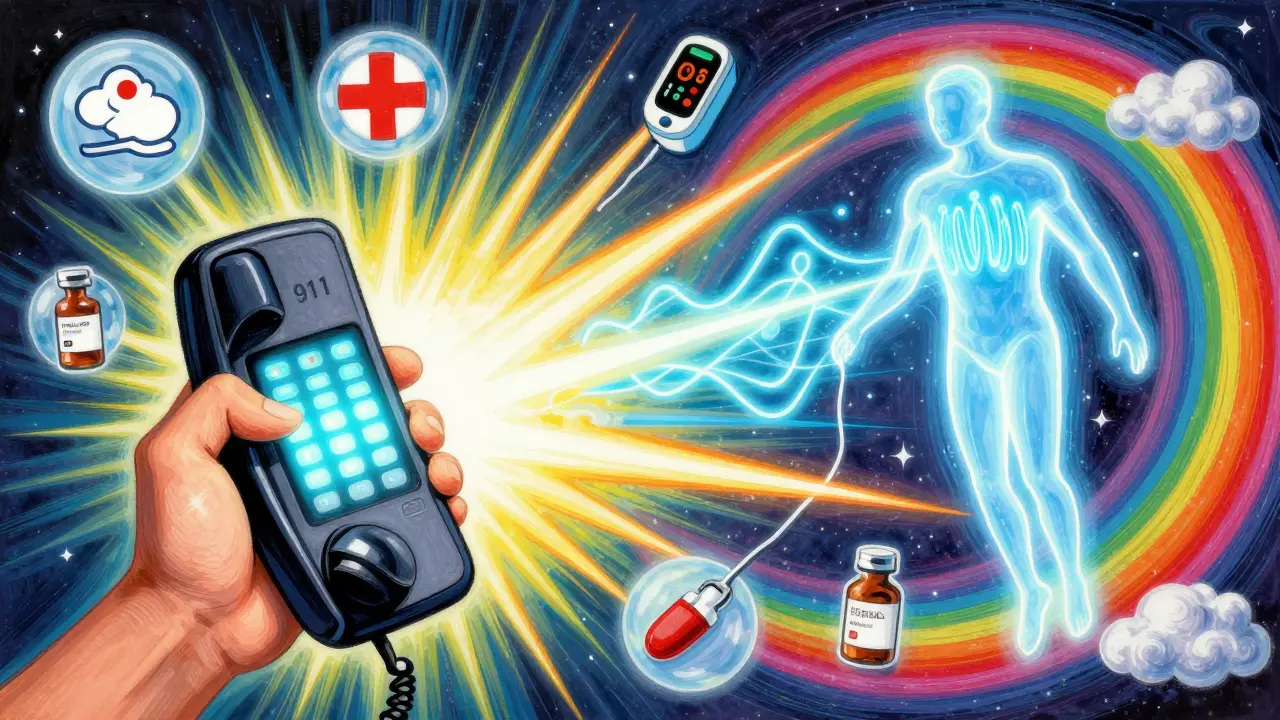
- Call 911 immediately: Say, "I think someone overdosed on sleep medication." Give your location. Don’t hang up until they tell you to.
- Start rescue breathing if needed: If they’re not breathing or breathing less than once every 5 seconds, tilt their head back, pinch their nose, and give one breath every 5 seconds. Keep going until help arrives.
- Stay with them: Even if they wake up, they can crash again. Don’t let them sleep it off.
Do not give them flumazenil. That’s the only antidote for benzodiazepines-but it can trigger seizures in people who’ve been using these drugs long-term. Only medical professionals should use it.
What Increases the Risk?
Some situations make overdose far more likely:- Mixing with alcohol: This doubles the risk of respiratory failure. In 41% of fatal sedative overdoses, alcohol was involved.
- Mixing with opioids: Fentanyl is the silent killer here. In 2021, 23% of benzodiazepine deaths also involved fentanyl.
- Taking more than prescribed: Even a few extra pills can tip the balance.
- Using old prescriptions: Pills from years ago may have different strength or be degraded.
- Having liver disease: Your body can’t clear the drug properly.
- Being over 65: Older adults metabolize these drugs slower.
Also watch for red flags in behavior: multiple prescriptions from different doctors, hiding pills, taking them at odd hours, or refusing to talk about their use.
What’s Being Done to Help?
Public health efforts are catching up. In January 2023, California started handing out free overdose recognition cards at pharmacies. They show the signs in simple pictures and say: "If they’re unresponsive and breathing slow-call 911." Early results show a 22% increase in bystander action.Emergency responders now carry intranasal midazolam, a fast-acting version of a sedative that can help reverse seizures caused by overdose. Hospitals are using new screening tools to find people at risk before they overdose.
And research is moving fast. Johns Hopkins is testing wearable pulse oximeters that monitor oxygen levels while people sleep. If oxygen drops too low, it alerts a phone or smartwatch. That could give 15-20 minutes of warning before breathing stops.
You Don’t Need to Be a Doctor
You don’t need medical training to save a life. You just need to know what to look for-and act fast. Sedative overdose doesn’t care if you’re a parent, a friend, or a sibling. It doesn’t wait for perfect conditions.If you’ve ever given someone a pill to help them sleep, you’re already part of their safety net. Don’t wait for them to say something’s wrong. Watch for silence. Watch for stillness. Watch for blue lips. If something feels off-trust it. Call 911. Give breaths. Stay with them.
One call. One minute. One breath. That’s all it takes to change the outcome.
Can you overdose on sleep meds even if you take them as prescribed?
Yes. Even when taken exactly as directed, some people are more sensitive to sedatives due to age, liver function, or interactions with other medications. A dose that’s safe for one person can be dangerous for another. Over time, tolerance can build, leading people to take more without realizing the risk. Always follow your doctor’s instructions, and never combine sleep meds with alcohol or other depressants.
Is it safe to try to wake someone up by shaking them or splashing water?
Shaking or yelling can help determine if they’re responsive-but don’t rely on it alone. If they don’t respond to a sternum rub (pressing firmly on the center of the chest), assume they’re unresponsive. Splashing water won’t help and can delay life-saving actions. Focus on checking breathing and calling 911. If they’re not breathing, start rescue breathing immediately.
What if I’m not sure what they took?
Call 911 anyway. Emergency responders are trained to handle unknown overdoses. Bring any pill bottles, packaging, or containers to the hospital. If you don’t have them, describe what you saw: how they acted, what time they took the pill, whether they drank alcohol. The more info you give, the better they can treat them.
Can naloxone (Narcan) help with a sedative overdose?
No. Naloxone only reverses opioid overdoses. It has no effect on benzodiazepines, Z-drugs, or barbiturates. Giving naloxone in a sedative overdose won’t help-and may give a false sense of security. Only use naloxone if you’re certain opioids are involved. For sedatives, focus on breathing support and calling emergency services.
How long does it take for sedative overdose symptoms to appear?
It depends on the drug. Z-drugs like Ambien can cause symptoms within 30-60 minutes. Benzodiazepines like Xanax may take 1-2 hours. Barbiturates can take longer, up to 4 hours. But if someone takes a large dose or mixes it with alcohol, symptoms can hit within minutes. Don’t wait for symptoms to get worse. If you suspect overdose, act immediately.
Can someone recover fully after a sedative overdose?
Yes-if they get help quickly. If breathing is restored within minutes and oxygen levels are maintained, most people recover without lasting brain damage. But delays of more than 10 minutes without breathing can lead to permanent injury or death. Recovery also depends on whether other drugs were involved. The sooner emergency care begins, the better the outcome.
Maggie Noe
January 10, 2026 AT 00:58Just read this and my hands are shaking. I had a friend who took Ambien with wine and didn’t wake up for 12 hours. We thought she was just passed out. Turns out her oxygen dropped to 78%. She’s fine now, but I’ll never ignore slow breathing again. 😢
Jacob Paterson
January 10, 2026 AT 07:51Of course it’s your fault if you mix Xanax with tequila. People act like these drugs are candy. You don’t get to be irresponsible and then act surprised when your brain shuts down. 🙄
Johanna Baxter
January 11, 2026 AT 03:57I’m crying rn. My sister did this. Took 12 Benadryl because she said "I just want to disappear." We found her at 3am. She’s in therapy now. But I still wake up every night wondering if I should’ve checked her breathing sooner. I didn’t. I’m so sorry, Jess. 💔
Jenci Spradlin
January 12, 2026 AT 19:48Biggest thing people miss: OTC sleep aids aren’t safe just ‘cause they’re on the shelf. I gave my mom 4 Tylenol PMs once for back pain, she got delirious and thought the cat was talking to her. ER trip. Don’t be that person. 🤦♂️
Diana Stoyanova
January 13, 2026 AT 02:14Let me just say this: if you’re reading this, you’re already more aware than 90% of the people who’ve ever given someone a sleeping pill. That’s powerful. You don’t need to be a nurse or a doctor to be the person who saves a life. You just need to be the one who doesn’t look away. Look at the chest. Count the breaths. Call 911. Don’t wait for a sign. Wait for nothing. Act like their life depends on it-because it does. And if you’re scared? Good. That means you care. Keep caring. Keep watching. Keep acting. One breath can be the difference between a funeral and a birthday next year. You’ve got this.
tali murah
January 13, 2026 AT 07:34Wow. So the entire medical establishment failed us, but now we’re supposed to be amateur paramedics? Thanks for the guilt trip, author. Next you’ll tell us to memorize the Glasgow Coma Scale before bed. 🤦♀️
Kiruthiga Udayakumar
January 13, 2026 AT 17:36From India, I can say this: here, people mix sleeping pills with chai and think it’s normal. My aunt did it for years. She died last year. Please, if you’re reading this, stop normalizing this. It’s not relaxation. It’s slow suicide.
Jerian Lewis
January 15, 2026 AT 15:06I’ve seen this too many times. People think "I’m just helping them sleep." But you’re not helping. You’re enabling. And when they die, you’ll say "I didn’t know." You knew. You just didn’t care enough to learn.
Elisha Muwanga
January 16, 2026 AT 17:36As a veteran, I’ve seen soldiers overdose on benzodiazepines prescribed by VA doctors. The system fails them first. Then we’re told to be heroes when they collapse. Don’t glorify bystander action-fix the prescribing culture. This isn’t about individual responsibility. It’s about institutional negligence.
Lindsey Wellmann
January 16, 2026 AT 20:42My mom took 3 Xanax after her dog died. She didn’t wake up for 18 hours. We thought she was sleeping it off. We didn’t know she was dying. I still hear her breathing in my dreams. Slow. Shallow. Like a tide pulling away. I didn’t check her lips. I didn’t count. I’m not a hero. I’m just a daughter who waited too long. Please… don’t wait. 🌊💔