
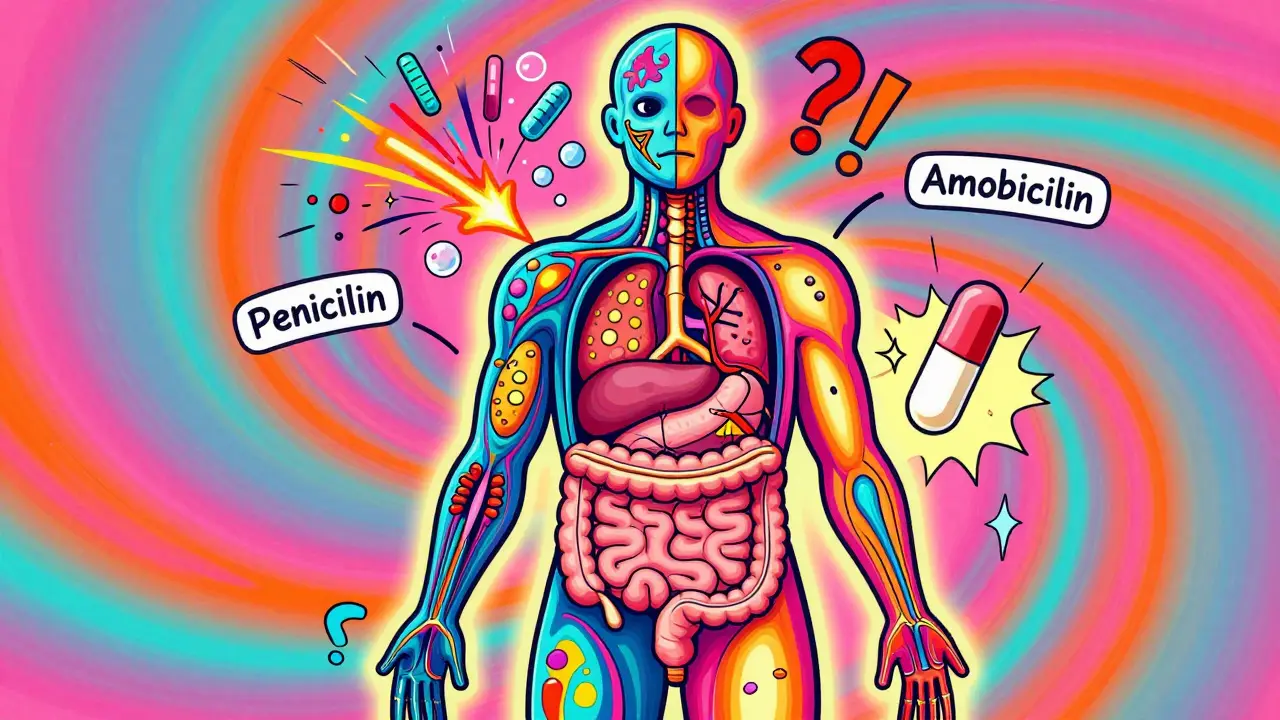
More than 1 in 10 people say they’re allergic to a medication. But here’s the thing: most of them aren’t. If you’ve ever stopped taking a drug because you got a rash, felt nauseous, or had a headache after taking it, you might have been told you have a "drug allergy." But chances are, what you experienced wasn’t an allergy at all-it was a side effect. And mixing up the two can cost you more than just discomfort. It can cost you better treatment, more money, and even put your life at risk.
What’s the Real Difference?
A drug allergy is your immune system overreacting to a medication. It’s not just irritation-it’s your body treating the drug like a dangerous invader. Your immune system makes antibodies to fight it, and that triggers symptoms like hives, swelling, trouble breathing, or even anaphylaxis. These reactions are rare-only 5 to 10% of all bad reactions to drugs are true allergies.
Side effects, on the other hand, are expected, predictable responses to how the drug works in your body. They don’t involve your immune system. For example, statins can cause muscle aches because they affect muscle cells directly. Antibiotics like amoxicillin can cause diarrhea because they change the balance of bacteria in your gut. These aren’t signs your body is attacking the drug-they’re just side effects of the drug doing its job.
The biggest clue? Timing. Allergic reactions to penicillin, for instance, usually show up within an hour-sometimes within minutes. A rash from amoxicillin that appears after 3 days? That’s often not an allergy. It’s more likely tied to a virus you had at the same time. Studies show up to 90% of kids labeled with "penicillin allergy" after a rash during a cold are actually fine with the drug later.
Why It Matters More Than You Think
If you’re wrongly labeled as allergic to penicillin, your doctor can’t use it-even though it’s one of the safest, cheapest, and most effective antibiotics out there. Instead, they’ll reach for something broader, like vancomycin or ciprofloxacin. Those drugs are more expensive, harder on your gut, and increase your risk of deadly infections like C. diff. People with mislabeled penicillin allergies are 2.5 times more likely to get C. diff.
The numbers are shocking. In the U.S., mislabeling penicillin allergies adds more than $1 billion a year to healthcare costs. One study found patients with a penicillin allergy label on their chart cost $1,025 more per hospital stay. That’s not because they’re sicker-it’s because they’re given less effective, more expensive alternatives.
And it’s not just penicillin. Sulfa drugs, NSAIDs like ibuprofen, and even common painkillers get mislabeled all the time. People stop taking them because they got a headache, felt dizzy, or had an upset stomach. But those aren’t allergies. They’re side effects. And if you avoid the right drug because of a misunderstanding, you might end up with worse pain, longer illness, or unnecessary complications.
How to Spot a True Allergy
True drug allergies come with specific signs. The most dangerous ones happen fast:
- Hives, itching, or swelling of the face, lips, or tongue
- Wheezing, tight chest, or trouble breathing
- Dizziness, fainting, or rapid pulse
- Nausea, vomiting, or a sudden drop in blood pressure
If you’ve had any of these within an hour of taking a drug, especially if it happened more than once, that’s a red flag. These are IgE-mediated reactions-the kind that can turn life-threatening in minutes.
Delayed reactions are trickier. A rash that shows up 1 to 2 weeks after starting a drug-especially if it’s widespread, blistering, or accompanied by fever, swollen lymph nodes, or liver problems-could be something serious like DRESS (Drug Reaction with Eosinophilia and Systemic Symptoms). DRESS has a 10% death rate. It’s rare, but it’s real. And it’s an actual allergy, not a side effect.
Side effects? They’re usually milder, predictable, and often fade over time. Nausea from antibiotics? It often gets better after a few days. Muscle aches from statins? Might improve with a lower dose or switching to another statin. Diarrhea from metformin? Happens in 20-30% of people, but most adjust to it.
What to Do If You Think You Have a Drug Allergy
Don’t just assume. Don’t write it off as "I’ve always been allergic." Write down exactly what happened:
- What drug were you taking?
- When did the reaction start? (Hours? Days?)
- What symptoms did you get?
- Did you need emergency treatment?
- Have you taken the drug since?
Bring this to your doctor or pharmacist. Ask: "Was this an allergy or a side effect?"
If you’ve been told you’re allergic to penicillin or another beta-lactam antibiotic, ask about testing. Skin tests for penicillin are 97-99% accurate at ruling out true allergy. If the test is negative, you can safely take it. Many people who were told they were allergic as kids can take penicillin without issue as adults.
For other drugs, an oral challenge under medical supervision might be offered. You’ll take a tiny dose, then gradually increase it while being monitored. Over 85% of people with a history of "penicillin allergy" pass this test without a problem.
What You Should Never Do
Never ignore a real allergic reaction. If you’ve ever had trouble breathing or swelling after a drug, don’t take it again without seeing an allergist.
Never label yourself based on a vague memory. "I think I had a rash once" isn’t enough. Many rashes from childhood illnesses are mistaken for drug allergies.
Never assume your doctor knows the difference. A 2022 study found primary care providers correctly identify true allergies in only 42% of cases. That’s why you need to be your own advocate.
And never let a vague label stay in your medical record. If you’ve been cleared by testing, ask for your allergy record to be updated. Electronic health records often keep old labels even after you’ve been proven safe. That can still affect your care.
Real Stories, Real Consequences
One woman in Sydney avoided antibiotics for years because she thought she was allergic to sulfa. She kept getting urinary tract infections and was treated with stronger, more expensive drugs each time. After a simple skin test, she found out she’d never been allergic. She now takes the right antibiotic-and her infections cleared up.
A man in Melbourne was told to avoid NSAIDs because he got a headache after taking ibuprofen. He suffered chronic pain for years. Turns out, he was dehydrated when he took it. The headache was a side effect of dehydration, not the drug. Once he drank more water before taking it, the headache vanished.
On the other hand, a child in Adelaide developed a severe rash after taking amoxicillin during a viral infection. Her parents were terrified. But the allergist confirmed it wasn’t a true allergy-just a common virus-drug interaction. She was able to safely take penicillin later for pneumonia.
What’s Changing for the Better
Hospitals are waking up. In 2018, only 15% of U.S. hospitals had formal programs to check if penicillin allergies were real. By 2023, that number jumped to 65%. Pharmacist-led allergy review programs have cut inappropriate penicillin avoidance by 80% in some health systems.
Regulators are pushing for change too. The FDA now requires drug labels to clearly separate allergy warnings from side effect information. Patient guides include decision trees to help people understand what’s dangerous and what’s just uncomfortable.
And research is moving fast. The NIH has invested $15 million to find blood tests that can spot true drug allergies without skin prick tests. That could make testing faster, safer, and available to more people.
But the biggest change? Awareness. More people are asking questions. More doctors are listening. More patients are getting tested and reclaiming safe, effective treatments.
What You Can Do Today
Check your medical records. Look at your allergy list. If it just says "penicillin allergy" or "sulfa allergy" with no details, ask for clarification.
If you’ve never been tested, and you’re told you’re allergic to a common drug, ask: "Can I be tested?"
If you’ve had a mild reaction-like a rash, upset stomach, or headache-ask if it was an allergy or a side effect.
Don’t let a label from 10 years ago keep you from the best treatment today. Most drug allergies aren’t allergies at all. And once you know the difference, you can make smarter, safer choices about your health.
Celia McTighe
December 29, 2025 AT 15:12I had no idea so many people get mislabeled with drug allergies! 🙌 I used to panic every time I got a rash after antibiotics, but now I know it was probably just a side effect. So glad this post exists - I’m going to ask my doctor about testing!
Teresa Marzo Lostalé
December 30, 2025 AT 06:02It’s wild how we’ve been conditioned to fear every little bump or nausea. I used to think my body was just ‘sensitive’ - turns out, I just didn’t know the difference between immune response and pharmacological side effect. The line between fear and fact is thinner than we think.
Ellen-Cathryn Nash
December 30, 2025 AT 19:55People label themselves with drug allergies like they’re tattoos - permanent, dramatic, and emotionally charged. But half the time? It’s just a headache after a long flight and a glass of wine. We’ve turned medical nuance into a personality trait.
Debra Cagwin
January 1, 2026 AT 10:34This is such an important topic - and you’ve explained it so clearly. If you’ve ever been told you’re allergic to penicillin because of a childhood rash, please, please get tested. It’s not just about avoiding discomfort - it’s about access to the safest, most effective treatment. You deserve better care.
Ryan Touhill
January 3, 2026 AT 03:49Let’s be real - the pharmaceutical industry doesn’t want you to know that 90% of ‘penicillin allergies’ are false positives. Why? Because the alternatives? Way more profitable. The FDA’s new labeling rules? A PR move. The real change? Comes from patients demanding testing - not from corporate goodwill.
Samantha Hobbs
January 3, 2026 AT 21:52I was told I was allergic to ibuprofen because I got a rash once - turned out I was sunburnt and took it on an empty stomach. My doctor didn’t even ask. So now I just avoid all NSAIDs. 😅
Sydney Lee
January 4, 2026 AT 17:55It’s not merely a matter of misdiagnosis - it’s a systemic failure of medical education. Primary care physicians, trained to check boxes, not think critically, perpetuate this mythos with the same rigor they apply to filling out insurance forms. A true allergy requires IgE-mediated response - a concept most clinicians can’t define, let alone diagnose. The public is being gaslit by a broken system.
oluwarotimi w alaka
January 6, 2026 AT 00:37lol so now they want us to trust doctors again? after all the vaccines and masks and pills that made people sick? you think they dont make up allergies to sell more drugs? i saw a guy in nigeria get 3 different antibiotics in one week just to make the pharma reps happy. this is all money game.
ANA MARIE VALENZUELA
January 6, 2026 AT 22:45And yet, you still have people who’ll say ‘I’m allergic to everything’ after one bad reaction. It’s not just ignorance - it’s performative victimhood. If you can’t distinguish between a headache and anaphylaxis, maybe don’t self-diagnose. Your medical record isn’t a mood board.
Bradly Draper
January 8, 2026 AT 22:40I didn’t know the difference until my grandma got really sick because they gave her the wrong antibiotic. Now I ask questions. Just ask. It’s worth it.
Kelsey Youmans
January 10, 2026 AT 16:57While I appreciate the clinical precision of this piece, I must emphasize the cultural implications of medical labeling. In many communities, particularly among older generations, the term ‘allergy’ carries a weight far beyond its physiological definition - it becomes a narrative of bodily vulnerability, a marker of identity. To dismiss these beliefs as mere misconceptions risks alienating the very populations we aim to educate. A more nuanced, culturally competent approach is imperative.
Gran Badshah
January 11, 2026 AT 01:35in india we just take whatever the doctor gives. if i get sick again i take the same pill. no testing no questions. if it makes me sleepy? that's just how it is. maybe you americans think too much.
Hakim Bachiri
January 11, 2026 AT 15:05Okay, so let me get this straight - you're telling me that after 40 years of avoiding penicillin because I got a ‘rash’ during a cold at age 7… I could’ve been taking the BEST antibiotic this whole time? And my doctor never bothered to ask? And now I’m paying $1,200 extra per hospital visit because of a mistake I didn’t even make? I’m not mad… I’m just… disappointed. In everyone. 😔